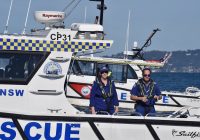
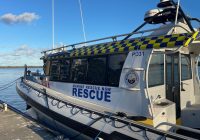
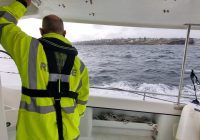
Marine Rescue Jervis Bay and Marine Rescue Alpine Lakes came together at Lake Jindabyne over the weekend of December 13 for an inter-unit training exercise designed to strengthen operational capability and interoperability between coastal and inland Marine Rescue NSW units. The exercise forms the second phase of a two-part collaboration initiative, following the inaugural Unit Connect Day held at Jervis Bay the previous weekend, and focuses on the unique demands of search and rescue operations on alpine waterways.
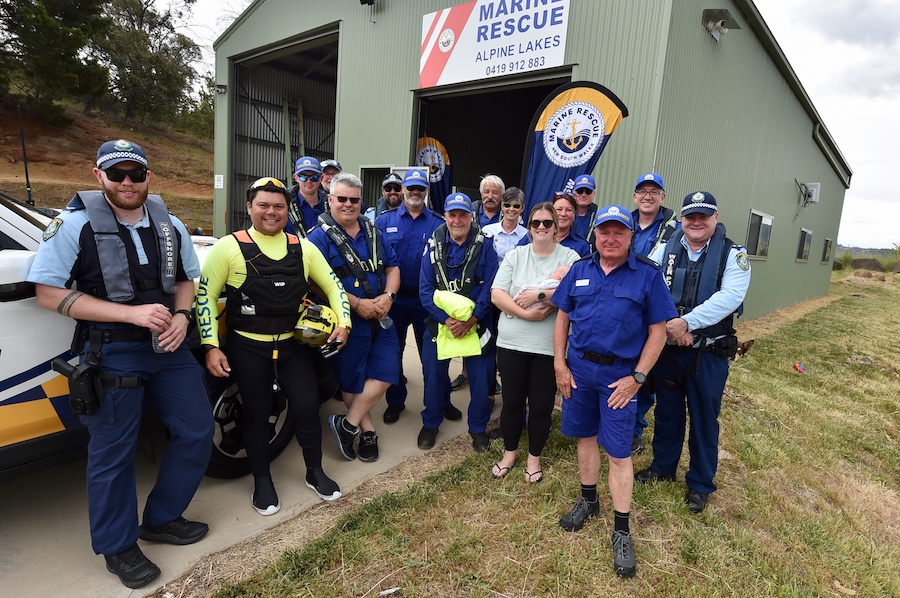
Marine Rescue Alpine Lakes and Jervis Bay volunteers along with officers from Monaro Police District got a lot out of the program
The Lake Jindabyne exercise involved up to four inland and alpine-specific search and rescue scenarios, including man overboard drills, vessels and persons in distress, structured searches, rescues and recoveries, and towing operations at multiple locations around the lake. Training manikins were used to replicate realistic conditions, with two Marine Rescue Alpine Lakes vessels operating alongside two Marine Rescue NSW rescue watercraft (jet skis). The Monaro Police District supported the activity, with a NSW Police vessel providing on-water safety throughout the exercise.
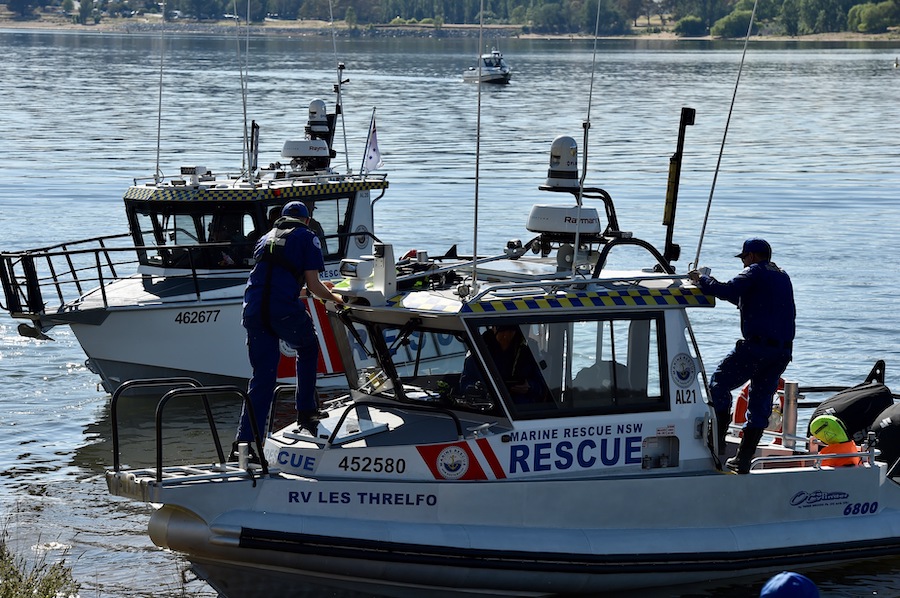
Marine Rescue NSW Inspector Glenn Sullivan said the Alpine Lakes phase was critical in giving coastal volunteers practical experience in an environment that presents very different challenges. “The purpose of the Lake Jindabyne exercise was to have inter-unit training between Jervis Bay and Alpine Lakes,” Inspector Sullivan said. “Last weekend we had inland water operators going down to the coast, and this weekend we’ve had people coming from the coast up onto the alpine waters. They’ve been working with the rescue watercraft operators from Jervis Bay and are now practising simulated survivor recoveries and learning how to best handle jet skis on alpine waters. Having that shared experience between inland and coastal waters is integral to what we’re trying to achieve for Marine Rescue NSW statewide.”
Inspector Sullivan said the varying conditions faced at Lake Jindabyne reinforced the importance of regular, realistic training. “Exposing our volunteers to different environments shows how quickly conditions can change and how fast our responses need to be,” he said. “It’s one thing to gain qualifications, but over time we need to keep our skills sharpened and our best practices in place to maintain operational capability.”
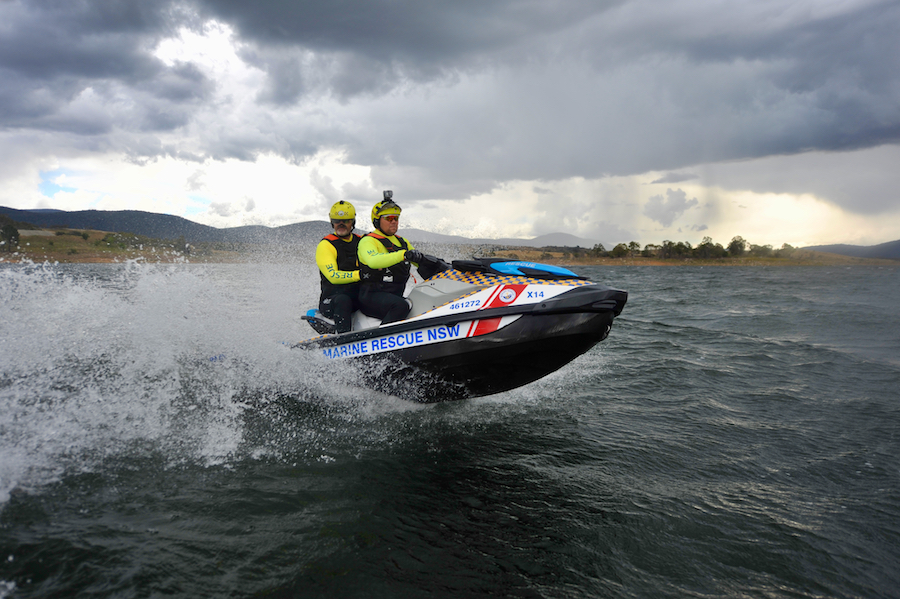
For Marine Rescue Alpine Lakes Unit Commander Cain Hopwood, hosting the exercise at Lake Jindabyne was an opportunity to showcase the complexities of alpine waterways while strengthening relationships with other units. “It’s great that we’ve had connections with other units,” he said. “We’re a small unit, so being able to rely on other units for training and development is really important for us. Mixing it up with other units makes a big difference, and it’s also valuable to expose visiting crews to the unique properties of inland and alpine waters.”
Unit Commander Hopwood said the scenarios conducted during the exercise reflected the types of challenges regularly faced by Alpine Lakes volunteers. “We ran a rescue scenario where a personal watercraft had crashed into an island and a person had fallen into the water,” he said. “The crew had to rescue the person and then tow the watercraft away from the island. That was tricky because of the rocks, the shallow water and the need to get in close to the shore, which are hazards we deal with here that you don’t usually see on the coast.”
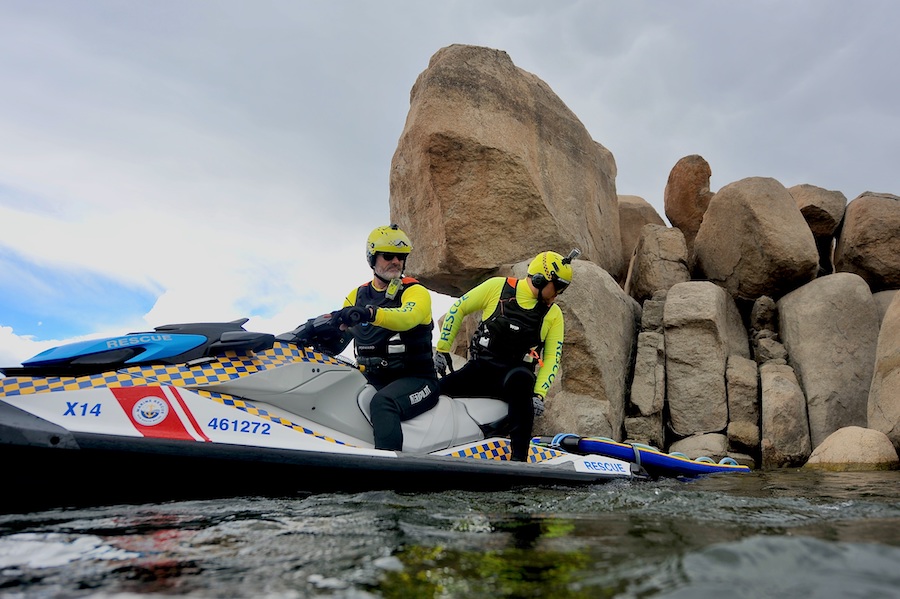
The contrasting environments were also evident to Marine Rescue Jervis Bay crew member Kyran Ring, who said working on Lake Jindabyne highlighted different approaches to risk and navigation. “The way they approach the waterway and obstacles is different to how we do because of the conditions,” he said. “It’s been great to see their foresight and how they handle things.”
Marine Rescue Jervis Bay Training Officer Ernie Panucci said the exercise reinforced a universal message for all waterways. “Any waterway is dangerous,” he said. “The weather only has to change slightly and all of a sudden it’s a different situation. We see that in Jervis Bay as well, where conditions can change dramatically, and that’s why training for those situations is so important.”
Shoalhaven based rescue watercraft operator Adam Breau said observing the Alpine Lakes crew at work offered valuable insight into how inland operations are assessed. “It was interesting watching the Alpine Lakes members checking the depth of the water,” he said. “We tend to look at tides, whereas they look at how Snowy Hydro controls their environment. That was a huge takeaway and really interesting to see.”

The learning exchange was not one-sided, with Alpine Lakes crew member Werner von der Burg reflecting on the coastal phase of the program held the previous weekend at Jervis Bay. “Being on a big boat is very different,” he said. “I had the opportunity to drive rescue vessel Jervis Bay 41, and that was a completely different experience compared to driving our much smaller boat here.”
Unit Commander Hopwood said the broader benefits of the collaboration extended beyond training scenarios. “Making connections with local police and the wider emergency services community is really important for us,” he said. “It makes it easier to deal with situations in the future, and exercises like this help build those relationships.”
The inter-unit training at Lake Jindabyne forms part of Marine Rescue NSW’s ongoing commitment to developing volunteer capability, confidence and collaboration across the state, ensuring crews are prepared to respond effectively in both coastal and inland environments.
Marine Rescue NSW is a volunteer based not-for-profit professional organisation dedicated to keeping boaters safe on the water and supporting local communities.