CARP. That four-letter name alone is enough to conjure up strong emotions in anglers. For some dedicated, dyed-in-the-wool British freshwater fishers, those feelings may be positive ones. However, for most Aussie anglers, the word carp is synonymous with a noxious scourge plaguing our waterways — literally “the rabbits of the rivers”, or worse.
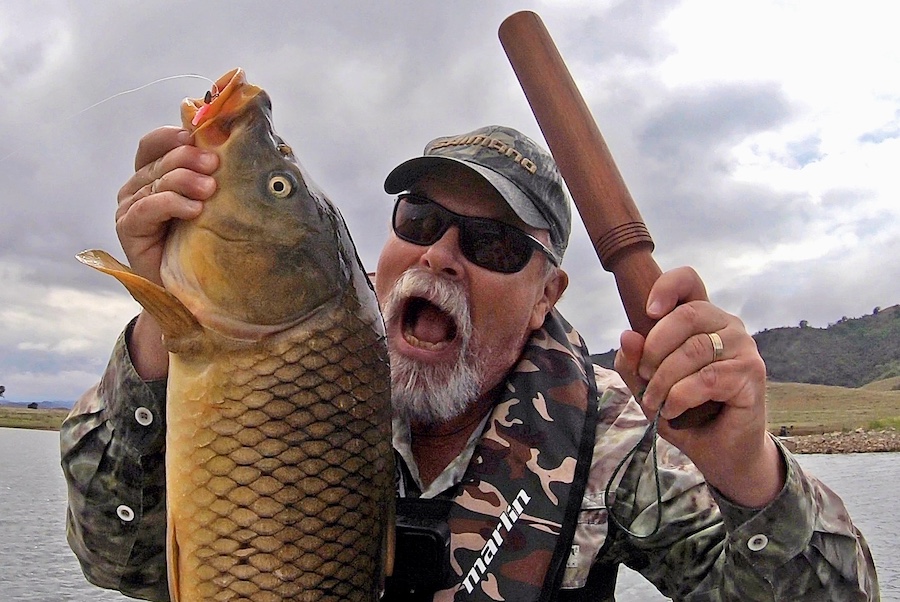
Yes, carp can be fun to catch, especially by sight-casting to them with small lures or flies. But make no mistake: they do immense damage to our waterways. Kill them all!
We could debate until the cows come home about the severity of Australia’s carp problem, and whether it’s more a symptom of degraded inland waterways than a direct contributor to them. Personally, I don’t have any doubts on that front. Across my lifetime I’ve watched the carp menace turn once limpid, green-tinged living rivers into dying, chocolate brown drains choked with stirred up mud. Carp also spread diseases and parasites and directly displace valuable, vulnerable natives such as Macquarie perch and eel-tailed catfish. Make no mistake: carp are at least as big an environmental menace in our waters as cane toads are on land.
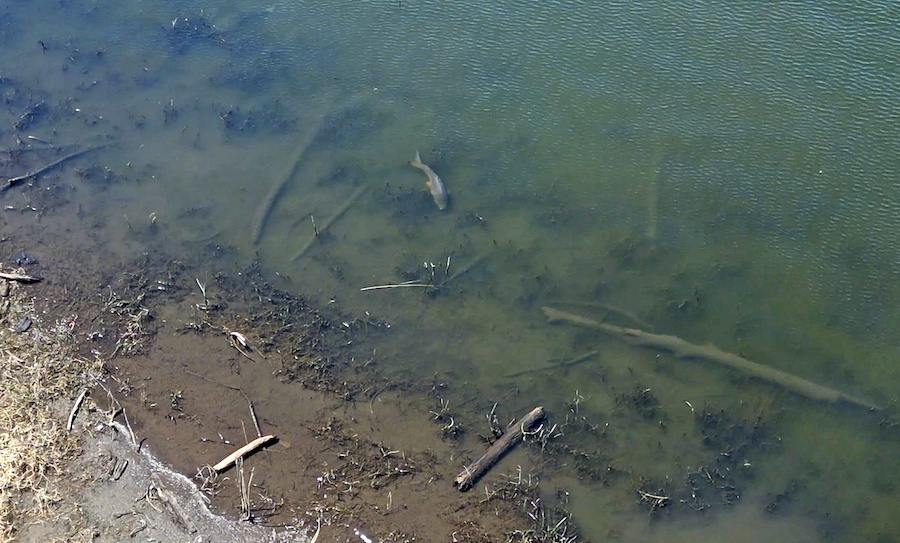
A large carp feeding in the shallows of Wyangala Dam. Their habits seriously degrade our waterways.
Best recent estimates claim that carp may now represent as much as 90% of the sheer biomass of life in the Murray/Darling basin, but they’ve spread far beyond that major outback arterial system. They’re now found in many of our coastal rivers, too — all the way north into Queensland and downstream into saline, tidal waters. And of course, most of our man-made dams, lakes and reservoirs in more temperate latitudes are absolutely heaving with these whiskery horrors.
The carp’s favoured feeding method of vacuuming up sediment from the riverbed and spewing it into the water column eventually suffocates our streams and lakes, undermines banks, uproots vegetation and destroys both the eggs and food sources of many native species. Yes, carp may well thrive in degraded systems, but they also create those degraded conditions. They’re what’s known by science as “ecosystem engineers”… and they’re bloody good at it!
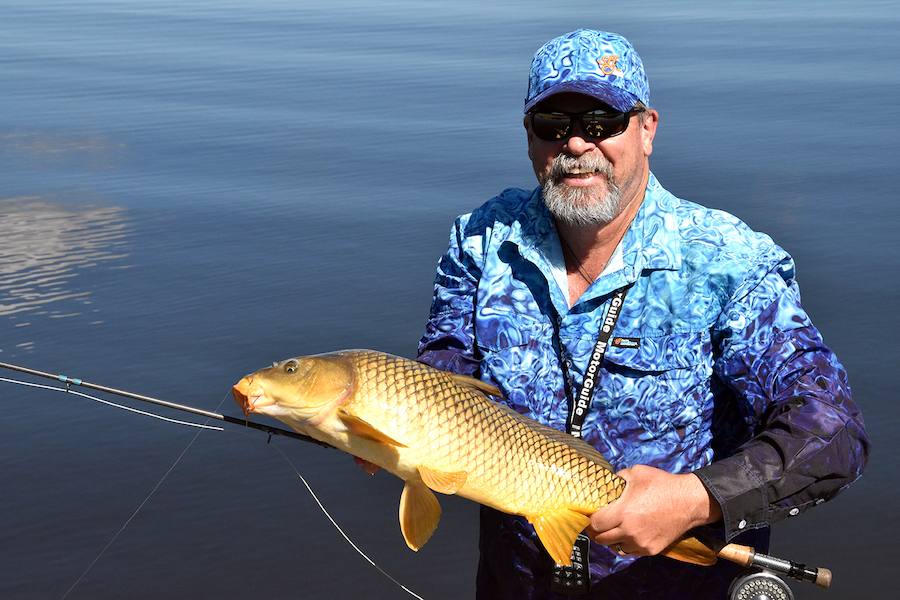
Starlo quite enjoys fly fishing for carp… and humanely dispatches every one of these noxious pests he lands.
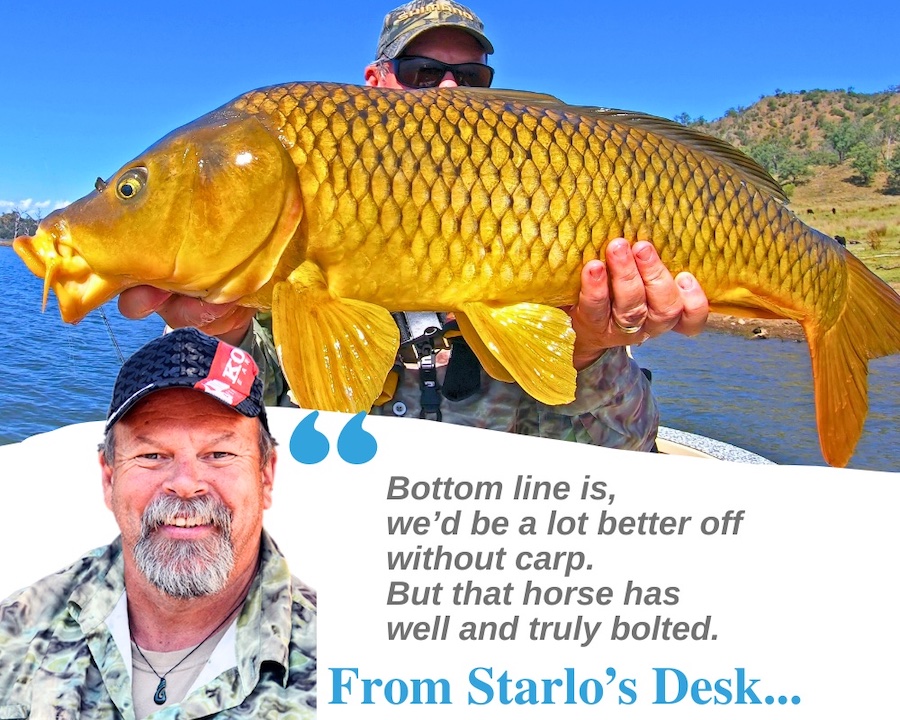
Bottom line is, we’d be a lot better off without carp. But that horse has well and truly bolted. It appears extremely unlikely that we’ll ever rid our waterways of these pests. To the best of my knowledge, that has only ever been successfully achieved in one part of the world: Tasmania’s highland twin lake system of Sorrell and Crescent. Even there — where carp populations weren’t huge and climatic conditions far from ideal for their spread — it took years of intensive effort and millions of taxpayer dollars to finally eradicate them. Doing the same thing on the mainland is an impossible pipedream.
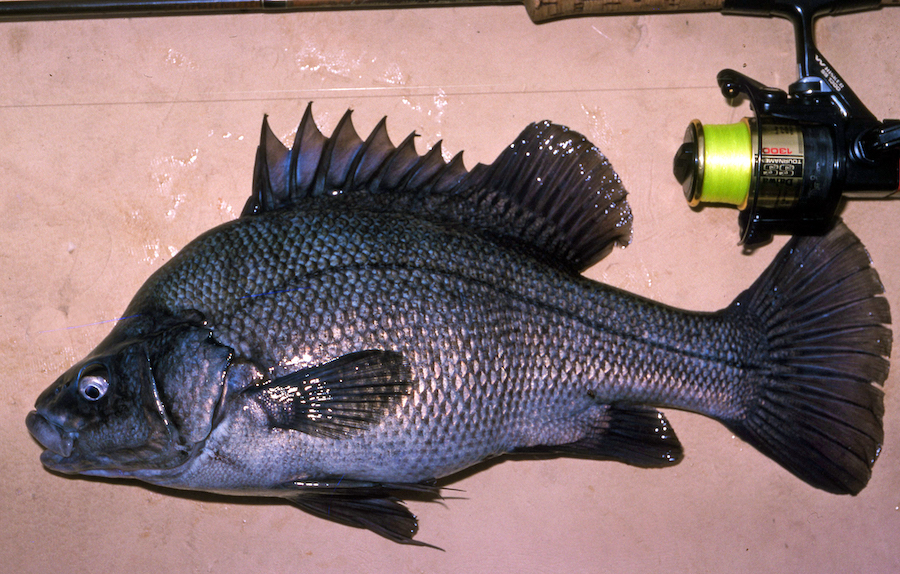
The unique and threatened Macquarie perch has been pushed to the brink by carp, redfin and habitat modification.
The best we can realistically wish for is to temporarily beat carp numbers down to a more manageable level where native species might have a better chance of rebounding and helping to keep them in check. After that we can hopefully wage successive campaigns to reduce the inevitable new spikes in carp populations — similar to the way rabbits are managed on land using biological tools such as myxomatosis and calicivirus (RHDV), or the dreaded prickly pear cactus is kept in check with the help of the cactoblastis grub.
The two best biological tools for doing these jobs on carp appear to be a genetic modification method known as “daughterless carp control”, and a virus called cyprinid herpesvirus 3, which already occurs on every other continent on earth except Australia and Antarctica and is quite specific to carp, with high mortality rates.
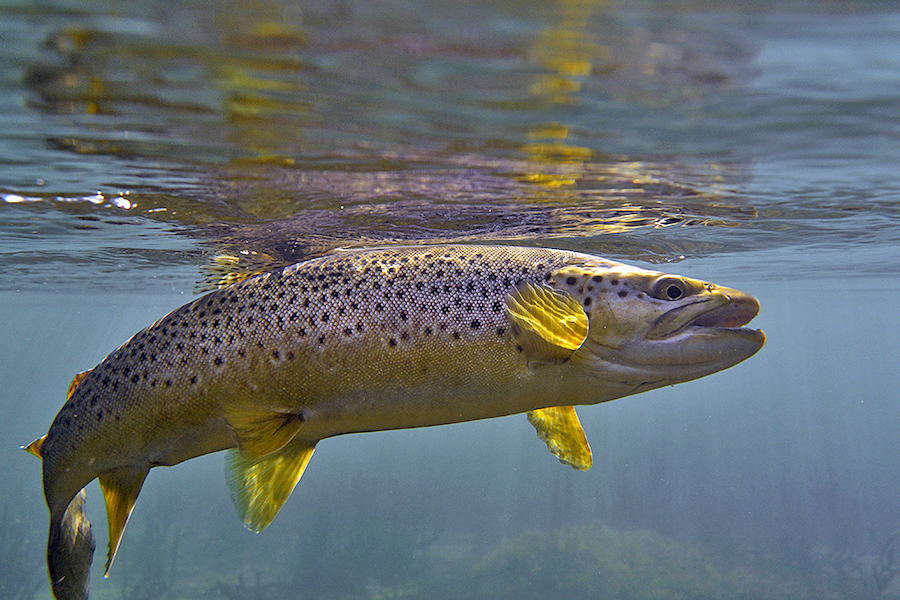
It’s true that introduced trout have also impacted our aquatic fauna, but nowhere near as dramatically as carp. The trout fishery also provides significant economic benefits, unlike carp.
Potentially used in tandem, these two tools could result in a relatively dramatic short to medium term reduction in the total carp biomass. But make no mistake: neither are silver bullets, and they won’t “eradicate” carp. The best result we could realistically hope for would likely be a 60 or 70% reduction in carp numbers for a few years, followed by a bounce-back as the survivors develop resistance to the biological controls, as they inevitably will.
Sadly, governments and scientific bodies have dragged their feet on both these projects for years, at least in part because of the public’s apparent willingness to swallow a cleverly cynical campaign of deceptive propaganda on the part of commercial koi carp breeders and others, who’ve actively spread misinformation about the supposed detrimental impacts of the virus, in particular.
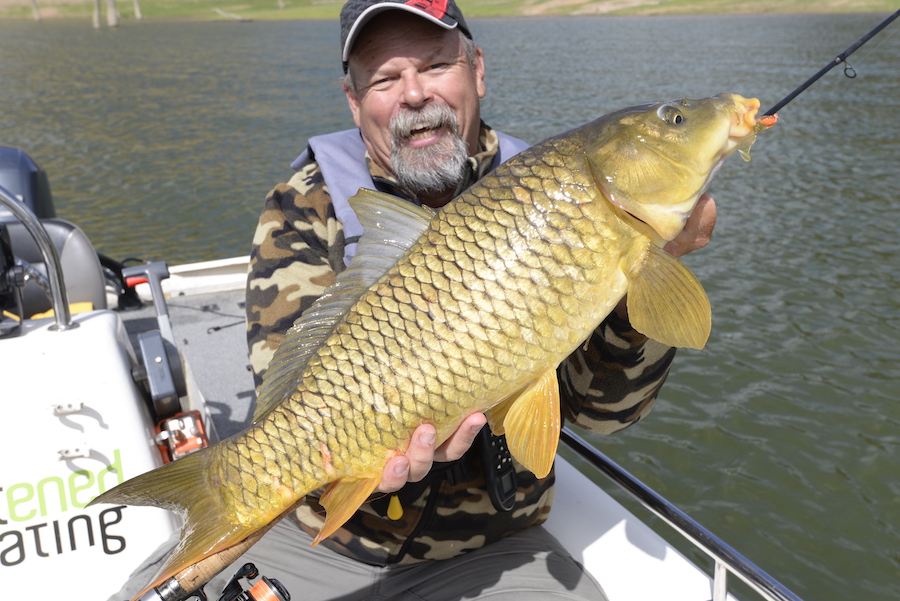
Starlo does his small bit by ridding our waters of yet another carp. Sadly, however, angling pressure has very little impact on their total biomass.
Right now, we seem to have a vague glimmer of hope that something positive might finally start to happen on the carp control front after decades of inactivity, but to be honest I’m not holding my breath.
The Victorian Fisheries Authority are at least talking the talk these days, and they are combining with the Australian River Restoration Centre to conduct an “action summit” on the carp issue in Nagambie at the end of April this year. But don’t get too excited. It’s very likely to be yet another talk fest, and it’s not even open to the public. To say I’m a tad sceptical would be something of an understatement.
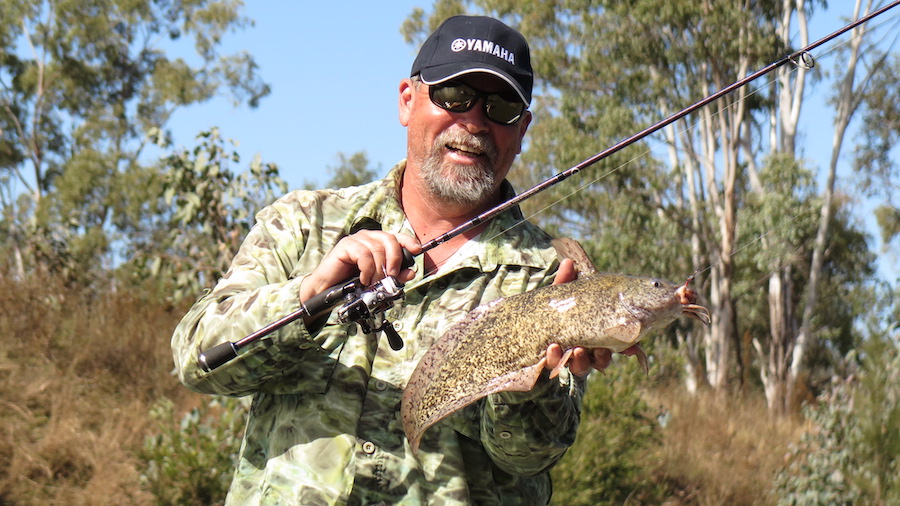
Our ell-tailed catfish or tandan is another native species that has been heavily impacted by the carp plague.
I hope I’m wrong, but I seriously doubt that anything significant will happen on the carp control front in my lifetime. It certainly won’t occur without a massive shift in public perceptions and grass roots attitudes. Sadly, those shifts don’t tend to grow out of closed-door summits or boffin-dominated talk fests.
As I said, I really hope I’m wrong. I dream of a day when our inland rivers are once again dominated by our wonderful native fish, and catching a carp become something of a novelty — much like scoring a big redfin perch is in most parts of their range these days. I grudgingly accept we’ll never be rid of carp, but I’m sure we can do a lot better than we have to date. It just needs a collective will to do so.
Until next time, Tight Lines.
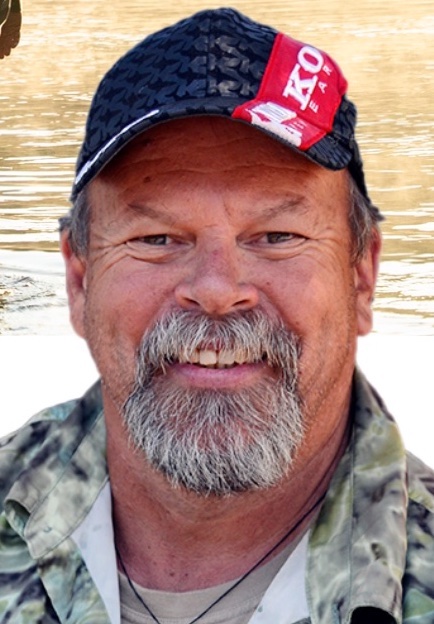
Steve (Starlo) Starling is an Australian sports fishing writer and television personality who has appeared in many of Rex Hunt’s Fishing Adventure programs on the Seven Network.
He has published twenty books on the subject of angling, as well as thousands of magazine articles.
Starlo has scripted and presented many instructional videos and DVDs, and been a Researcher and on-screen presenter for a number of Australian angling and outdoor television programs.
Follow Starlo Gets Reel on Youtube for some of the best, educational and most entertaining fishing viewing on-line.
Click on the banner below for a direct link to the Channel.