The Australia and New Zealand Sales Manager helping bring the Dometic Gyro Stabiliser to the Australian market
When a new piece of onboard technology comes to market, the product itself is only half the story. The other half is how it is introduced, supported and installed, because in the real world, confidence is built at the dock, not in a brochure.
That is the thinking behind the approach Dometic is taking as it brings the Dometic Gyro a gyroscopic stabiliser, officially into the Australian market for the first time. After it’s launch throughout the rest of the world earlier in 2025, rather than rushing to scale, Dometic is putting detailed process, training and customer experience first, and it has the right boating-minded leadership in place to do it.

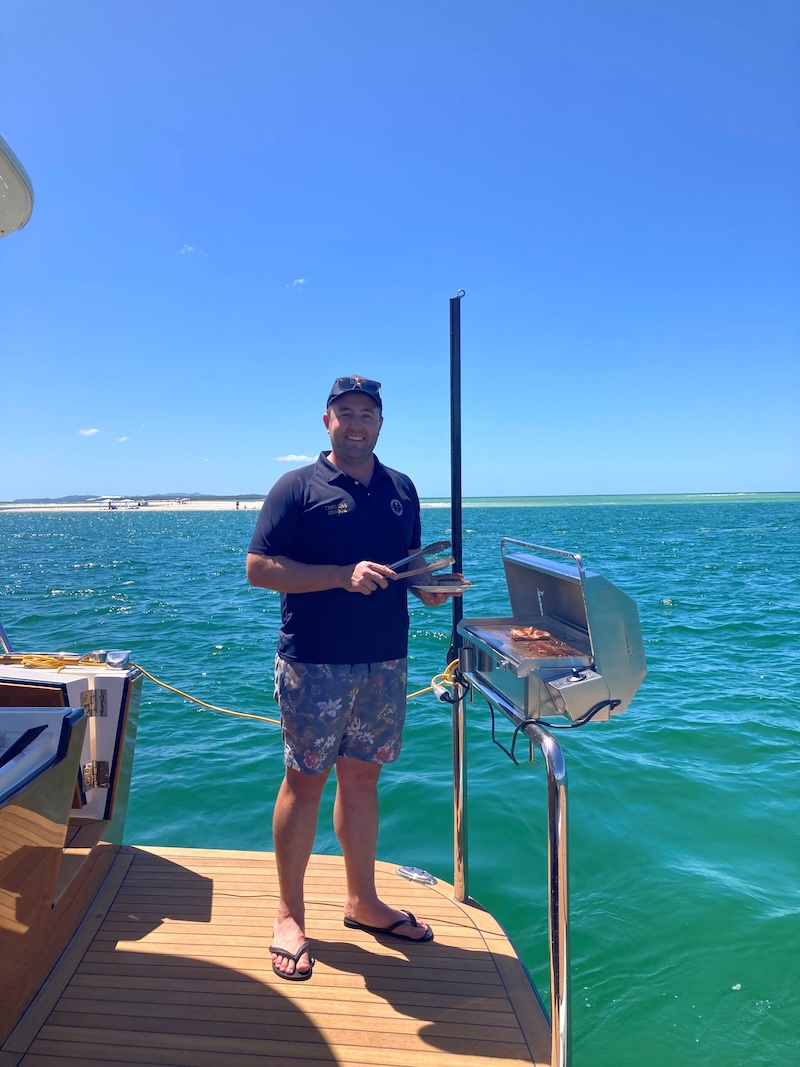
Daniel Alcock, Sales Manager for Australia, New Zealand within Dometic’s Marine Division has a role that sits at the intersection of product sales, taking care of the dealer network, technical capability and customer outcomes, precisely where a stabilisation product needs strong guidance.
Dan’s background is a practical one, built from the engine-room up. An electrician by trade, he quickly moved into marine electronics specialising in High Seas service and repair, then into the technology start-up world working with remote data logging solutions.
From there, he joined BLA as Technical Sales Manager in Queensland before stepping into his current position at Dometic, responsible for distributor and direct marine sales across Australia and New Zealand.
That career path matters because stabilisation is not a “bolt-on” purchase. It intersects with onboard power, controls, mounting considerations, vessel operation and owner expectations. Dan brings knowledge of onboard systems and real on-water experience operating boats across a wide range of sizes, making him well placed to guide the market in a way that protects performance and customer satisfaction.
Dometic’s broader business principles lean heavily on quality delivery and service, and that focus is shaping the Dometic Gyro rollout.
The company has commenced a deliberate journey to ensure Dometic Gyros are delivered and installed into customers’ vessels in a professional, completely customised and consistent way, here the end goal is simple: owners feel they have been looked after, and the product performs as it should.
A key part of that journey is starting with a limited number of specialist installers, dealers whose capability, credibility and service ethos align with Dometic’s philosophy.
The initial dealer appointments are telling.
In Sydney, Barrenjoey Marine Electrics (BME) has been selected to support the introduction. With more than 45 years of experience, BME is known for marine electrical and electronics expertise and for working alongside leading boat manufacturers. Their emphasis on qualified engineers, professional advice and training support matches what a first-wave stabilisation program demands: clear guidance, careful installation and strong after-sales care.
On the Gold Coast, Onboard Electrical (OBE) has been appointed as the other initial specialist dealer. Formed in 2015 by Mark Bunker, OBE quickly built a reputation across private and commercial boating. Based at The Boatworks, the business covers an extensive range of vessels , includes internal electrical design capability and produces CAD drawings for new builds and rewires, exactly the kind of detail orientation that supports quality stabiliser installations.
It’s a clever path to market. Over time, specialist installers will grow throughout the region, but this “limited entry” phase gives Dometic the ability to refine processes and procedures, build consistent customer touchpoints, and ensure the owner journey is aligned with the company’s charter for quality products and services.
For consumers, that should translate into clarity: where to go, what to expect, and who will support them from enquiry through installation and beyond. And for the industry, it’s a signal that Dometic Gyro is being introduced with the professionalism the category requires, backed by strong dealers, and led by someone who understands boats not just as products, but as platforms that owners become custodians of.
Marine Business News sat with Dan; this is what he had to say
Your career has spanned electrical trade work, marine electronics, a technology start-up and technical sales. How has that mix shaped your approach to bringing the Dometic DG3 Gyro Stabiliser to market?
My trade background keeps me grounded and solution-focused.
Marine electronics reinforced the critical importance of reliability and seamless integration. On a vessel, systems must work together effortlessly and perform consistently in demanding conditions.
The start-up experience taught me to move with pace, to iterate, and to stay open to innovation. It built a mindset of continuous improvement.
And technical sales shaped how I listen. Understanding what owners and builders truly value, and communicating that clearly, is just as important as the engineering itself.
Bringing those experiences together means I approach the DG3 with both technical discipline and a strong customer-centric perspective.
When you look at the Australian and New Zealand market today, what problem is the DG3 best positioned to solve for owners and families on the water?
For owners and families across Australia and New Zealand, stability remains one of the biggest barriers to fully enjoying time on the water. Our conditions can shift quickly, and uncomfortable roll can turn an otherwise perfect day into a short one.
The Dometic Gyro is designed to change that. It delivers powerful, responsive stabilisation that makes boating feel calmer, safer and more accessible, particularly for families seeking confidence without complexity.
It effectively turns “I hope the weather holds” into “let’s go anyway”, giving owners more usable days on the water and a far more relaxed experience once they’re there.
From your perspective, what should customers realistically expect to feel or notice once a gyroscopic stabiliser is correctly installed and commissioned?
When a gyroscopic stabiliser is properly installed and commissioned, the change is immediate. The most noticeable difference is the significant reduction in side-to-side motion, removing the fatiguing roll that often limits comfort at anchor.
Movement onboard becomes easier. Entertaining feels more natural. Children can play without constant bracing.
Many owners also report reduced fatigue over the course of a day, because the vessel feels more composed and predictable in varying conditions.
Why did Dometic choose a deliberate, “quality-first” rollout strategy rather than going wide immediately with installations?
We chose a quality-first rollout because long-term performance matters more than short-term scale. A stabiliser represents a significant investment, and customers deserve complete confidence in how it performs.
By working closely with select specialist installers, refining processes and gathering real-world feedback, we ensure every DG3 delivers the smooth, reliable experience expected from Dometic.
Rather than prioritising volume, we focused on building a strong technical and service foundation that supports consistent, high-quality outcomes from day one.
What were the key criteria for appointing the first two specialist dealers, BME and OBE, and what makes them the right partners for this phase?
We appointed BME and OBE because both bring deep marine-electrical expertise, strong reputations and the technical capability required for a quality-led rollout.
BME, based in Pittwater, NSW, is widely respected for premium marine electrical and electronics installations, supported by highly skilled technicians experienced in complex integration projects.
OBE, located onsite at The Boat Works in Queensland, combines extensive vessel experience with meticulous installation standards, strong industry partnerships and in-house CAD capability for custom designs and new builds.
Together, they set the benchmark for installation quality, consistency and customer experience as we expand the DG3 programme more broadly.
What does a great DG3 installation look like in practice, from first conversation through to sea trial and handover?
A great installation feels structured, transparent and collaborative from the outset.
It begins with a detailed discussion about how the owner uses their vessel, what challenges they experience and what improved stability would mean for them. From there, the installer carefully plans positioning, structural integration, power management and system connectivity to ensure everything aligns seamlessly.
The installation itself is precise and well-communicated. On sea trial, the transformation becomes tangible, owners feel the vessel settle, roll diminish and confidence increase.
Handover focuses on clarity: operation, expectations and ongoing support are explained thoroughly so owners leave informed and assured.
How will Dometic support dealers and installers to ensure consistency across different boat types and use cases?
Consistency is a priority. We provide hands-on technical training, defined installation standards and ongoing engineering support to ensure installers have guidance at every stage.
We are also developing shared tools, including templates, wiring schematics and structured checklists, to maintain alignment across varying vessel types.
Post-installation, we remain closely engaged with dealers, reviewing feedback, sharing best practice and refining processes collaboratively. The objective is straightforward: every owner should experience the same level of performance and professionalism, regardless of vessel or installer.
For owners comparing stabilisation options, what should they ask a dealer or installer?
Owners should ask clear, practical questions.
How quickly does the system reach effective stabilisation? The DG3 offers industry-leading spin-up time and up to 40% lower power consumption, delivering tangible real-world advantages.
What maintenance is required? With its all-electric actuator, absence of hydraulic systems and titanium heat exchanger, ongoing servicing requirements are significantly reduced.
How well does it integrate with the vessel’s electrical architecture? The DG3 operates on 12, 24 or 48 volts and connects via Ethernet, supporting straightforward integration and future serviceability.
These questions help owners evaluate both the product and the long-term ownership pathway.
How will Dometic capture feedback from early customers and dealers, and how will that influence the broader rollout?
Feedback is central to the rollout strategy. We maintain close engagement with early customers and specialist dealers through structured follow-ups, sea-trial check-ins and installer debriefs.
Those real-world insights directly inform refinements to training, documentation and installation standards.
We also place strong emphasis on after-sales support, as ongoing conversations often reveal the most practical improvements. This continuous feedback loop ensures the broader regional rollout reflects real operational experience, not assumptions.
On a personal note: what keeps you passionate about this space?
What continues to motivate me is seeing the impact a well-engineered solution can have on someone’s boating experience. There’s a noticeable moment during sea trials when you see owners relax — shoulders drop, movement becomes easier and the vessel feels composed.
Hearing later that families are spending more time on the water, with greater confidence and comfort, is incredibly rewarding. Helping owners experience their boat the way they always envisioned is what makes this industry so compelling.
For more information about Dometic, visit their website HERE