Article by Danny Casey
Now that I am semi-retired with a tad more time to kill, I thought it’d be timely to again crank up my chronicling of innovative or epoch-making outboards of the past.
I think I’ll firstly dissect the revolutionary DT200 V6 Exanté – this was the famous “talking” outboard with two spark plugs for each of its six cylinders. So let’s examine why the Exanté was so unique and ground-breaking…
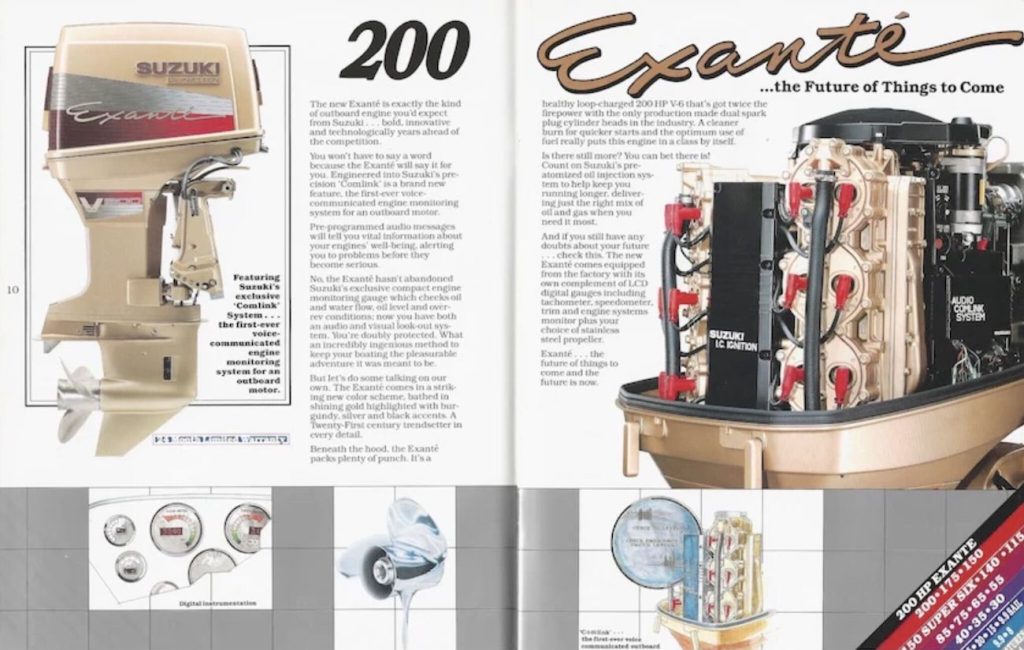
Introduced in 1987 (and produced up until the 1990 model year), the DT200 Exanté (there is no such word, with accented “e” or otherwise, but it wasn’t a bad attempt at creating a somewhat elite, separate marque) was a derivative of the DT150/200 series – specifically the bass-specific DT150SS (Super Six), which had twin-plug cylinder heads (i.e. six per bank). The main difference was that the DT150SS had boron-composite cylinder bores (which could not be rebored) whereas the Exanté incorporated conventional sleeves in which oversize pistons could eventually be installed.
Unusually, the Exanté incorporated a gimmicky AM radio (with fewer channels than a cat has fingers!) and a limited-menu audio warning system that advised the operator to check the fitment of safety lanyard, check temperature and check oil level (like all Suzukis of that era, the Exanté had an ultra-reliable, gravity-fed oil injection system which was head and shoulders above any other brand).
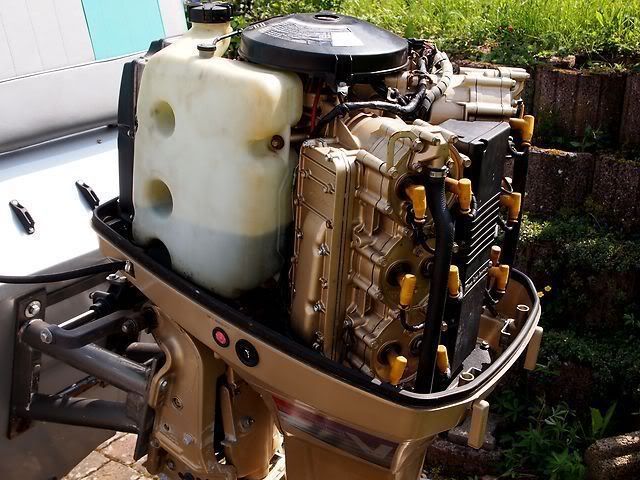
The twin-spark ignition system (extremely reliable but not specifically due to having two plugs per cylinder, which fired simultaneously) had no discernible performance benefit, except that the loss of power from one plug would not result in a dead cylinder. The likes of Alfa Romeo twin-spark systems, for example, fired at TDC and then ATDC, to fully “purge” the charge in the cylinder). Despite twin plugs, which should have theoretically produced a cleaner, more thorough burn, the Exanté (like the standard single-spark DT200) was quite a thirsty motor – the triple double-throat Mikuni carbs being deliberately “over-jetted” to cool the pistons in what was quite a long-stroke motor.
Thirst aside, another issue was a tendency to sometimes smoke prodigiously and chokingly at idle. As most Exantés were conventional long shaft with a 20″ leg (and therefore mounted on lighter boats), this meant the exhaust relief port was, in many installations, buried too deeply. The smoking malaise – irksome rather than terminal – was decisively remedied, however, by switching to the fabled, magical elixir that was Suzuki CCI Green oil!
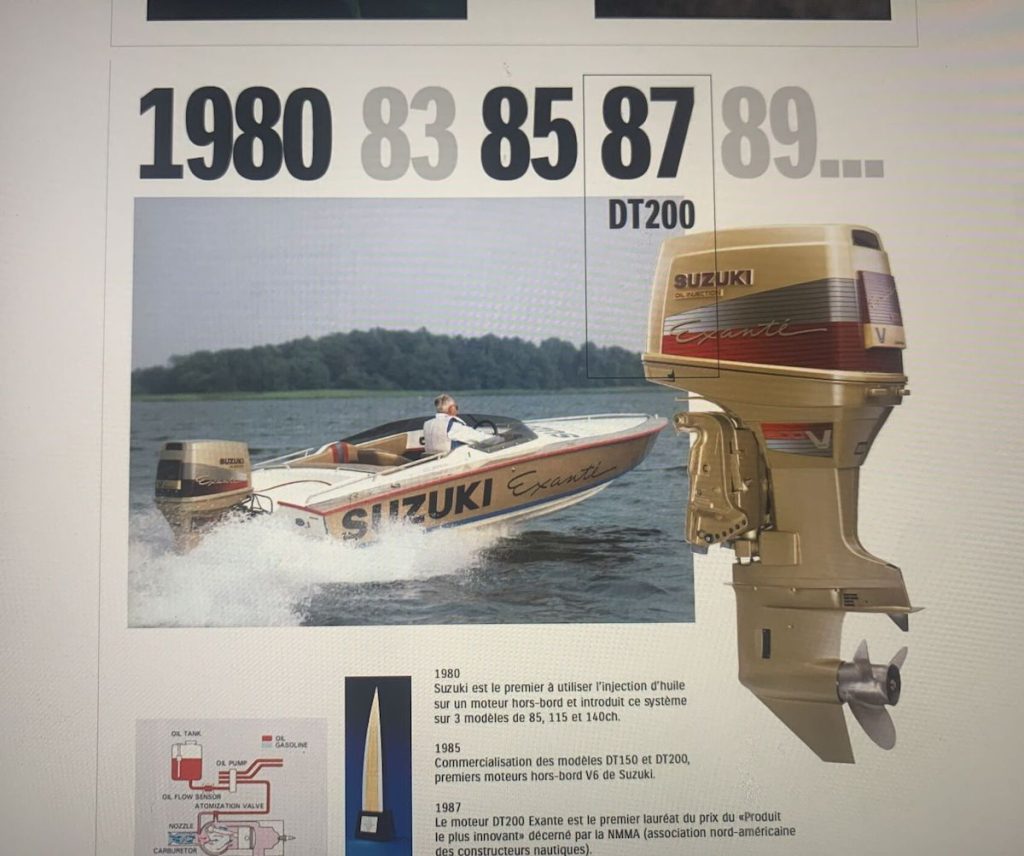
Looks-wise, I liked this motor, the only Suzuki outboard ever to have been painted gold, with the gold castings and cowling complemented by quite sophisticated, distinctive maroon and grey decals – à la the 1973 Evinrude Starflite, perhaps, but not unattractive.
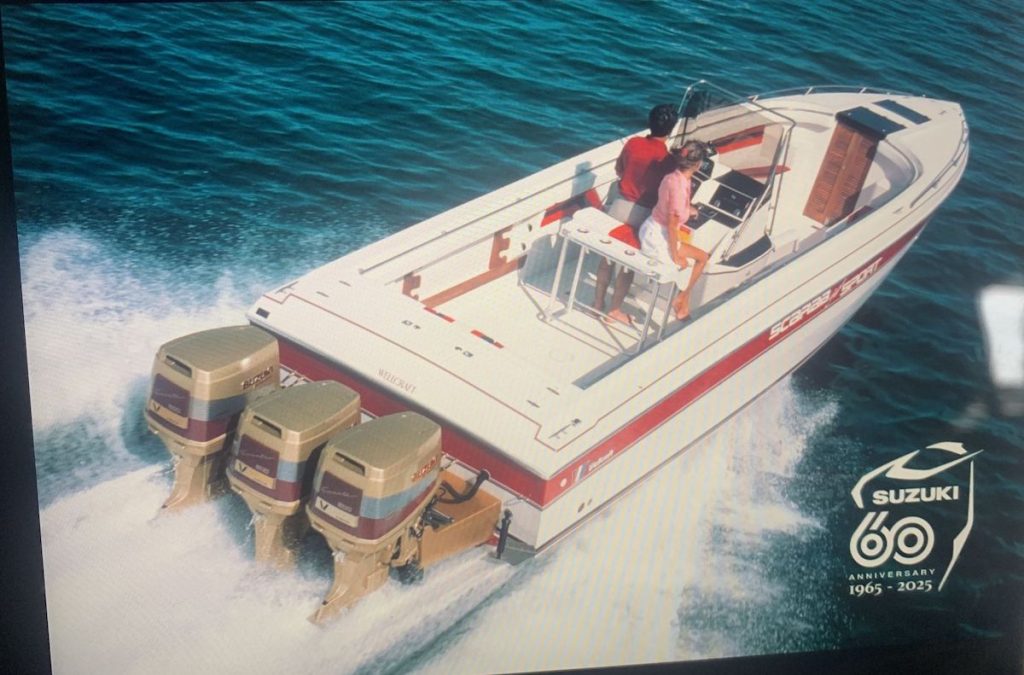
Apologies once more for the quality of the images, which are again scanned from period brochures or press articles, and I hope this doesn’t diminish your enjoyment of the piece.
Danny Casey is highly experienced, undoubtedly idiosyncratic, and immensely knowledgeable about things mechanical, new or old. His knowledge and passion are as a result of spending his whole life in or around anything power-driven – especially marine engines. His passion for boating is second to none, with his life a montage of fabulous memories from decades spent in or around water and boats, both here and in Europe. Danny has spent myriad years in the recreational marine industry in a varied career in which he has bamboozled colleagues and competitors alike with his well-honed insight.

His mellifluous Irish accent, however, has at times been known to become somewhat less intelligible in occasional attempts at deliberate vagueness or when trying to prevent others from proffering a counter-argument or even getting a word in. Frank and to-the-point, but with a heart of gold, it can be hard to convince Danny to put pen to paper to share his knowledge. Marine Business News is grateful for his contributions. Connect with Danny through LinkedIn.