By Danny Casey.
In the 1960s through to the late 1970s, Outboard Marine Corporation (manufacturers of Johnson and Evinrude motors) could do no wrong.
They supplied over 30% of all the outboards sold worldwide, with Johnson the biggest single brand by far.
Then, slowly, in the late 1960s and 1970s, the drip-drip influx of Japanese outboards started. It was hesitant and seemed patchy and amateurish at first, with engines topping out at 25 hp, so there was no need for Mercury and OMC to worry – yet. By the mid-’70s, however, Yamaha, Tohatsu and Suzuki had begun to augment their ranges with twin-cylinder models from 50-65 hp.
However, in 1978, Yamaha introduced a ground-breaking outboard that I maintain had serious ramifications for the US manufacturers, and for OMC especially.
That motor was the 3-cylinder 85A, which is still, in various configurations, in production to this day.
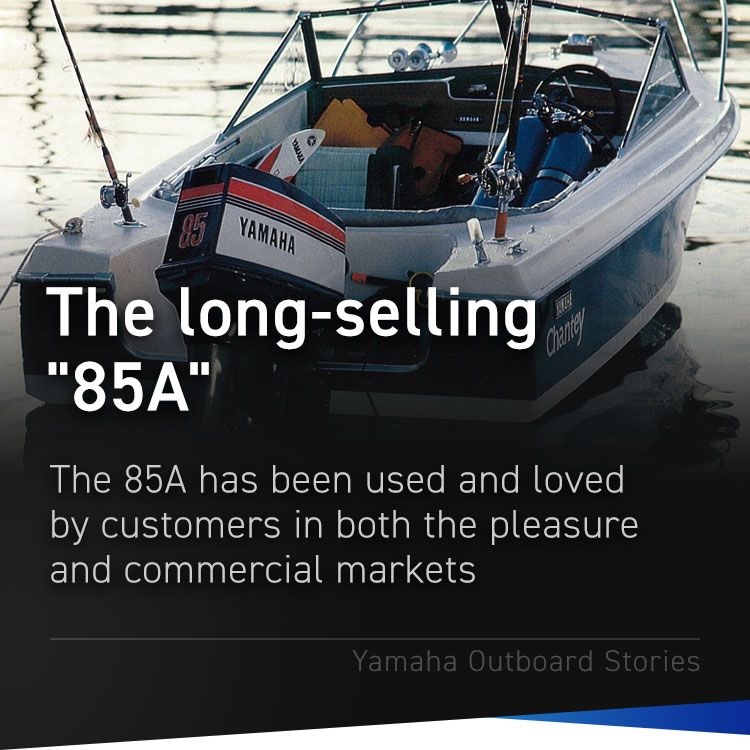
Although the Japanese manufacturers would eventually match and even surpass the power offerings from the US, it is, I believe, the Yamaha 85A (later 90A) that started the slow, inexorable slide into oblivion for OMC. At that time, OMC’s offering in the 85/90 hp category was the old 1,518 cc crossflow V4, which shared a platform with its larger 1,632 cc 115/135/140 hp siblings. It was torquey and, being a 90-degree design, was smooth – albeit heavy, bulky, thirsty and slow. Mercury at that time used a cutdown 80/85 hp 4-cylinder version of the inline-6 “Tower of Power” – lighter, faster, and more compact than the OMC, but still old technology.
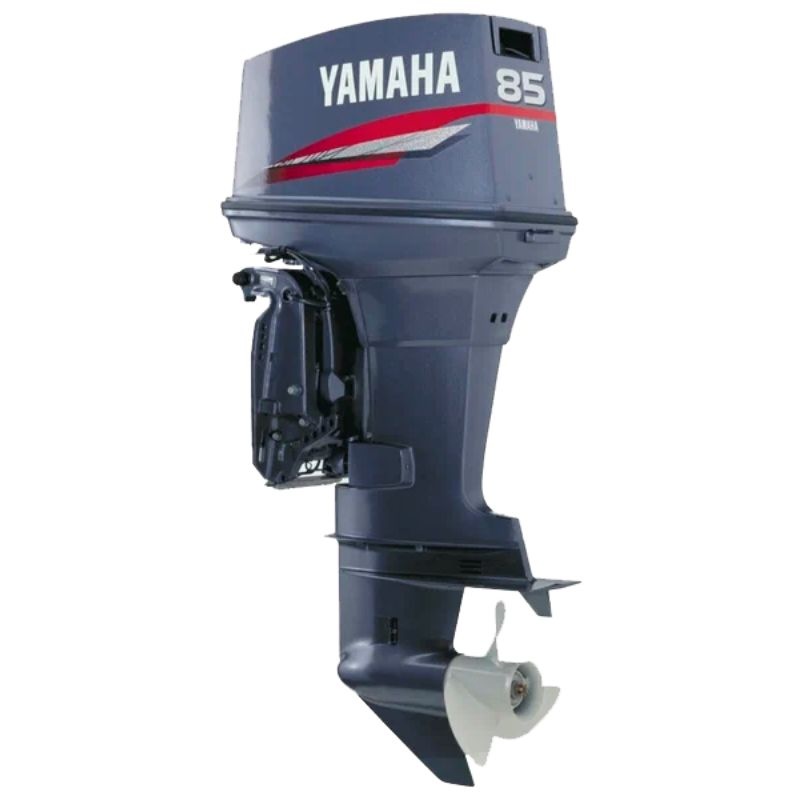
The Yamaha 85A was both revolutionary and revelatory – an 1,140 cc engine which was slim, compact sleek, light and, above all, very fast (even allowing for Yamaha’s rudimentary propeller selection in those early days) – and it liked to rev.
Mercury eventually began to make modern, compact, lightweight 3-cylinder outboards in the 70-90 hp segment, but OMC never did and never even tried – and this is what started their descent into oblivion. Eventually the three main Japanese 2-stroke manufacturers (plus Mercury) started to outsell OMC in that segment.
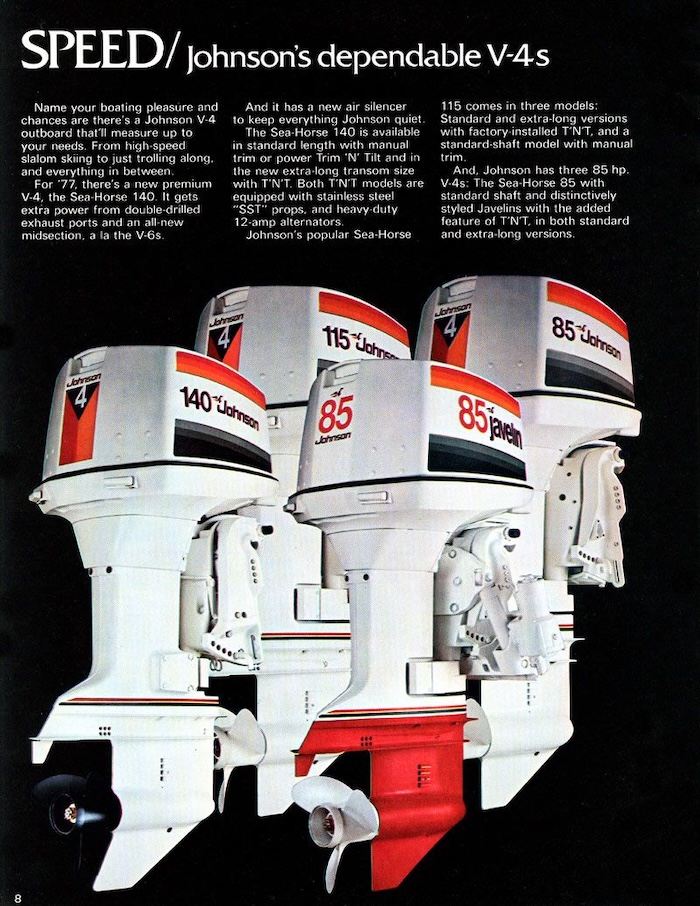
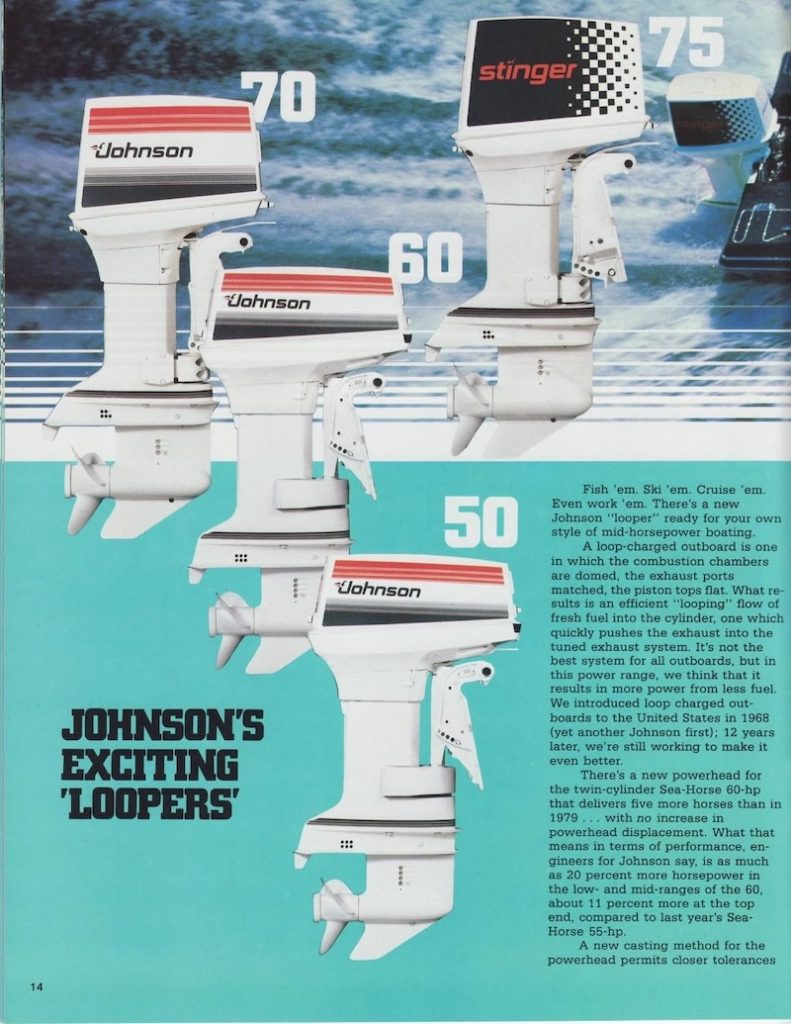
But when it came to revitalise their 90 hp offering, what did OMC do? They utilised a new loop-charged 1.7 litre V4. This was pure folly, as had they known it (and some of their key engineers must surely have realised this), the answer was right under their noses in the form of an existing, reliable production unit – the loop-charged, twin-cylinder 737 cc 60 hp. How hard would it have been to add an extra cylinder to that motor to bring it up to 85/90 hp and thus take the fight to the Japanese? Nobody at OMC seemed to have considered the need for such a vital product.
And then OMC started to run out of ingenuity, momentum, luck and, eventually, money. A tragic end for the company that, in 1968, gave the world the original, epoch-making 3-cylinder 814 cc “looper” – the best 2-stroke outboard of all time.
Danny Casey is highly experienced, undoubtedly idiosyncratic, and immensely knowledgeable about things mechanical, new or old. His knowledge and passion are as a result of spending his whole life in or around anything power-driven – especially marine engines. His passion for boating is second to none, with his life a montage of fabulous memories from decades spent in or around water and boats, both here and in Europe. Danny has spent myriad years in the recreational marine industry in a varied career in which he has bamboozled colleagues and competitors alike with his well-honed insight.

His mellifluous Irish accent, however, has at times been known to become somewhat less intelligible in occasional attempts at deliberate vagueness or when trying to prevent others from proffering a counter-argument or even getting a word in. Frank and to-the-point, but with a heart of gold, it can be hard to convince Danny to put pen to paper to share his knowledge. Marine Business News is grateful for his contributions. Connect with Danny through LinkedIn.