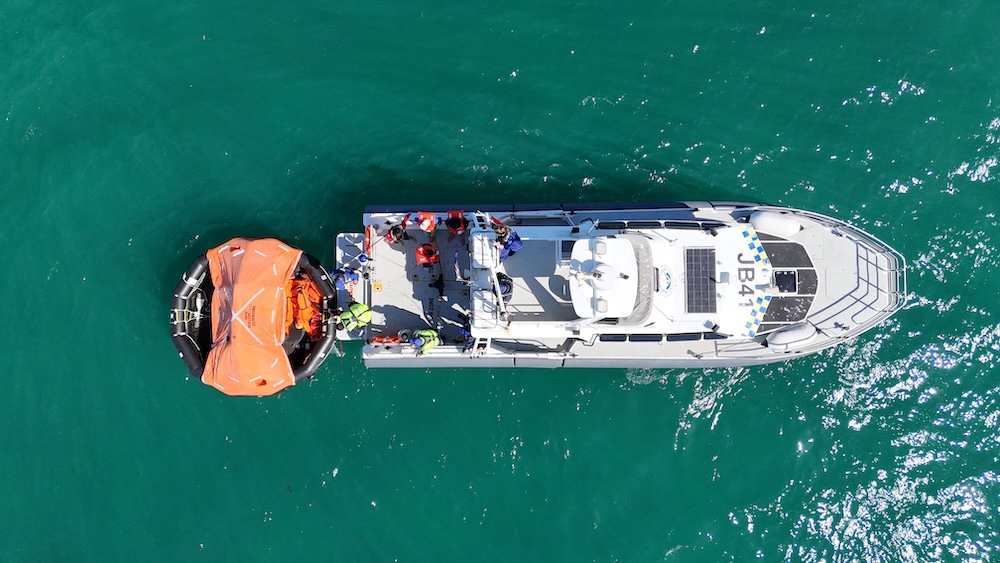
Ten people were thrown into a life raft off Jervis Bay as a simulated whale strike sent a vessel to the bottom, but this time the people waiting to be rescued were real.
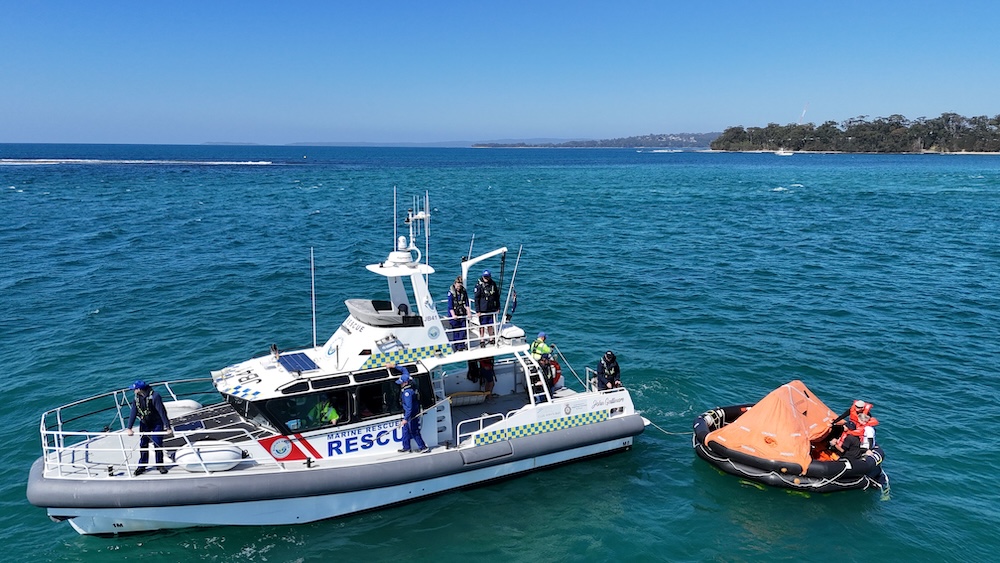
Six Surf Life Saving NSW Bronze Medallion members volunteered to become simulated patients alongside four manikins in a demanding mass casualty scenario that formed part of a major Marine Rescue NSW search and rescue exercise (SAREX) at Jervis Bay today.
The exercise brought more than 70 Marine Rescue NSW volunteers and staff together with NSW Police Marine Area Command, Surf Life Saving NSW, and the Australian Federal Police to test how they would respond when multiple lives were suddenly at risk.
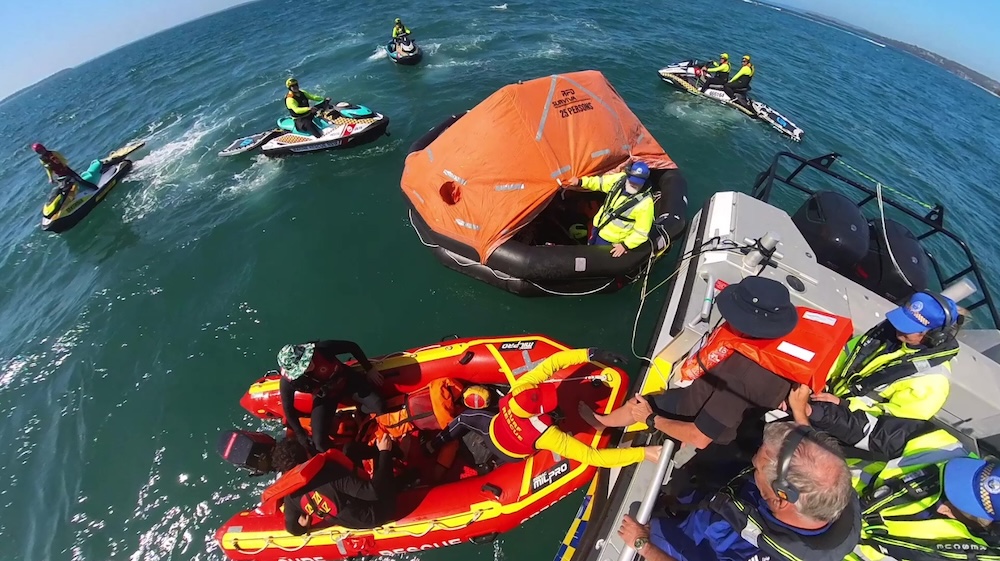
It was the first time Marine Rescue NSW had incorporated a live rescue involving multiple people into a SAREX, taking the realism and pressure to a new level.
Marine Rescue NSW Inspector Stuart Massey said having real people in the life raft changed the dynamic for crews.
“This was about as close as we can get to the real thing without people actually being in danger,” Inspector Massey said.
“Knowing there were 10 people in that life raft, with six real people acting as casualties, added a completely different level of realism and pressure for our crews.
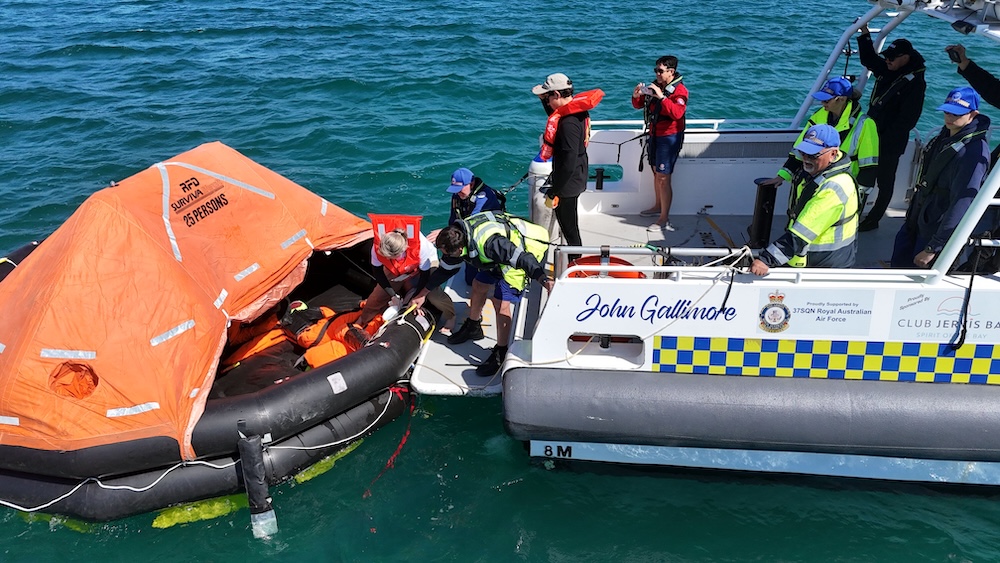
“They had to find the life raft, assess what they were confronted with, triage the patients and work out the safest and most effective way to get everyone off the raft and onto rescue vessels.
“That is the reality of search and rescue, you don’t get to pause the clock, reset the scenario and start again.”
The life raft scenario was activated while crews were already engaged in a large-scale search for five missing sailors.
The initial scenario simulated a racing yacht returning from the Sydney to Hobart after encountering a storm off Jervis Bay.
Five crew members were believed to have been swept overboard after the vessel sustained damage, prompting a MAYDAY and the activation of all available Marine Rescue NSW assets from Port Kembla to Kioloa.
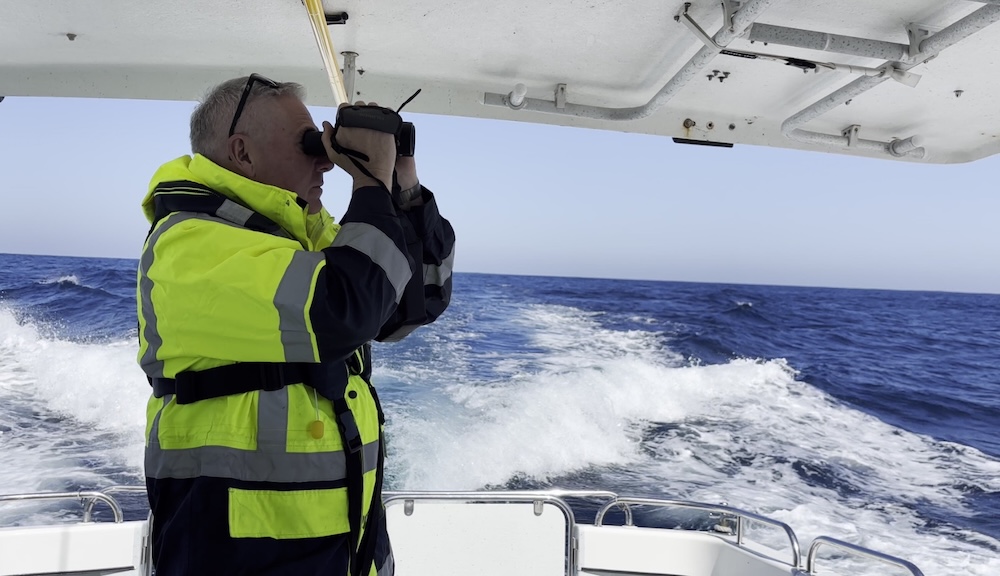
Fourteen Marine Rescue NSW vessels, seven rescue boats and seven rescue watercraft (jet skis) took part, supported by Surf Life Saving NSW jet skis, and an Australian Federal Police vessel.
Crews searched an offshore area of approximately 120 square nautical miles from Beecroft Head to Steamers Beach, while another 30-square-nautical-mile search was conducted inside Jervis Bay (from Green Patch Beach to Honeymoon Bay).
All five missing sailors, represented by manikins, were located, along with other objects including liferings and personal flotation devices.
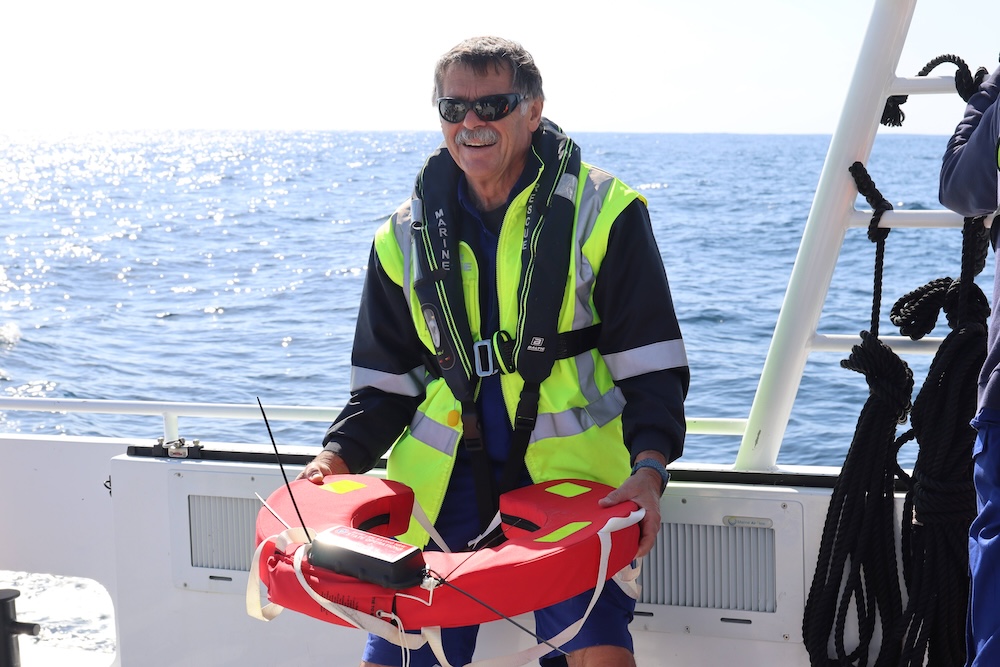
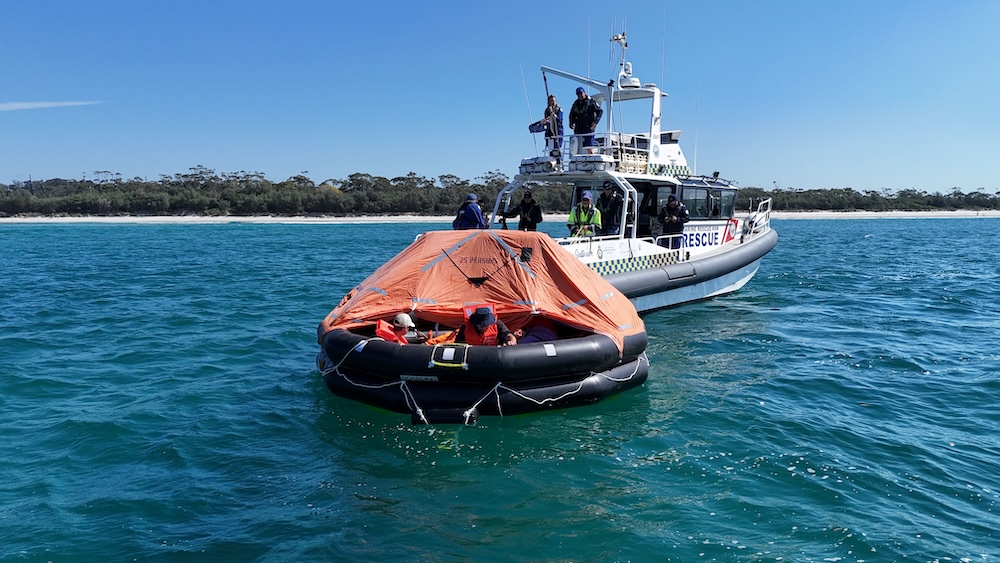
As the first search continued, crews were suddenly confronted with the second MAYDAY, a simulated whale-watching vessel had been struck by a breaching whale, was taking on water and sank.
The 10 people on board abandoned the vessel in a life raft.
Multiple rescue vessels were redeployed and located the raft off Myola Beach.
The survivors were transferred to rescue vessels and taken to Huskisson Wharf for treatment.
The casualties presented with a range of conditions including hypothermia, leg injuries, lacerations, dehydration and head and back injuries.
Inspector Massey said the exercise deliberately recreated the confusion and competing priorities crews can face during major incidents.
“You never know what is going to happen next in a real emergency,” he said.
“While crews were already committed to a large search, they were suddenly presented with another MAYDAY involving 10 people in a life raft.
“That tested their ability to adapt, communicate, prioritise and work together under pressure.
“The crews did an exceptional job. They had to rapidly assess the situation, triage the patients and safely extract 10 people from a life raft and they did exactly what we train them to do.”
The exercise also put Marine Rescue NSW’s volunteer radio operators under pressure, with communications managed from the Marine Rescue Jervis Bay base at Voyager Park alongside Marine Rescue NSW staff and officers from NSW Police Marine Area Command.
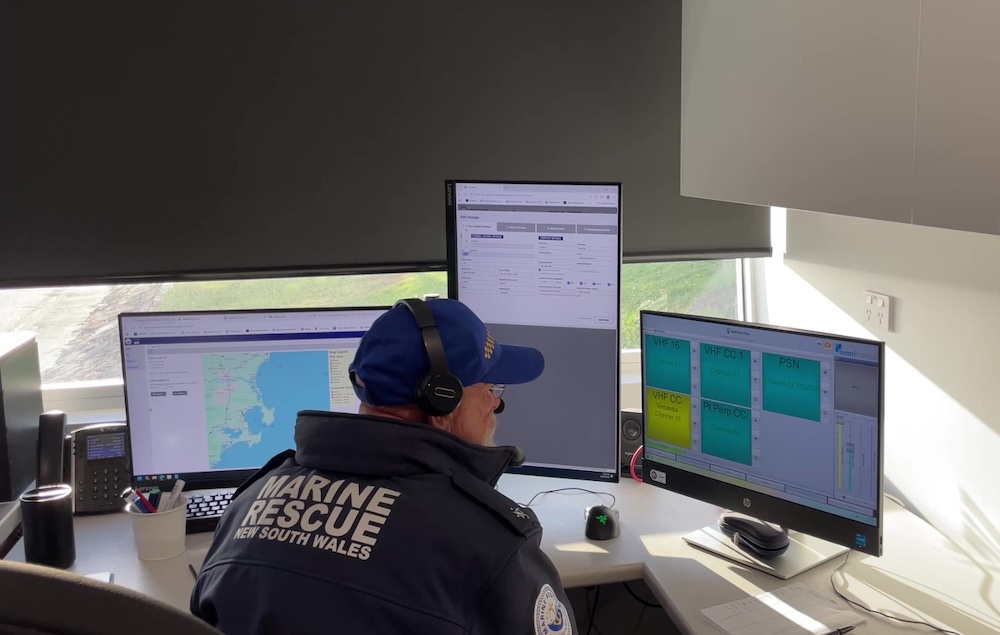
Inspector Massey said communications were critical to the successful outcome.
“When you have multiple vessels, multiple agencies and multiple search areas operating at the same time, communication can be the difference between a coordinated response and chaos,” he said.
“Our radio operators maintained clear and concise communications throughout the exercise, supporting the crews on the water and helping keep the operation coordinated.”
NSW Police Marine Area Command Inspector Stephen Wye said the exercise highlighted the importance of rescue agencies being able to work seamlessly together before facing a real emergency.
“Exercises like this are so important to prepare for real-life search and rescue missions which have numerous variables and are never the same.
“Today gave everyone the opportunity to work together under pressure, test our systems and understand how each agency can contribute when lives are at risk.”
Inspector Wye said the realism of the scenarios was particularly valuable.
“Having real people acting as casualties made the second scenario much more dynamic.
“It required crews to respond to the people in front of them, assess their individual needs and safely manage a mass casualty situation.
“That is the sort of pressure emergency responders can face in the real world.”
Marine Rescue NSW volunteers from Port Kembla, Shellharbour, Shoalhaven, Jervis Bay, Sussex Inlet, Ulladulla and Kioloa took part in the exercise.
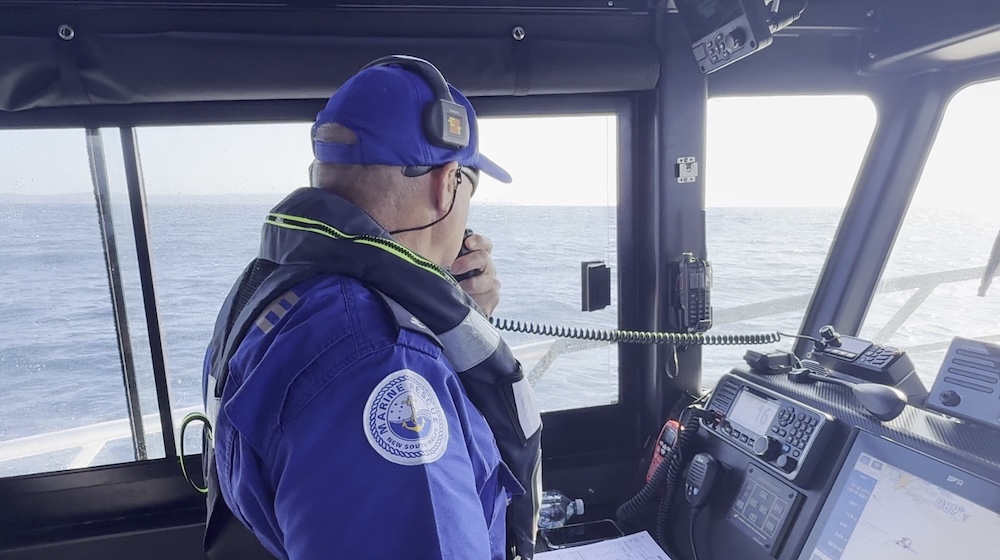
Inspector Massey said the lessons from the exercise would be used to further strengthen Marine Rescue NSW’s search and rescue capability.
“Our volunteers train for the day when someone makes that MAYDAY call and lives are in danger,” he said.
“Today was about putting that training under pressure, working with our emergency services partners and identifying what we can do even better.
“The scenarios may have been simulated, but the lessons are very real.
“When the real call comes, we need our people to be sharp, calm and ready to act, because for the person waiting to be rescued, there is nothing simulated about it,” Inspector Massey said.
Marine Rescue NSW is a volunteer‑based, not‑for‑profit professional organisation dedicated to keeping boaters safe across the state. 3,400 trained volunteers support communities through search and rescue operations, marine radio monitoring and boating safety education.