For most boat owners, making an insurance claim begins with a phone call and the hope that their vessel can be repaired and returned to the water as quickly as possible. What follows, however, can be far more involved than many people realise.
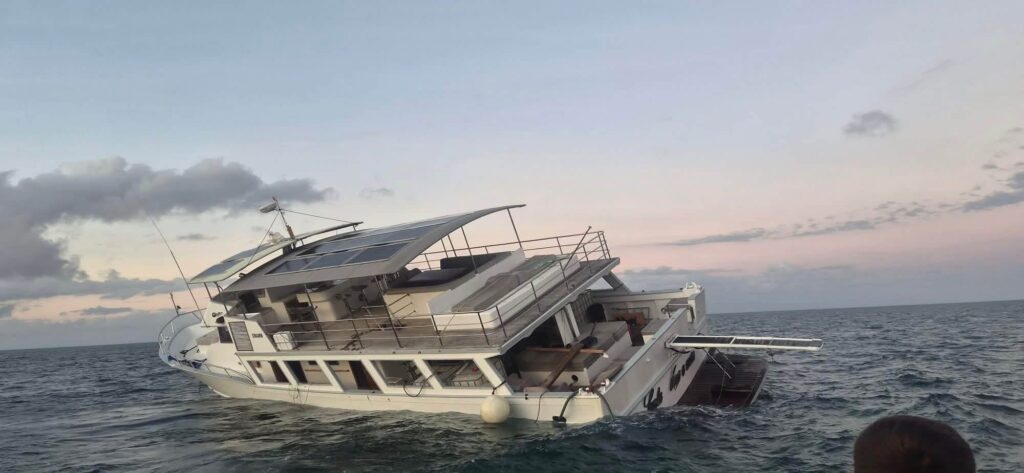
Unlike many other insurance claims, damage to a boat can require the combined expertise of surveyors, repairers, shipwrights, mechanics, electricians, riggers, salvage contractors and specialist suppliers. The vessel’s location, the weather, access to repair facilities and the availability of replacement parts can all influence how the claim progresses.
In an earlier discussion with Marine Business News, Pantaenius Australia Managing Director James MacPhail explained why choosing appropriate marine insurance, and understanding what it covers, is so important. This time, we asked him to take us behind the scenes and explain what happens after an incident is reported: from the immediate response and damage assessment through to repairs, salvage, settlement and, where another party is responsible, the recovery of costs.
A look behind the claims process
Most experienced boat owners know that getting a boat repaired is rarely as simple as dropping it off at the nearest workshop.
Depending on the damage, you might be dealing with a haul-out, surveyor, shipwright, electrician, rigger, mechanic, specialist supplier, crane operator or salvage contractor, sometimes several at once. If the boat is overseas, remote or sitting somewhere it shouldn’t be, the logistics become another challenge altogether.
What isn’t always visible, however, is how much work happens behind the scenes to coordinate all of this and get a claim from the initial incident through to repair, salvage or settlement.
Here’s a closer look at what happens once a marine claim is lodged.
The typical steps
After an incident, the immediate priority is the vessel and the people around it.
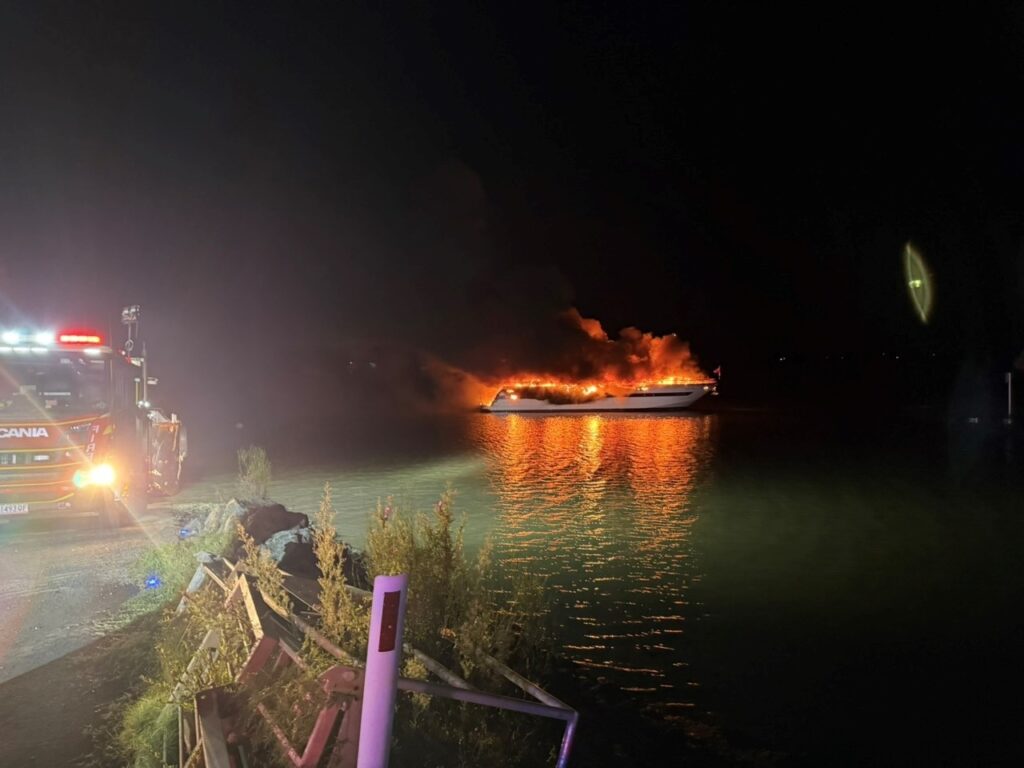
A collision, grounding or severe weather event can leave a boat taking on water, sitting in an exposed location or at risk of further damage. Before anyone is talking about permanent repairs, there may be emergency towing, pumping, temporary repairs, securing lines or moving the vessel to a safer location.
Where the boat is matters enormously. A vessel damaged alongside a marina is one thing. A vessel aground on a reef, sitting in shallow water or stranded in a remote location presents an entirely different set of problems. Once the immediate situation is under control, the claims process can properly begin.
The next step is establishing the extent and nature of the damage.
Depending on the circumstances, a marine surveyor or other specialist may need to be appointed to inspect the vessel, determine the likely scope of repairs and provide technical advice. From there, repair plans and estimates can start to take shape. This is where marine claims can become considerably more involved than many other types of insurance claim.
There is rarely just one person involved in repairing a boat
A substantial marine repair can involve a surprising number of moving parts. You as the boat owner, the yard, or your insurer may need to coordinate various different trades. Parts may need to be sourced locally or internationally. The vessel may need to be lifted, stored or moved between facilities. Additional damage may be discovered once work gets underway.
The marine insurer’s role is typically not as simple as receiving a repair invoice at the end. There can be ongoing conversations with the boat owner, surveyor, repairer, suppliers and other specialists to establish what needs to be done, what is reasonable and what is actually required to return the vessel to its pre-loss condition.
The costs involved in marine repairs can also vary significantly. Two boats can sustain similar damage but have very different repair costs depending on their location, access, availability of parts, slipway or cranage fees and, of course, the labour rates of different contractors. Even something that sounds as straightforward as replacing damaged electronics can become far more complex when the current replacement model isn’t compatible with the boat’s existing setup. In some cases, finding a suitable solution may mean sourcing refurbished or compatible components, modifying the existing installation or bringing in a specialist trade to get everything working together again.
For an insurer handling marine claims, understanding these nuances is critical to finding practical solutions and keeping a claim moving. This is one of the key differences that can come with specialist marine insurance. When your claims team understands boats and how they are built, maintained and repaired, they are better placed to understand why a particular repair, contractor or piece of equipment may be necessary, even when it isn’t immediately obvious from the initial damage assessment.
When the boat needs to be salvaged
Some claims don’t begin with a repairable boat sitting conveniently in a marina. A vessel may be aground, partially submerged, sunk at anchor, sitting on rocks or stranded somewhere with limited access. In these situations, salvage becomes the first challenge.
Weather and water conditions can have a major impact. Swell, wind, tides, currents, depth and the surrounding seabed can determine whether a salvage operation is possible, when it can happen and what equipment will be required. A salvage contractor may need pumps, dive teams, lifting equipment, barges, cranes or specialised towing vessels. Sometimes a boat can be refloated and towed away. Other times the location or condition of the vessel makes that impossible.
And then there is the question: what happens when the vessel is a total loss?
Total loss doesn’t necessarily mean the job is over. It might seem logical that once a vessel has been declared a total loss, the difficult part is finished but in marine insurance, it can be quite the opposite.
If the vessel is wrecked or stranded, it may still need to be removed, and wreck removal can be a substantial operation in its own right. A large vessel cannot necessarily be lifted in one piece. Depending on its location and condition, it may need to be stabilised, refloated, dismantled or cut into sections before it can be removed. Access for cranes or barges can be limited, particularly in remote locations or areas without suitable marine infrastructure.
The construction of the vessel also matters. Fibreglass, aluminium, steel, timber and composite vessels each present different challenges when dismantling and disposing of a wreck. Engines, fuel, batteries and other equipment may need to be removed separately, and environmental or local authority requirements can add another layer of complexity.
The cost can be substantial and can vary dramatically depending on the circumstances. A total loss in a well-equipped marina and a total loss on a remote reef are both “total losses” on paper. The work required to deal with each can be worlds apart.
When another boat is responsible
The claims process can become even more complicated when another vessel is involved. If your boat has been damaged and you believe the other party was at fault, your insurer may ultimately seek to recover the costs of the claim from the responsible party or their insurer.
The first step for a recovery claim is establishing of liability. This typically involves gathering statements from the parties involved, reviewing photographs and other evidence, obtaining survey reports, assessing the damage and considering the circumstances surrounding the incident. If all information evidences the other parties fault, the case is presented to them. Sometimes the other party accepts responsibility quickly and the process can move forward. Sometimes they don’t.
When liability isn’t accepted
This is where recovery can become a long exercise in persistence.
If the other party disputes liability, insurers may need to negotiate over the circumstances of the incident, the evidence available and the costs being claimed. There can be competing accounts of what happened, questions about navigation or responsibility, and disagreement over the extent or value of the resulting damage.
If the matter cannot be resolved through negotiation, legal proceedings may ultimately be required. Once a matter enters the legal system, neither the boat owner nor the insurer controls the timetable.
Court availability, procedural requirements and the time required to prepare and progress a matter can all affect how quickly a recovery can be resolved. Even where the underlying facts seem relatively straightforward to those involved, the formal process can take considerably longer than anyone would like. For a boat owner, this can be particularly frustrating because the vessel may have been repaired months or even years earlier, while the separate process of recovering the costs from the responsible party is still underway.
So what happens to the excess?
Where a recovery is successfully made from the responsible third party, the insured’s excess may be recoverable as part of that process, but it isn’t necessarily immediate. The recovery commonly needs to be resolved first, and the timeframe can depend heavily on whether liability is accepted, whether the amount is agreed and whether legal action is required.
This is an important distinction: repairing your boat and recovering costs from the party responsible for damaging it are two separate processes. One can be completed while the other continues in the background.
Not comparable to other insurance
For a boat owner, the visible part of a claim is usually the boat itself: the damage, the survey, the yard and eventually the repair. Behind that is often a much larger network of people and decisions.
Aside from the various different parties contractors and experts which may need to be involved, there can be constant decisions around access, safety, logistics, repair methodology, availability of facilities and the most practical way to deal with the vessel. And unlike many other forms of insurance, the asset itself is often sitting in an environment that is unpredictable and difficult to work in.
Weather can stop a salvage operation. Tides can determine when a vessel can be moved. A remote location can make getting equipment and people to the boat a major undertaking. A hidden structural problem can change the scope of a repair once the vessel is opened up. A disputed liability claim can continue long after the physical damage has been repaired.
This is why marine claims don’t always move in a straight line. Sometimes that process is relatively straightforward. And sometimes, as anyone who has spent enough time around boats will know, nothing on the water is ever quite as straightforward as it first appears.
As James explains, a marine insurance claim is rarely just a matter of assessing the damage and approving a repair invoice. Behind every claim can be a network of specialists, practical decisions and logistical challenges, all working towards protecting the vessel, limiting further damage and finding the most appropriate path forward.
For boat owners, the message is clear: the real value of marine insurance becomes apparent when something goes wrong. The right policy is important, but so too is having access to an insurer with the specialist knowledge and experience to manage the complexities of a marine claim. When an incident occurs, that expertise can make a considerable difference, not only to the outcome, but also to the experience of getting there.
You can contact the Pantaenius team on (02) 9936 1670 or email them at

James MacPhail, Managing Director – Pantaenius Australia
Jamie MacPhail grew up on the water, developing a lifelong passion for sailing and water sports. In his teens and twenties, he competed nationally and internationally in numerous dinghy and keelboat classes, including representing Australia in the Etchells class at major global events. His achievements include multiple top-10 world rankings, winning the Californian Championships, and placing 4th at the USA Nationals. In 1996, Jamie skippered Australia’s winning Kenwood Cup team and secured victory at the Air New Zealand Regatta.
Beyond competition, Jamie built a strong career in yacht sales and project management, handling some of Australia’s most successful racing yachts, including multiple Hamilton Island Race Week winners. He also played a key role in introducing the J35, Mumm 36, and 11 Metre One Design classes to Australia and contributed to building the renowned Etchells class locally.
A mentor to many sailors who have since excelled in events like the Volvo Ocean Race and America’s Cup, Jamie values these contributions above all. Since 2012, he has led Pantaenius Australia, growing it into one of the country’s most trusted marine insurance providers, with a commitment to serving the boating community and shaping the industry’s future.