Ahead of World Rivers Day on Sunday 27 September, GME is encouraging Australians to recognise the hidden risks associated with rivers and make emergency communication part of their preparation.
Rivers are central to boating, fishing and outdoor recreation across Australia, but their often-calm appearance can conceal conditions capable of placing even experienced water users at risk.
Strong currents, sudden changes in depth, submerged debris and unstable banks are among the hazards that may be difficult to identify from the surface. In regional and remote areas, limited mobile coverage, difficult access and longer emergency-response times can further increase the consequences when something goes wrong.
The latest National Drowning Report records 313 drowning deaths across Australia during 2025–26. Of these, 68 occurred in rivers and creeks, making them one of the country’s leading locations for fatal drowning. While this represented a welcome reduction from the 99 river and creek deaths recorded in 2024–25, the figures reinforce the need for continued education and preparation.
Ahead of World Rivers Day on Sunday 27 September, Australian communications and safety technology company GME is encouraging people to better understand the risks associated with inland waterways and reconsider relying on a mobile phone as their only means of calling for help.
Research commissioned by GME in conjunction with Pureprofile also points to gaps in Australians’ preparedness for emergencies on the water. The September 2025 survey of more than 1,000 Australians found that fewer than one in three respondents felt confident they could rescue themselves in a water emergency, while 76 per cent believed they would panic.
Marine Business News asked GME about the research, the circumstances that make rivers particularly hazardous and the practical steps Australians can take before heading onto or near an inland waterway.
GME refers to research showing that fewer than one in three Australians are confident they could rescue themselves in a water emergency, while 76% believe they would panic. Who conducted this research, when was it undertaken, how many people participated and what was the methodology?
Commissioned by GME in conjunction with Pureprofile, the research was conducted online in September 2025. Findings are based on a nationally representative sample of over 1,000 Australians. The methodology is an omnibus survey, which is a quantitative data collection method.
Can GME provide any additional findings from that research that would help us better understand Australians’ preparedness for a water-related emergency?
Our research also found that water safety knowledge is falling short, with three-quarters of the nation (76%) agreeing that they would panic in an emergency on the water. Concerningly, two in five (40%) Aussies would rely on someone else knowing what to do in an emergency, while just 45% are confident they could tread water for over 30 minutes. Additionally, only one-fifth (20%) of the nation feels confident reading tides, swells, and weather conditions, and under a third (29%) would know how to activate an EPIRB or use a VHF radio.
Furthermore, less than a quarter could perform a man-overboard rescue (22%). While 60% of Aussies believe that rescue services can easily find them on the water if something goes wrong, danger becomes very real without proper preparation and gear.
When it comes to emergencies on the water, 40% of the nation agrees that a lack of experience is the biggest cause, while bad weather and poor conditions account for 30% of perceived causes. Equipment failure and not carrying safety gear are each identified as key factors by 9% of respondents, and poor navigation is noted by 6%.
What was the source for the statement that almost 100 people drowned in Australian rivers during 2024–25 and that this represented more than a quarter of all drowning deaths?
This was obtained from Royal Life Saving Australia’s 2025 National Drowning Report which states that 28% of the 357 drowning deaths in 2025-24 occured in Rivers/Creeks. However, there’s been a new edition of the report just released on 10 September, which shows that drowning deaths have decreased to 313 in 2025-26, though rivers/creek still take up the majority in terms of location at 22%
How does the 2024–25 figure compare with previous years? Are river drowning deaths increasing, decreasing or remaining relatively consistent?
Comparing the 2024 report (323 total drowning deaths in 2023-24, with 25% in rivers and creeks) to the 2026 report shows a spike followed by a recent drop. Total drownings jumped to a record 357 in 2024-25, with river and creek deaths reaching 99. In 2025-26, overall deaths fell to 313, and river/creek deaths dropped to 68 (22% of the total).
Even with this recent drop, the overall numbers are not steadily decreasing. Total drownings are still 10% higher than the 10-year average, and rivers and creeks remain one of the most dangerous places for drowning in Australia.
Are there particular demographics that are disproportionately represented in river drowning statistics, for example by age, gender, location or level of swimming ability?
Men are significantly overrepresented in river drowning statistics. Data from Royal Life Saving’s 2026 Drowning Report shows 82% of river and creek drowning deaths are male, with adults aged 65 years or older accounting for the greatest proportion at 30%.
Swimming ability is not consistently recorded in fatal drowning data, so we should be cautious about drawing conclusions. Importantly, even capable swimmers can be overcome by cold-water shock, strong currents, submerged hazards or a sudden drop in depth.
Do the statistics identify the circumstances in which these incidents most commonly occur? For example, how many relate to boating?
River drownings occur across a range of circumstances, not only while swimming. Long-term data identify unintentional falls, swimming and recreation, and driving through floodwater as significant contributors.In the 2025-26 financial year, boating and watercraft incidents accounted for a notable percentage of national fatalities.
However, the headline national data does not isolate exactly how many of the 68 river and creek deaths directly involved boating, so we would avoid presenting a river-specific figure without further analysis.
What are the principal hazards that make rivers different from beaches, swimming pools and other aquatic environments?
Rivers can appear calm on the surface while concealing strong currents, sudden drop-offs, submerged rocks and branches, unstable banks and rapidly changing depths or conditions.
Unlike pools and many popular beaches, rivers are rarely patrolled. In regional and remote areas, limited phone reception, difficult access and longer emergency-response times can compound the danger.
What are some of the common misconceptions Australians have about river safety?
One misconception is that familiar or slow-moving water is safe. River conditions can change quickly following rain, flooding or releases upstream, and hazards beneath the surface may not be visible.
People may also assume that being a strong swimmer, staying close to the bank or carrying a phone is enough. None of those measures removes the need to check conditions, wear an appropriate lifejacket and carry reliable emergency equipment.
GME is primarily known as an Australian communications and safety technology company. What prompted the company to become involved in raising awareness of river drowning and water safety?
GME has spent decades developing Australian-made communications and emergency-location technology for people travelling, working and recreating in regional and remote environments.
We know that when something goes wrong around an inland waterway, the ability to communicate and accurately signal your location can be lifesaving. Raising awareness of preparation and emergency communication is therefore a natural extension of our safety focus.
Is this part of a broader GME safety initiative or community education program?
This campaign reflects GME’s broader commitment to helping Australians prepare properly before heading into regional and remote areas, whether they are boating, fishing, camping, four-wheel driving or exploring inland waterways.
Our role here is in reinforcing the communications and preparedness measures that can help people avoid emergencies and obtain assistance when one occurs.
You mention that mobile phones should not be relied upon as the only emergency communications device. What are the limitations of a mobile phone in these environments, and what alternatives or complementary safety equipment should people consider?
Phones depend on available network coverage and battery power and can easily be damaged or lost in the water. While emergency services may connect through another available mobile network, it can’t create coverage where no network signal exists.
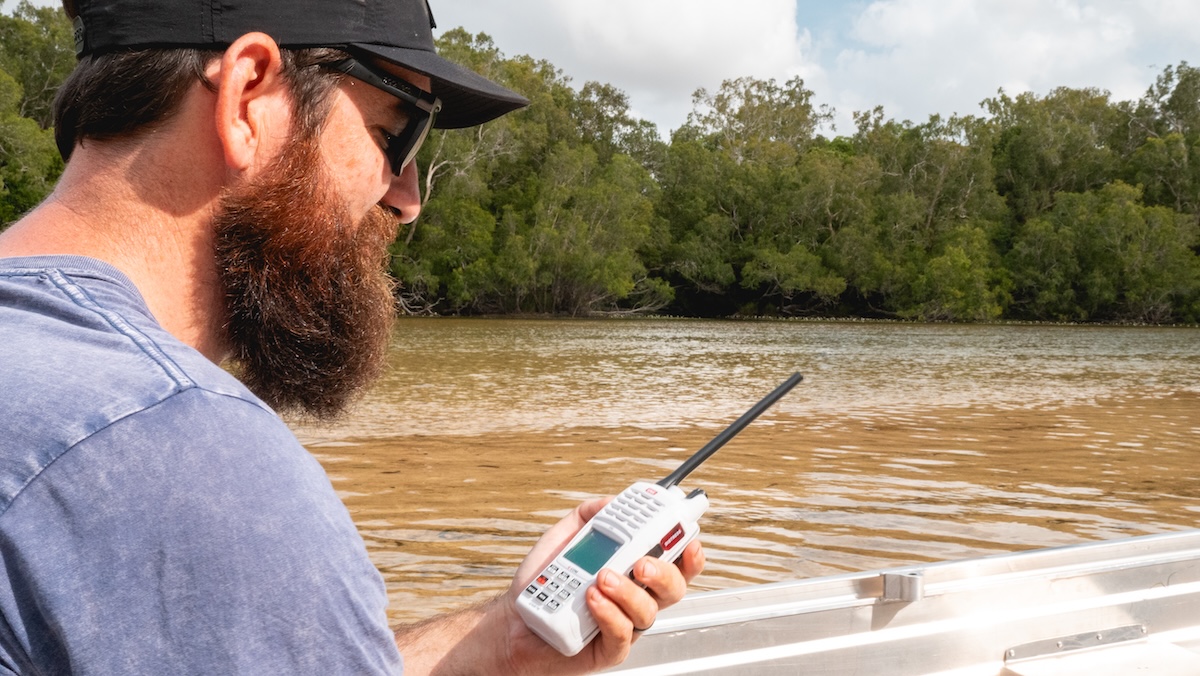
Depending on the activity and location, people should consider a registered Personal Locator Beacon, an appropriate UHF or marine radio, and a correctly fitted lifejacket. Devices should be waterproof or carried in a waterproof, readily accessible pouch – rather than packed away somewhere unreachable.
What practical precautions would GME recommend people take before visiting a river, particularly in regional or remote areas?
Before visiting a river, Aussies should check weather, river and flood conditions, understand the location’s hazards, tell someone exactly where you are going and when you expect to return, and avoid entering floodwater under any circumstances.
Where possible, be sure you’re travelling with others, wear a lifejacket when boating, and carry multiple communication options alongside first-aid supplies, navigation tools, and sufficient food and water.
Are there particular education messages that GME believes should receive greater public attention?
River safety should be treated differently from pool or beach safety, as there may be no lifeguards, no flags, no visible warning that conditions have become dangerous, and conditions can change extremely quickly.
Emergency communication needs to be part of trip planning, instead of an afterthought. People should understand their phone’s limitations, know how to use their safety equipment, and keep it accessible throughout the trip.
What would GME like Australians to do differently as a result of this campaign?
We want Australians to pause before visiting a river and consider the conditions, whether someone knows their plan, and how they will call for help if their phone does not work.
The goal here is to make preparation as automatic as packing food or checking the weather, because a few simple decisions made before leaving home can save a life.
GME’s message is not that Australians should avoid the country’s rivers, but that these environments need to be approached with an understanding of their particular risks.
Checking weather, river and flood conditions, telling someone where you are going, wearing an appropriate lifejacket and carrying more than one reliable means of communication can all improve the chances of avoiding an emergency or obtaining help when one occurs.
World Rivers Day provides an opportunity to celebrate the enormous recreational, environmental and community value of Australia’s inland waterways. It is also a timely reminder that preparation should begin before leaving home, and that safety equipment is only effective when it is accessible, and people know how to use it.
For more information about World Rivers Day, visit their website HERE
For more information about GME visit their website HERE