High-energy density battery, PowerNet: designed to safely power 4WDs, caravans, boats and home backup.
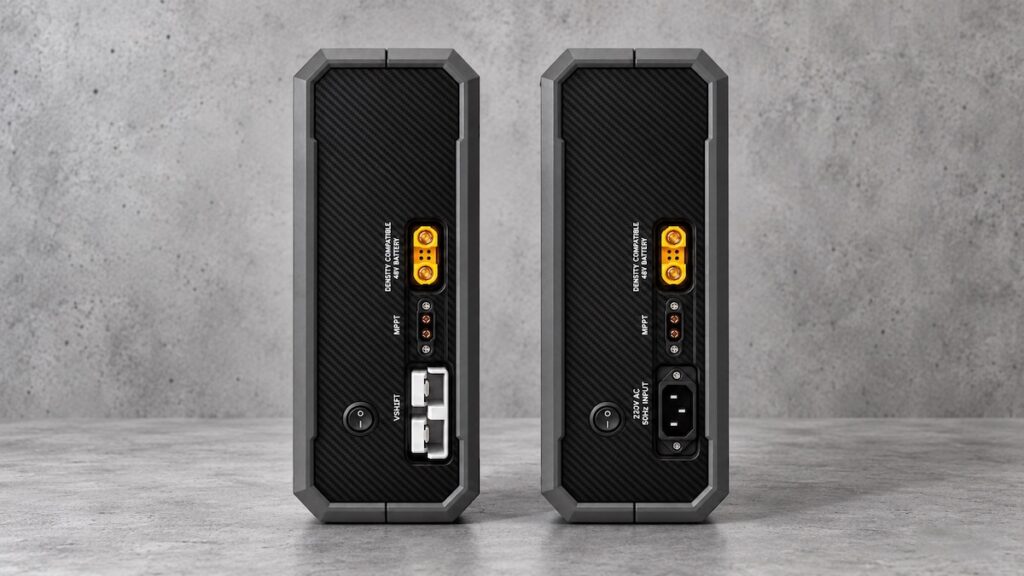
Density, the battery division of Melbourne engineering company Clutch Industries, will bring PowerNet to market in early 2027: a portable battery that stores 4kWh in a unit weighing around 20kg.
The Australian Renewable Energy Agency (ARENA) announced $6.77 million in funding on Friday. The funding will contribute to a $19.35 million project to establish scalable PowerNet assembly, testing and quality assurance in Coburg North, Melbourne.
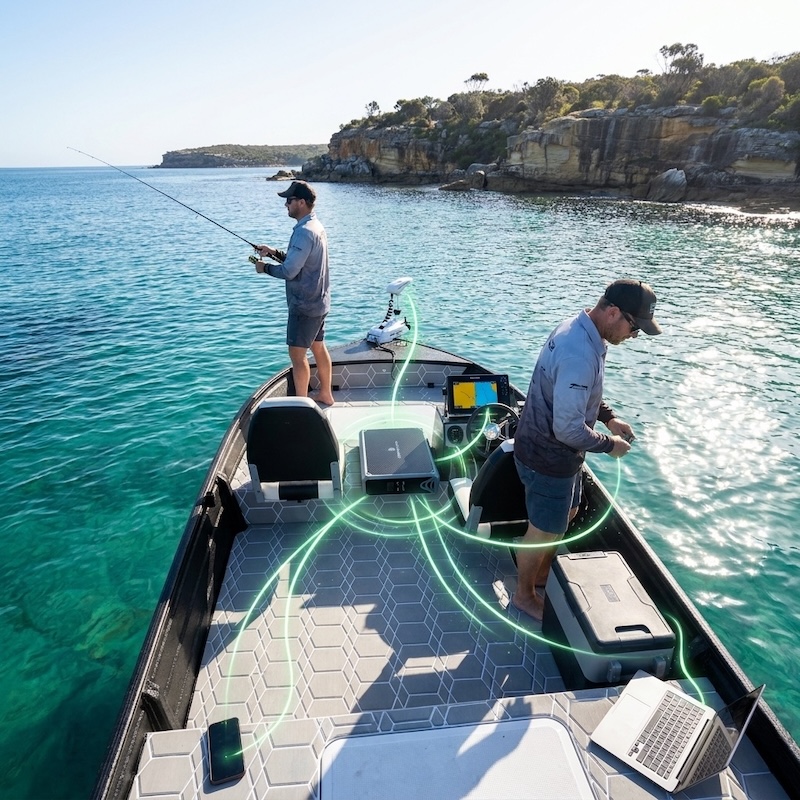
For 4WD, caravan and boat owners watching their payload, weight matters. PowerNet has been designed as one battery that moves between jobs. The same unit can run a 4WD’s 12V system, a camp setup, a 48V electric outboard or a home during a power outage (an inverter required), so owners need fewer dedicated batteries over time.
On the water, battery safety matters even more. A fire on a boat leaves few places to go, and most lithium-ion cells contain a flammable liquid electrolyte. PowerNet’s cells are designed without free-flowing liquid to reduce that risk, which is achieved through its X-SSB architecture, resulting in a safer, lighter and energy dense battery.
The project is supported through ARENA’s Battery Breakthrough Initiative, which backs battery manufacturing in Australia.
PowerNet at a glance:
- About 4kWh of energy (4,096Wh) in a unit weighing 20kg
- Charges at up to 8kW and delivers up to 12kW
- Variable voltage DC output, with Density’s VSHIFT plug configurable to 12V, 24V, 36V or 48V
- Built-in 1kW solar input
- Two 100W USB-C ports and two USB-A ports
- Monitoring and control through the Density Link app
Tested at the cell level
PowerNet uses Density’s X-SSB cells, an application-variable solid-state battery architecture with no free-flowing liquid electrolyte.
In independent testing commissioned by Density, Deakin University’s Battery Research and Innovation Hub tested the 76Ah cell used in PowerNet at a continuous 5C discharge rate, equivalent to approximately 380A. It delivered 76.6Ah, retaining its full rated capacity, with a peak cell-centre temperature of 62°C.
For comparison, the 40Ah lithium iron phosphate (LFP) cell tested at 2C delivered 36.9Ah, approximately 92 per cent of its rated capacity, and reached a peak cell-centre temperature of 58°C. Density’s cell therefore retained its rated capacity at 2.5 times the relative discharge rate used for the LFP comparison, with a peak temperature just 4°C higher. Both tests were conducted at 25°C ambient without external cooling, pressure or clamping.
In a separate charging test, the Density cell charged from 0–100 per cent in 33 minutes at 2C, reaching a peak cell-centre temperature of 35.5°C, a rise of 10.5°C above ambient.
Deakin also held a Density 5Ah cell under vacuum for more than 50 hours. It lost about 0.5g, under 1 per cent of its mass, and researchers observed no liquid when the cell was taken apart. The cell architecture is designed to reduce fire risk and is paired with layered electrical, thermal and mechanical protection at pack level.
Justin Batten, General Manager Marketing and Sales at Clutch Industries, said:
“PowerNet is about carrying one battery instead of five. It’s designed to move between the ute, the boat, the campsite and the house, and the government’s support means we can get it into people’s hands sooner. Every petrol generator or outboard replaced with battery power means less fuel burned, and that’s a change we want to help make.”
Clutch Industries CEO Brad Davis said:
“Clutch Industries has spent 75 years engineering parts Australians rely on. Density brings that same discipline to batteries. We have our cells tested independently because people need to trust what they’re carrying.”
ARENA CEO Darren Miller said:
“Projects like this can build Australian manufacturing skills and give locally developed energy technologies the opportunity to demonstrate their value at commercial scale.”
The current range
Density’s first products include the ultra-thin PowerBank 5K, the high output PowerHub Nano and the lightweight high energy powerstation PowerHub Pro, plus the PowerDrive 1600 and PowerGen 3600 power system for vehicle and van fit-outs coming out later this year.
PowerNet is due early 2027. Retail and trade partners, and customers wanting early access, can register interest at mailchi.mp/densitybatteries.com/signup
For more information, visit densitybatteries.com/collections/powernet