Kaloyan Radulov is challenging the marine industry’s focus on alternative propulsion, arguing that designers and shipyards must take greater responsibility for building efficient, durable, serviceable and future-ready yachts.
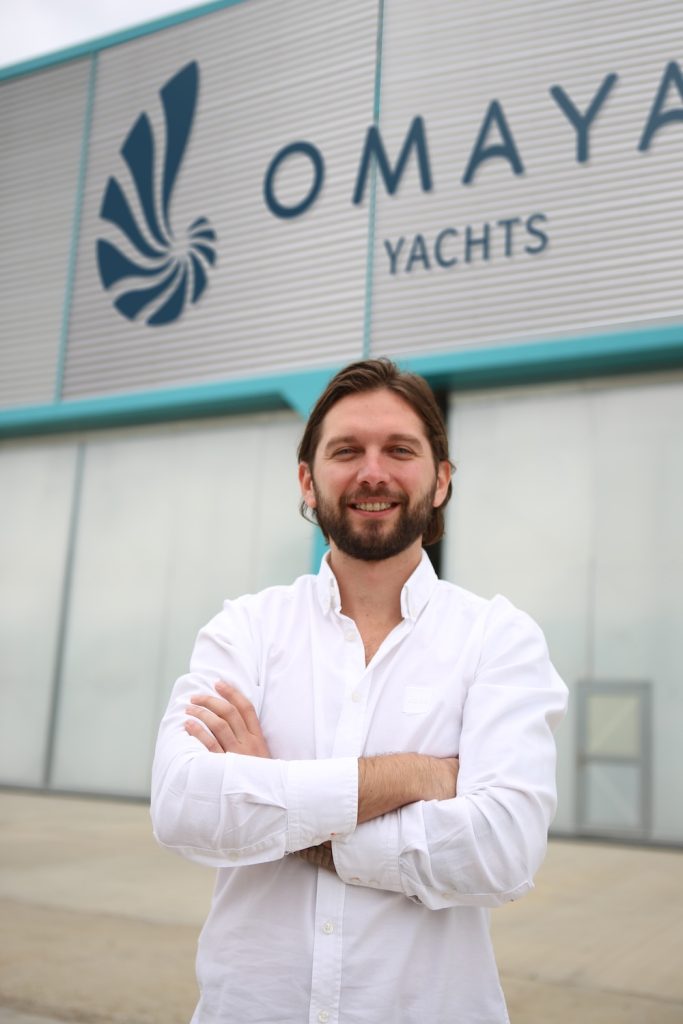
Kaloyan Radulov, CEO and co-founder of OMAYA Yachts
As the yachting industry continues to promote electric propulsion, alternative fuels, and new sustainable materials, OMAYA Yachts CEO Kaloyan Radulov questions whether the sector is overlooking some of the most fundamental aspects of sustainable boatbuilding.
“We spend an enormous amount of time discussing what will power the yachts of tomorrow, but perhaps not enough discussing how those yachts are actually designed and built,” said Radulov.
“What is the point of installing the latest propulsion technology if the vessel is inefficient, its systems are difficult to maintain, or it cannot be adapted when better technologies become available?”
Radulov argues that sustainability in yachting must be considered across a vessel’s entire lifecycle, rather than judged predominantly by its emissions during operation.
“Electric propulsion, hydrogen, methanol and other technologies certainly have a role to play. But a yacht that produces no emissions while running on electric motors is not necessarily a sustainable yacht. Behind it are thousands of components, chemical-intensive manufacturing processes, global supply chains, and materials whose environmental impact can be extremely difficult to trace. These don’t disappear simply because we replace the diesel engine.”
According to Radulov, the industry must look beyond the technology installed on board and reconsider the design principles that determine how yachts perform and age.
Hull efficiency, durable construction, accessible technical systems, and modular design can all influence a yacht’s lifetime environmental impact. A more efficient hull requires less energy throughout its operational life, while a vessel designed for straightforward maintenance and repair can avoid unnecessary component replacement and the associated consumption of materials and resources.
“We’ve become accustomed to a culture where replacing something is often easier than repairing it and perhaps that works commercially for smartphones and fast fashion, but should we really be applying the same mentality to yachts, which are high-value assets that ought to remain in service for decades?”
He believes responsibility begins at the design stage, with questions rarely prominent in sustainability marketing.
“Can a technician actually reach the equipment without dismantling half the interior? Can a failed component be replaced without cutting into composite structures? Can the yacht be upgraded with more efficient propulsion or energy systems in ten or 20 years? These are questions designers and shipyards should be asking from day one and none of this should come at the expense of the elegance, comfort and functionality that make a yacht desirable in the first place.”
For Radulov, the challenge is not simply to introduce more sustainable technologies, but to establish a manufacturing culture where resource efficiency, quality, and long-term thinking become inseparable.
At OMAYA, this thinking is influencing the company’s approach to construction, modular interiors, service accessibility, and future product development. However, Radulov is careful not to present these efforts as a finished sustainability achievement.
“We are still far from where we want to be and although some improvements are already in place, others are being developed, with many still ahead of us. My experience in yacht manufacturing has taught me to be cautious about absolute sustainability claims because the reality is far more complex than the marketing often suggests. What matters is establishing a culture where people continuously question how things can be done better, whether regulation requires it or not.”
Radulov believes this cultural change, rather than any single technological breakthrough, will ultimately determine the industry’s environmental progress.
“We don’t need a handful of companies claiming to have achieved sustainability but rather thousands of imperfect companies consistently improving how they design, manufacture and maintain their products. Sustainability is not something you achieve by installing one technology or earning one certification, it is the result of thousands of decisions made throughout the life of a product.”
For more information, visit www.omaya-yachts.com.