Keeping your vessel compliant and safe: What you need to know about inspections
Staying compliant isn’t just about ticking boxes – it’s about protecting your crew, your business, the marine environment, and getting home safely to your family. Our Domestic Commercial Vessel (DCV) inspection programme helps you do exactly that.
Why it matters to you
- Avoid costly delays and penalties by meeting safety requirements year-round.
- Get early notice on Focused Inspection Campaigns (FICs) to check key compliance areas before an inspection.
- Benchmark your performance and learn from inspection insights to improve operations.
What we do
Using a risk-based approach, we focus inspections where they’re needed most:
- Routine inspections prioritised using our risk calculator.
- Targeted campaigns to address specific operational risks or regulatory changes.
What you can do now
- Check this year’s inspection priorities.
- Download and follow our preparation guide to ensure your documentation and safety systems are ready.
- Reach out with questions – we’re here to help.
The goal is simple: safer, compliant, and environmentally responsible operations for every vessel owner and operator.
Upcoming webinar: Hazardous gases
AMSA Webinar: Hazardous gases
Thursday 27 November 2025
2:00 pm – 2:45 pm AEDT
Online via MS Teams
Learn how to:
- Conduct a risk assessment – consider potential risks of hazardous gases from sewage systems as part of your SMS requirements under Marine Order 504
- Ensure proper storage and maintenance – identify equipment, appliances and systems that create hazardous gases, and keep them maintained and stored correctly.
- Protect your crew and passengers – implement measures to eliminate or reduce the risk, including induction and training.
This webinar supports a Focused Inspection Campaign on hazardous gases beginning February 2026.
Reduce your risk — read about Hazardous gases: carbon monoxide, hydrogen sulphide and carbon dioxide
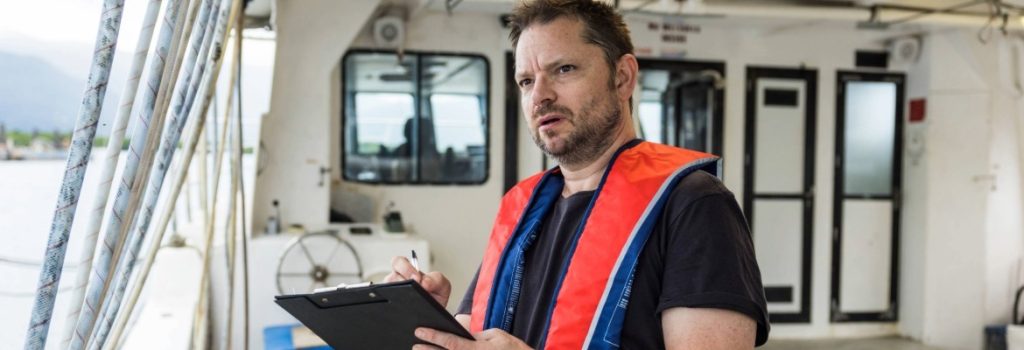
Is your vessel a safe workplace?
Every day is the right day to prioritise safety on the water – make sure your vessel is a safe workplace for everyone onboard.
Having the right safety equipment on board gives you, your crew, and passengers the best chance of survival if something goes wrong.
Before heading out, check that you have everything you need on your vessel, that it’s easily accessible, and has been well maintained. Flares expired? Forget it.
The safety equipment you need depends on your vessel, and how you operate.
We provide safety equipment lists for:
- Class 1, 2 and 3 surveyed vessels
- Non-survey vessels
- Non-survey fishing vessels operating in warm waters and within 2 nautical miles of land
- Non-survey beach fishery vessels operating anywhere in Australia
- Tenders
Keep your vessel a safe workplace every day.
View your safety equipment list
Don’t ignore it, report it
Marine incident reporting is a shared responsibility between vessel owners, operators and crew. It plays a vital role in making vessels safer places to work.
By sharing incident details, you help us:
- respond quickly and efficiently to incidents when they happen
- understand the risks affecting your vessel operations
- build a reliable safety database to inform better safety guidance
Every report matters. Even if in doubt, report it. Your experiences help shape safer practices across the industry. Together, we can strengthen safety culture and prevent future incidents.
Learn more about what to report and how to do so. Your time and effort make a real difference and can save lives.
More on marine incident reporting
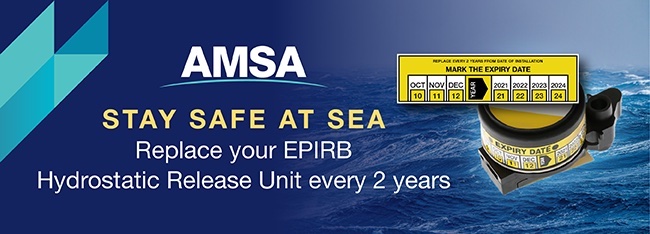
Is your float-free EPIRB ready for an emergency?
Your float-free EPIRB could save lives – but only if it works when it matters most. Keep your HRU and EPIRB battery in check to ensure your float-free EPIRB activates properly in an emergency and stays compliant with safety regulations.
When submerged, the HRU releases the float-free EPIRB so it can float to the water’s surface and transmit your distress signal to search and rescue.
What you need to do
- Check the EPIRB battery: Ensure it’s in date and functional.
- Replace the HRU: Every 2 years (or as per manufacturer’s instructions).
Don’t wait until it’s too late – inspect your float-free EPIRB today.
Find out more about HRU replacement

Apply now: AMSA scholarship opportunities available
We support the next generation of maritime leaders with the skills and opportunities to build a safer, more sustainable future at sea.
Do you know someone passionate about a career at sea?
Applications are currently open for several of our University of Tasmania (UTAS) partnered scholarships.
Available for Semester 1, 2026:
AMSA First Year Access Scholarship for Maritime Studies
Available to a student commencing their first year of an undergraduate degree at the Australian Maritime College (AMC).
AMSA Sara Bool Women in Maritime Engineering Scholarship
Available to a female student (or those who identify as female) entering Year 3 of the Bachelor of Maritime Engineering (Specialisation) with Honours.
AMSA Environmental Excellence Scholarship
Available to a student commencing the first or second year of the Master of Marine and Antarctic Science at the Institute for Marine and Antarctic Studies (IMAS).
Shaping safer seas: AMSA’s 2025–26 regulatory program
AMSA’s 2025–26 regulatory program sets out key areas for review this year – including national law safety standards for domestic commercial vessels and improved safety and pollution regulations for international shipping.
Stay tuned for upcoming public consultations and have your say.
Your feedback helps ensure safety regulations remain practical and relevant to the vessels and operations they apply to.
Source: AMSA‘s monthly newsletter.
For more information visit www.amsa.gov.au