By Danny Casey
It’s a safe bet that somewhere in the halcyon past of those dyed-in-the-wool motorboaters in the UK and Ireland who have, through the years, worked their way up in size and expenditure and graduated to large power craft, there lurks the spectre of a Fletcher sports boat.
There is little doubt that nearly every seasoned powerboater has, at least once, sat in, driven, skied behind or yearned for a Fletcher – with the unbridled fervour of six teenagers setting off for a disco in a Ford Fiesta.
It would probably be fair to say that Norman Fletcher was a genius, at both building and marketing boats. With a surname like that, he was onto a winner for a start. To elaborate: in the Middle Ages, a “fletcher” was someone who made arrows (the French word for arrow is, in fact, flèche), so Norman bestowed upon most of his sports boats names that began with “Arrow” – e.g. Arrowflyte, Arrowstreak, Arrowbeau, Arrowshaft etc. The later cruisers didn’t use the “Arrow” prefix, but they also became top-of-mind in their own right.
Collectively, the entire UK industry probably owes Norman Fletcher an immense debt, as the number of boaters who started off in, say, a humble 140 Arrowflyte and worked their way up in stages into the likes of Sunseekers, Princesses, Fairlines and Sealines etc. must be myriad.
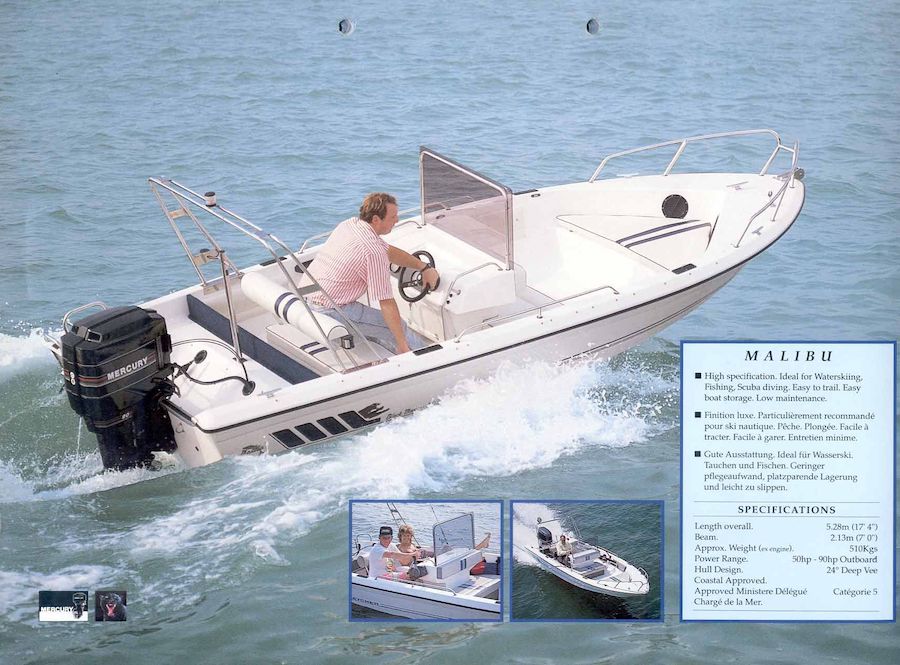
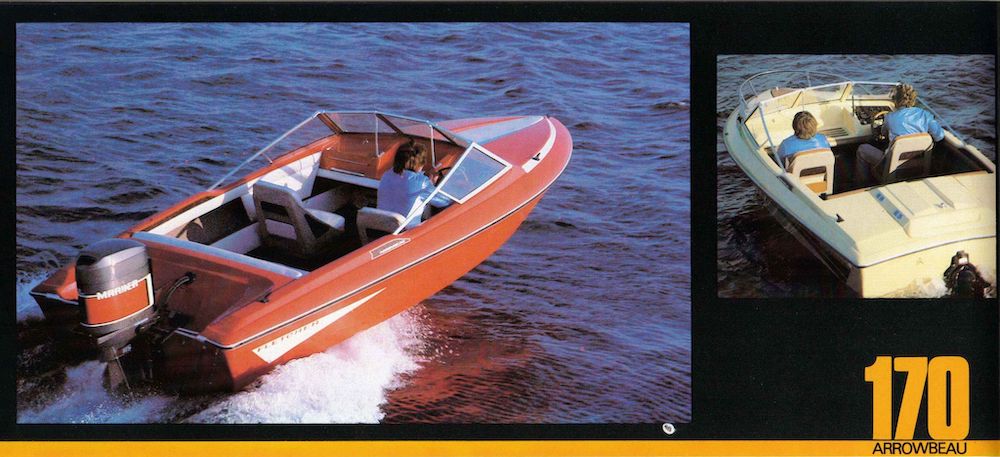
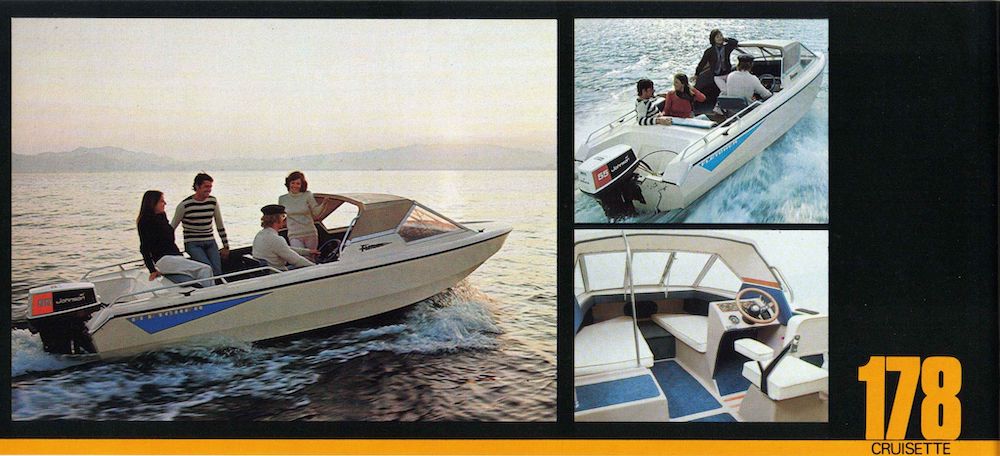
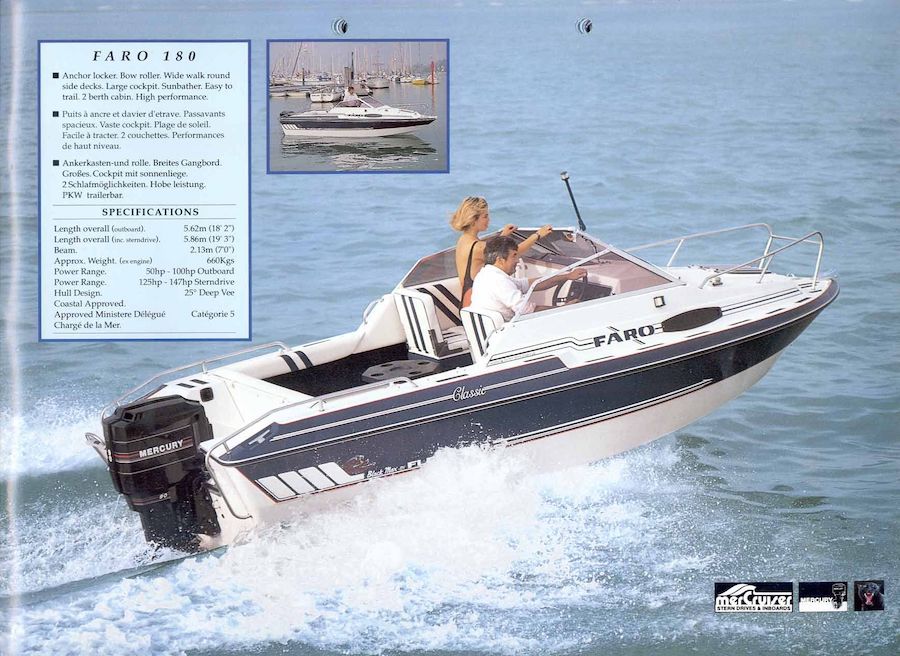
He was also a genius at economies of scale, or using the same mould for multiple variants – the prime example being the hull from the Arrowbeau 170. He extracted no fewer than six separate models from that hull: the Arrowbeau itself; the cuddy-cab Cruisette (a superb concept in its day – almost certainly later copied by the likes of Ryds, Flipper and Yamarin); the Vigo cruiser (nearest direct competitor to the Shetland Family Four of that era); the Dorado and Faro (a personal favourite of mine) half-cabins, and the open, dory-type Fish ‘n’ Ski allrounder (later known as the Malibu).
And what a sublime, rapid yet forgiving hull that original Arrowbeau was. 17 ft long with a full 7 ft beam – on the wide side for a UK trailer boat of that era. And it was a boat that gave as much enjoyment with 100 hp as it did with double that power (even though the early ones were only officially rated to 150 hp). I once had the heady pleasure of sampling two in one day – one with a V4 Yamaha 140 and one with a V6 Suzuki DT200 – and they both put a huge smile on my face, but in subtly different ways.
I have attached some pictures (apologies in advance for the quality, as they were lifted from lo-res copies of brochures) of the Arrowbeau and a few of its variants, but couldn’t find any pics of two of the models: the Vigo and the Dorado. However, these images undoubtedly show a heady mélange of creativity, innovation, pragmatism and marketing nous that is much harder to find today.
Danny Casey is highly experienced, undoubtedly idiosyncratic, and immensely knowledgeable about things mechanical, new or old. His knowledge and passion are as a result of spending his whole life in or around anything power-driven – especially marine engines. His passion for boating is second to none, with his life a montage of fabulous memories from decades spent in or around water and boats, both here and in Europe. Danny has spent myriad years in the recreational marine industry in a varied career in which he has bamboozled colleagues and competitors alike with his well-honed insight.

His mellifluous Irish accent, however, has at times been known to become somewhat less intelligible in occasional attempts at deliberate vagueness or when trying to prevent others from proffering a counter-argument or even getting a word in. Frank and to-the-point, but with a heart of gold, it can be hard to convince Danny to put pen to paper to share his knowledge. Marine Business News is grateful for his contributions. Connect with Danny through LinkedIn.