The most sustainable marina is not sterile. It is clean, useful, lively and valued by people onshore and afloat.
When we wrote Sustainable Marina Development in 2012, we argued that marina sustainability needed four tenets, not three: ecological, economic, social and destination. The usual three pillars are still important, but I remain convinced that Destination Protection is the missing piece.
Apart from a pure working industrial marina, most marinas only work over the long term if they protect and improve the place people come to enjoy.
The difficulty today is that sustainability has been discussed so often that some people glaze over as soon as the word appears. It can sound expensive, worthy, on trend and lacking specificity in a real business plan. We can’t make a marina less economic or simply toss in some greenwash. What we need are practical steps that work.
So perhaps the next step is to bring sustainability back to earth. What are the simple, practical, inexpensive actions that show the community marinas are serious?
I always liked d’Albora Marinas back in the day, when they used a simple proximity switch as a people counter at the gangway entrance. It is not glamorous technology. It will not get invited to speak at a climate conference. But it tells a useful story. How many people are actually using the facility? When do they come? What does that mean for the coffee shop, toilets, bins, security, events and local businesses?
That sort of information is powerful. At rent renewal for a cafe, actual foot traffic is better than a hopeful guess. For council, it helps show the marina is not a closed boat park. It is public-facing waterfront infrastructure. For the community, it proves the marina is being used, valued and shared by more people than berth holders alone.
This is where social sustainability becomes practical. Count school visits. Count sailing students. Count clean-up day volunteers. Count people on the boardwalk, dogs at the cafe, visitors at an open day and jobs supported by marina tenants. None of this requires a new breakwater or a million-dollar grant. It requires discipline, a spreadsheet and someone who remembers to check the counter or better still put it into a simple dashboard or your AI bot!
The same idea can be applied across the marina. Count pump-out use, water refills, recycling volumes, public access, event attendance and participation in habitat days. Track how many people complete a learn-to-sail course, how many school groups visit, how many local trades are supported and how often public areas are used. These are not wasted statistics, instead they are evidence that the marina is contributing to its destination.
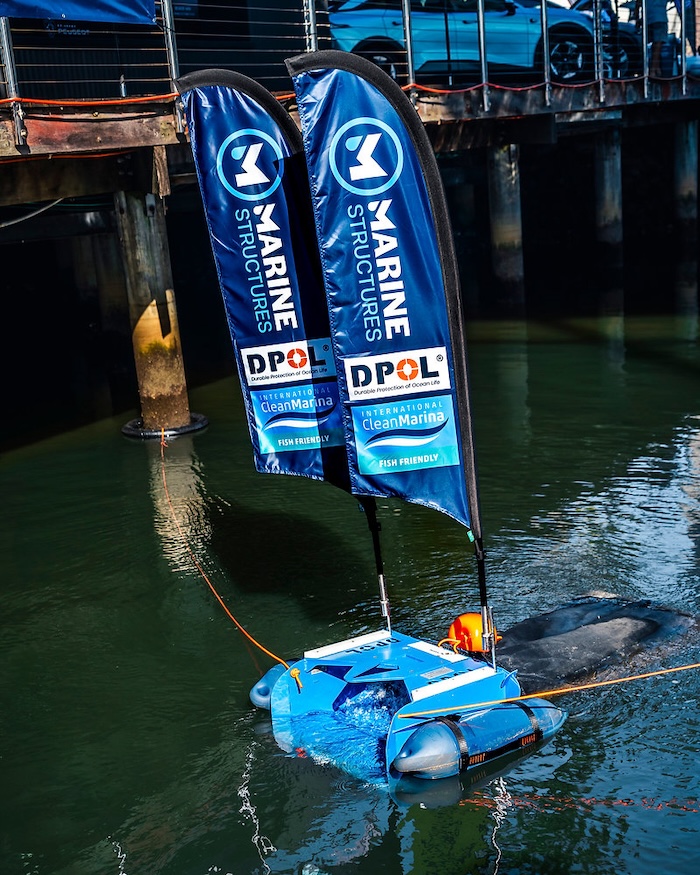
Low-cost sustainability can start with simple data: an example could be the mass of waste collected in a DPOL machine like this.
The ecological tenet still matters deeply. Marinas sit at the water’s edge, so we must protect water quality, reduce pollution, manage waste and design with the surrounding ecosystem in mind. But many useful steps are modest: better bin placement, pump-out promotion including lessons on how to use it, visible water-quality reporting, stormwater checks, floating litter collection, habitat improvement and practical customer education. People believe what they can see.
Visible action is important. A sign or a TV monitor showing recent water-quality results, how much floating litter has been collected, or a simple display explaining a habitat project can do more for community confidence than a glossy policy hidden on a website. If the marina is doing the work, tell people. If the marina has more to do, tell people that too. Honesty has a surprisingly low capital cost.
The economic tenet should not be treated as the enemy of sustainability. A marina that cannot make a commercial return will not have the resources to maintain high standards. Equally, a poorly designed asset with high maintenance, or, worse, poorly managed with no maintenance is not sustainable. Whole-of-life value, durable infrastructure, easy maintenance and reuse of components are practical sustainability.
In many cases, the best sustainable decision is also the best commercial decision. Use products that last. Make services easy to access and repair. Reduce energy waste. Plan layouts that can adapt as vessel sizes and customer behaviour change. Buy once, buy well and avoid creating the next expensive disposal problem.
We should also be honest about resource use. Many boats spend most of their life parked. That does not mean boating is bad, but it does mean we should think harder about utilisation. Boat clubs, shared ownership, charter, training fleets and better access for non-boat owners may deliver more enjoyment from fewer underused assets. A new electric boat may be right in some applications, especially regular short trips with clean charging, but it is not automatically the best carbon outcome if it hardly ever leaves the berth.
This is where marinas can help people participate without owning a boat. Cafes, boardwalks, sailing schools, paddling, events, viewing areas, volunteering, citizen science and clean-up days all connect people to the water. The more people who enjoy and understand the riparian zone, the stronger the constituency for protecting it.
This is also an opportunity for the Marina Industries Association (MIA). Imagine a simple voluntary framework where marinas report a handful of practical measures: people through the gate, school visits, waste collected, pump-out use, water-quality checks, tenant jobs, events, clean-up days and habitat projects. Aggregated across the industry, that becomes a powerful story about marinas as managed, useful, community-connected riparian assets.
MIA already has a biennial industry snapshot called the HAMIS (Health of the Australian Marina Industry Survey), which provides some insight into the proactive sustainability initiatives of marinas such as investment in solar and battery infrastructure, however further sustainability data could be added to show some compelling trends. It could feed Clean Marina, Fish Friendly and the Marine Sustainability Pledge. It could produce more Waterline case studies, conference sessions and practical templates that any marina can use. Most importantly, it would help the industry tell its story with evidence.
Destination Protection is really about stewardship. It asks whether the marina will still be valued in 10, 20 or 30 years. Is it cleaner, safer, better used, more resilient and more loved by the community? Does it create a better waterfront experience for people on boats and people onshore?
The next phase of sustainability does not need more sermons. It needs evidence, humour, humility and practical action. Count what matters. Share what you learn. Fix the simple things. Make the marina better tomorrow than it was yesterday. If we can do that, sustainability stops being a slogan and becomes part of how good marinas are run.

John Hogan, Director, Marine Structures
John Hogan is the Director of Marine Structures, a company formed through the merger of Superior Jetties and The Jetty Specialist Groups. Headquartered in Southeast Queensland, Marine Structures has become Australia’s leading provider of marina infrastructure. With manufacturing facilities on both the Sunshine Coast and the Gold Coast, the company has been serving the market for over 35 years, producing and installing a wide range of marine berthing systems across Australia and exporting through an international dealer network.
John served as Chairman of the Global Marina Institute from 2016 to 2019 and has been a Board Member of the Marina Industries Association since 2004.
This story was reproduced from Waterline Magazine with permission from Marina Industries Association.