In boating, value is rarely determined by the price printed on the box. Nowhere is that more important than in the systems responsible for controlling the vessel.
Steering is not a cosmetic accessory, nor can its performance be judged by examining a component before installation. A helm, cylinder, hose or fitting may look almost identical to a proven product, yet its real quality lies internally – in the engineering, materials, tolerances, valves, seals and testing that determine how it performs under load.
That distinction was brought into sharp focus by independent United States marine writer and retired boatbuilder Dave East. His experience replacing the steering system on a 1988 Ranger 390V bass boat became a cautionary lesson about buying safety-critical equipment primarily on price.
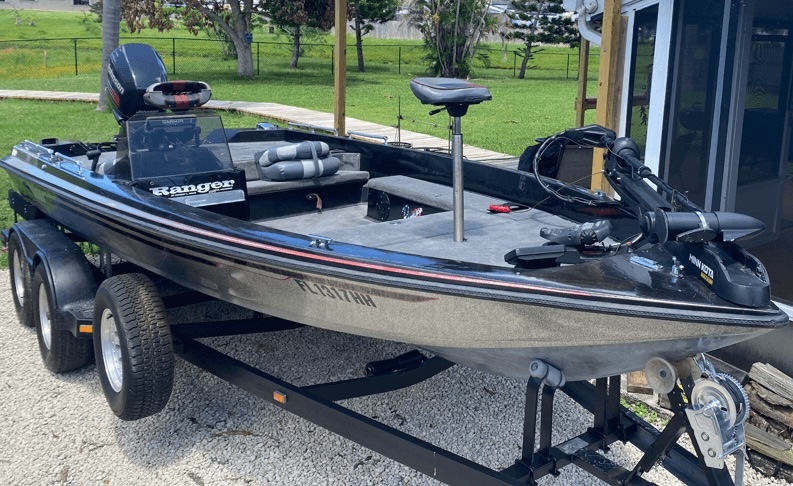
East was undertaking a comprehensive restoration that included new carpet, electronics, batteries, a trolling motor and an electrical-panel upgrade. He also decided to replace the boat’s original dual-cable steering with hydraulic steering.
After repeatedly seeing boat owners discuss inexpensive imported systems sold online, he decided to test one. The product was advertised for outboards up to 200 horsepower, comfortably above the 150 horsepower output of his Johnson two-stroke. On arrival, the machining looked clean, the castings seemed well made and installation closely resembled the OEM-quality systems East had fitted throughout 28 years in boat manufacturing.
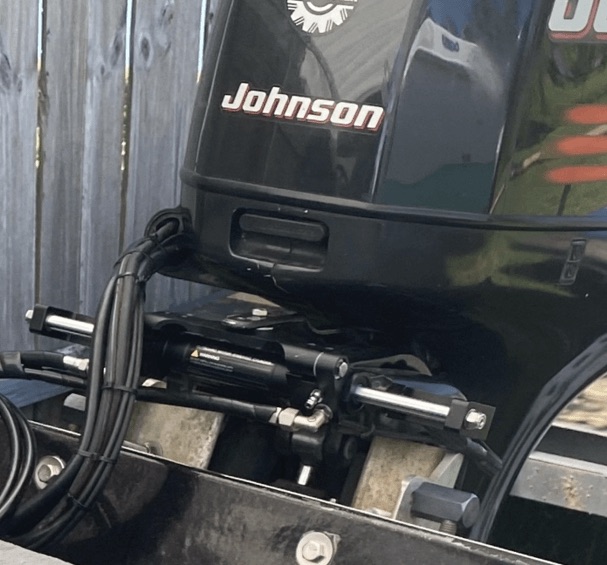
The apparent saving quickly lost its appeal on the water.
East reported that once the engine exceeded approximately 3,000 rpm, the boat pulled hard to port. Holding a straight course required increasing starboard input until the steering system could no longer adequately resist the outboard’s natural steering torque.
Suspecting an internal fault, East returned the system and accepted a replacement. After carefully reinstalling and bleeding the second unit, he experienced the same behaviour. His concern was no longer about inconvenience, but what might happen if a less experienced operator encountered the problem at speed.
The experience does not establish that every inexpensive steering system will fail, nor should a product be judged solely by where it is manufactured. It does reinforce an important procurement principle: a safety-critical marine component should be assessed by its engineering pedigree, application suitability, compliance, support and demonstrated performance – not merely by appearance, advertised capacity or purchase price.
Steering systems work in demanding conditions. They must translate wheel movement into controlled engine or rudder movement while managing hydrodynamic and propeller-generated loads. They are exposed to vibration, moisture, corrosion and repeated cycling. In faster or higher-powered boats, small deficiencies in design or manufacturing tolerances can have serious consequences.
This is where the value of an established specialist becomes clearer.
Dometic’s current marine steering portfolio spans mechanical, hydraulic and electronic power steering, with product families including SeaStar, BayStar, Xtreme and Optimus. It extends from conventional cable and hydraulic systems to power assist, electronic steering and joystick-control solutions.
The breadth reflects the fact that marine steering is not a one-size-fits-all purchase. Hull type, vessel length, engine make, horsepower, number of engines, expected speed, steering load and intended use can all influence the appropriate configuration.
Dometic supports selection through its online System Builder Tool. Users choose between Optimus electronic power steering, Optimus 360 joystick control, SeaStar hydraulic steering and SeaStar mechanical steering, then enter relevant vessel and propulsion information. The tool develops an application-specific system specification rather than relying on guesswork, although Dometic makes clear that installers remain responsible for confirming component fit.
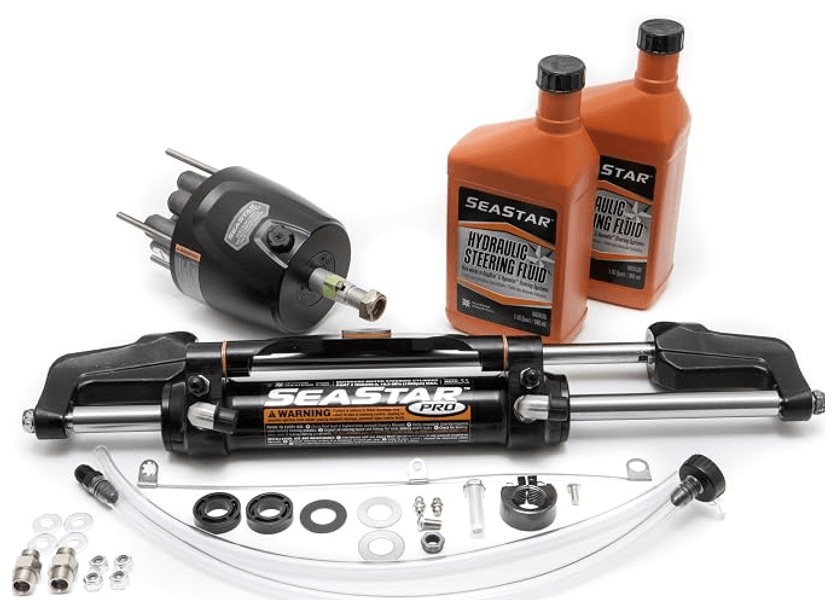
Correct selection is only one element of value. Established products also carry the accumulated benefit of development, validation and field experience. Dometic identifies patented steering lock valves and low-friction hydraulic operation among the features of its SeaStar kit. Its SeaStar Pro kit is positioned for high-performance boats with single non-power-assisted outboards up to 300 horsepower, particularly vessels capable of more than 60 mph.
Across the wider range, Dometic publishes the standards and certification requirements met by particular products. Depending on the system, these include ABYC, NMMA, CE, ISO and SAE requirements. SeaStar steering cables, for example, are described as exceeding ABYC safety standards and ISO, IMCI and NMMA certification requirements, while SeaStar Power Assist is listed as approved to ABYC, CE, NMMA and ISO 10592.
That documentation gives boatbuilders, installers and owners something more substantial than a broad marketplace claim: a defined product for a defined application, supported by accessible technical information.
Parts availability and technical support matter as well. Boats often remain in service for decades and undergo repowers or refits. A steering system may eventually require seals, hoses, fittings, fluid, service procedures or compatibility advice. Dometic’s Australian steering catalogue includes complete systems as well as helms, cylinders, hoses, fluids, fittings, seal kits and other service components.
After removing the lower-priced system, East used Dometic’s System Builder and installed the recommended SeaStar configuration. Although the earlier components had closely copied SeaStar’s outward form and mounting pattern, the similarities ended on the water.
The SeaStar steering remained smooth and predictable through 3,000, 4,000 and 5,000 rpm. At 5,400 rpm and 62 mph, East reported that the Ranger tracked correctly without the persistent pull, escalating correction or struggle at the wheel experienced with the earlier systems.
The lesson is broader than one boat, one test or one steering brand.
Boat owners regularly make sensible decisions about where to economise. Cosmetic upgrades can be postponed and non-critical accessories selected according to budget without materially affecting safe operation. Steering belongs in a different category.
Its true cost includes more than the transaction price. It includes installation time, possible removal and replacement, lost boating days, technical support, parts availability and, above all, confidence that the vessel will respond as intended under load.
For boatbuilders, dealers and service professionals, trusted products also help protect customer relationships and business reputations. A cheaper component may improve the margin on one invoice, but a subsequent failure, difficult diagnosis or lack of replacement support can consume that saving many times over.
Dometic’s advantage is therefore not simply the SeaStar name on a helm or cylinder. It is the engineering, selection resources, documented applications, range and support structure behind it.
As East concluded, there are many places to save money during a boat restoration. The systems responsible for protecting the boat and its occupants should not be among them.
In marine steering, the least expensive purchase can become the costliest decision, and proven quality is not an indulgence. It is part of responsible boat ownership.
For more information about Dometic’s Marine Steering Systems, visit their website HERE