Government and industry unite to unlock Africa’s boating economy
Government commitment, global trade pressures, artificial intelligence and manufacturing competitiveness dominate opening discussions at the African Boating Conference in Cape Town.
Africa’s boating industry has the expertise, manufacturing capabilities and international appeal to become a far greater contributor to economic growth. Encouragingly, the opening morning of the African Boating Conference demonstrated that government recognises the industry’s potential and, importantly, the need to address the practical barriers standing in its way.
Held under the theme “Boating as a Catalyst for Economic Growth”, the conference brought together government leaders, economists and marine industry executives to examine how stronger partnerships, effective policies and international competitiveness can translate opportunity into meaningful economic activity.
Government commitment goes beyond words
Western Cape Premier Alan Winde and Alderman James Vos of Invest Cape Town delivered an encouraging message about government’s commitment to creating an environment in which marine businesses can thrive.
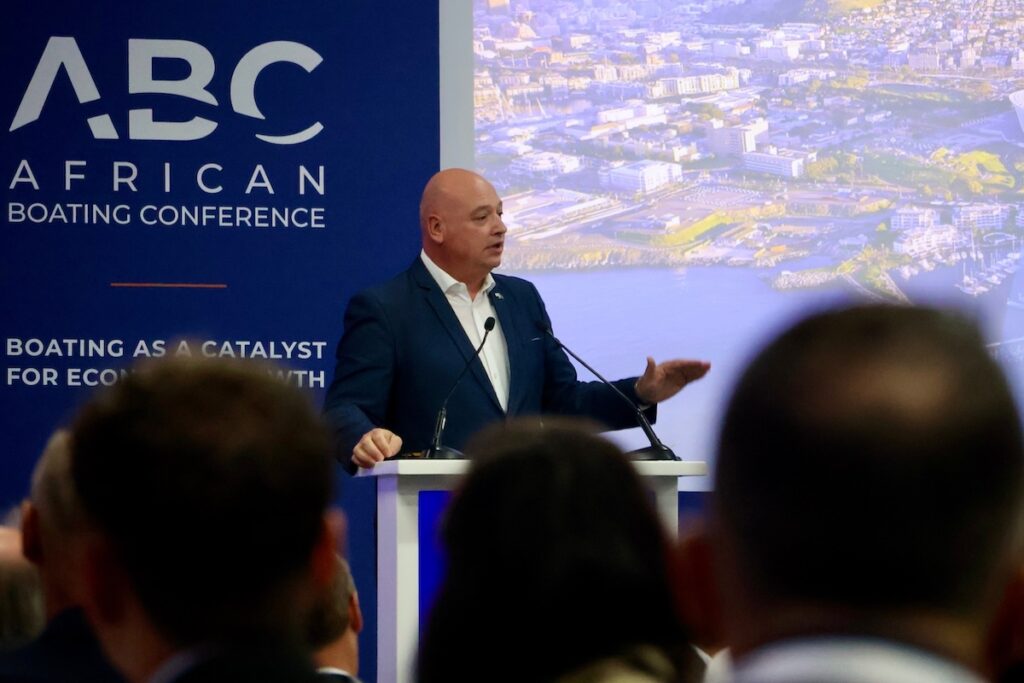
Alderman James Vos
What stood out was the practical approach to understanding the challenges facing industry. Rather than simply promoting investment, the emphasis was on asking businesses directly what is preventing them from growing, exporting and creating employment — and then working to remove those obstacles.
The Western Cape’s Ease of Doing Business Matrix and dashboard provided a tangible example of this approach, using measurable performance indicators to hold government departments accountable for addressing barriers to business and investment.
Premier Winde also highlighted his engagement in the United States over trade tariffs, making the important point that restrictions on South African boat exports have consequences for American businesses too.
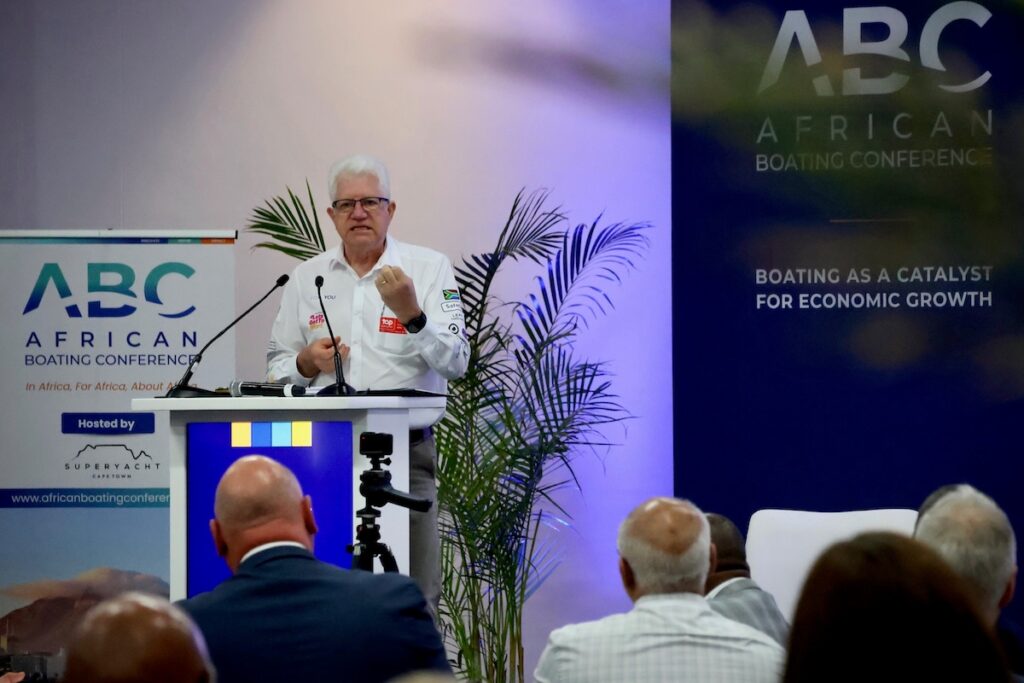
Premier Alan Winde, Premier of the Western Cape
South African boatbuilders incorporate substantial US technology, components and equipment into their vessels. Reduced exports from South Africa therefore also mean reduced business for American suppliers — a powerful illustration of the interconnected nature of international marine manufacturing and the importance of maintaining competitive trade relationships.
The message from government was clear: getting the fundamentals right, removing unnecessary obstacles and creating a business-friendly environment are essential to sustaining industry growth.
Economic pressures and opportunities across Africa
FNB Chief Economist Mamello Matikinca placed these discussions in a broader global context, highlighting the pressures of economic volatility, rising diesel costs, increasing debt, interest rates and financial market uncertainty.
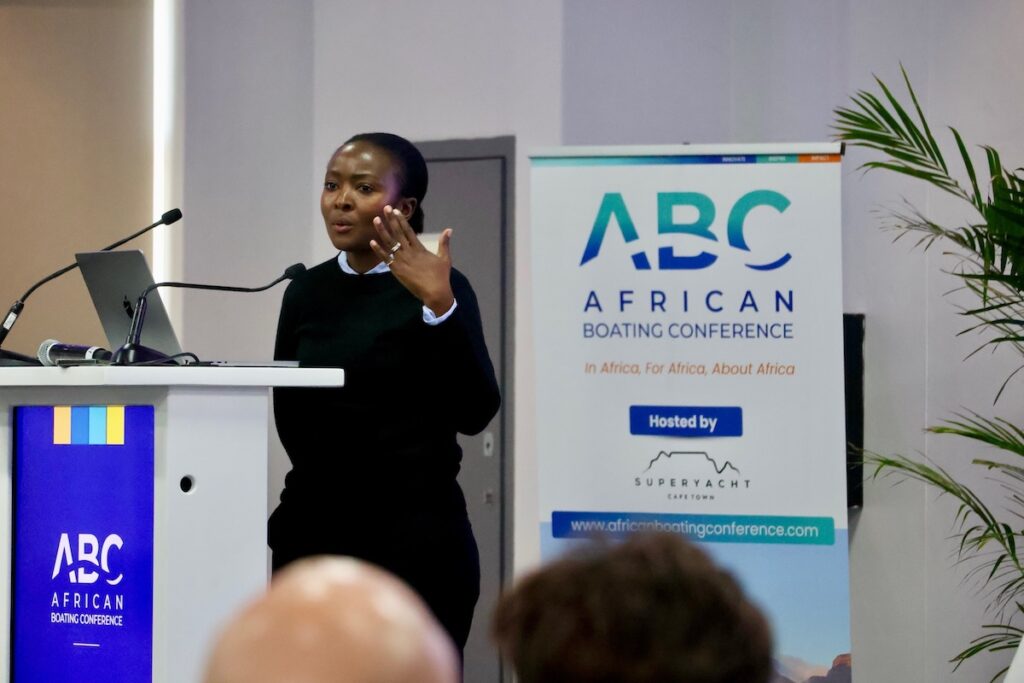
Mamello Matikinca Chief Economist FNB
She also explored the growing influence of artificial intelligence on economic resilience and competitiveness.
Despite these challenges, opportunities remain across African markets, including Kenya, Ghana, Nigeria, Tanzania, Namibia and Mauritius, reinforcing the potential for marine industry development beyond established markets.
Artificial intelligence: the next industrial transformation
David Duarte of Treeshake delivered a particularly thought-provoking and practical presentation, challenging delegates to view artificial intelligence not simply as another business tool, but as a fundamental utility.
Just as electricity transformed industry, AI is ushering in an era in which intelligence itself becomes an essential resource.
For an industry reliant on engineering, design, manufacturing efficiency and international competitiveness, the implications are significant. Duarte’s presentation demonstrated why embracing AI is becoming a commercial necessity rather than an optional innovation.
Boatbuilders confront global competitiveness
A panel featuring Two Oceans Marine, Gemini Marine, Southern Wind Shipyard and Nexus Yachts examined the commercial realities facing South African boatbuilders in an increasingly competitive international market.
Skills shortages emerged as a common concern, alongside supply chain pressures, changing trade conditions and the need to remain globally competitive.
The discussion reinforced that building world-class boats is only part of the equation. Access to skilled people, reliable supply chains, supportive trade policies and an efficient business environment are equally important to sustaining exports, employment and investment.
Turning conversations into economic outcomes
Conference Director Veda Pretorius said the opening discussions reinforced the importance of bringing government and industry decision-makers together.
“What has been particularly encouraging is the level of engagement from government and the recognition that understanding the real barriers facing marine businesses is essential if we want this industry to grow.
“Africa has internationally respected boatbuilders, innovative businesses and extraordinary opportunities. But expertise alone will not unlock that potential. We need the right policies, the right partnerships and a commitment to addressing the practical challenges affecting competitiveness.
“What is exciting is that these are no longer simply conversations about what Africa could become, but about what needs to happen to turn opportunity into investment, employment and sustainable economic growth.”
The opening morning delivered a clear message: Africa’s marine industry does not need to prove its potential. The priority now is creating the conditions to turn that potential into measurable economic results.
Dubai’s marine success offers a blueprint for Africa’s emerging superyacht region
Gulf Craft CEO Erwin Bamps highlights the importance of connected cruising destinations, marine infrastructure and long-term investment in unlocking new international markets.
The remarkable development of Dubai into an internationally recognised yachting destination offers valuable lessons for Africa as it seeks to attract more superyachts, develop its marine infrastructure and establish a connected regional cruising market.
Delivering a keynote address at the African Boating Conference in Cape Town, Erwin Bamps, CEO of internationally renowned yacht manufacturer Gulf Craft, drew on the company’s global expansion and the evolution of the Middle Eastern marine industry to highlight what emerging markets need to compete successfully on the world stage.
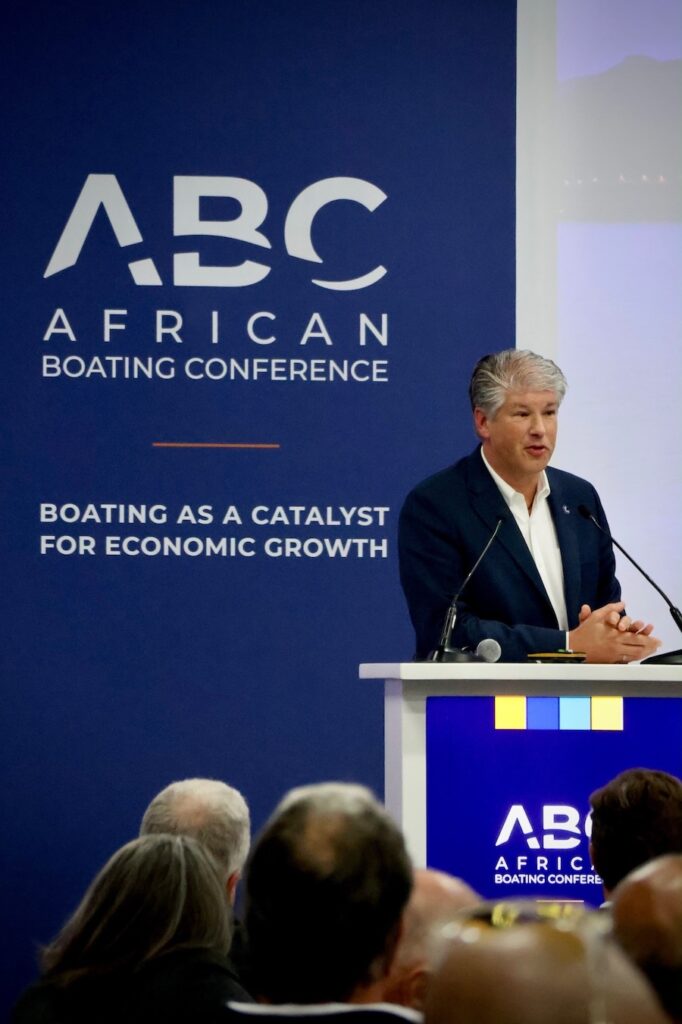
Erwin Bamps
Under the theme “From Emerging Market to Global Player – Competing Successfully on the Global Stage”, Bamps emphasised that manufacturing exceptional yachts is only one part of building a successful marine economy. Equally important is creating the infrastructure, services, international connections and compelling cruising experiences that encourage yacht owners to visit and remain in a region.
Dubai’s transformation provides an important example. Sustained investment in marinas, waterfront developments, luxury tourism and marine services has helped establish the emirate as a recognised international yachting centre. Yet attracting more visiting superyachts and encouraging them to explore the wider Gulf region remains an important opportunity.
For Bamps, the challenge facing both the Middle East and Africa is not simply attracting individual yachts to individual destinations, but developing connected cruising regions with the facilities, services and confidence needed to support extended voyages.
Gulf Craft investing beyond boatbuilding
Gulf Craft’s own expansion demonstrates this broader approach to marine industry development.
Founded in the United Arab Emirates in 1982, the company has grown into an internationally recognised manufacturer with a diverse portfolio spanning luxury superyachts, long-range explorer yachts, recreational cruisers and power catamarans.
Its Majesty range caters to the luxury yacht and superyacht market, while the long-range Nomad range is particularly relevant to owners seeking extended cruising and exploration. The company’s cruisers and power catamarans provide additional options for leisure boating, fishing, coastal cruising and commercial applications.
This diversity offers considerable potential for African markets, where demand extends beyond luxury ownership to include adventure cruising, tourism operations, island transfers and recreational boating.
Gulf Craft’s investment in the Maldives provides a further example of how manufacturing, marine services and tourism infrastructure can develop together.
With an established shipyard in the Maldives, the company has expanded its regional capabilities to include vessel support, servicing and marine infrastructure. Its broader Gulf Lagoon development vision incorporates marine facilities, training and resort hospitality, reflecting the growing importance of providing a complete destination offering rather than simply manufacturing vessels.
The Maldives experience is particularly relevant to Africa, where destinations along the eastern coastline and across the Indian Ocean have considerable potential to attract international yachts but require further investment in berthing, maintenance, refit facilities, provisioning and supporting services.
Connecting Africa’s cruising destinations
The need for regional connectivity was a central theme of the conference, reinforcing work already underway through Superyacht Africa, the initiative emerging from the African Superyacht Working Group.
Recent BOATPro research presented at the conference shows that Southern Africa attracted 36 visiting superyachts over 24 metres in 2025, compared with 14 in 2019. The average visiting yacht measured 60 metres, significantly larger than the global average of 34 metres.
These figures highlight both the quality of vessels already visiting the region and the economic opportunity associated with attracting more yachts and encouraging longer stays.
The vision is to connect Cape Town, Southern Africa’s eastern coastline and Indian Ocean destinations, including Mauritius, Seychelles and the Maldives, into a more accessible and internationally recognised cruising network.
Conference Marketing and Development Director M Edwards said:
“Erwin’s experience demonstrates that building a successful superyacht region takes more than world-class boats and marinas. Africa has extraordinary cruising destinations, but we need to connect them through the right infrastructure, services and partnerships. The opportunity is to create a region that encourages yachts to visit, explore and stay longer, delivering real economic benefits to local businesses and communities.”
The message from Bamps’s keynote was clear: global competitiveness requires more than world-class products. For emerging marine markets, long-term success will depend on developing the infrastructure, international relationships and connected destinations that transform regional potential into sustained economic activity.
V&A Waterfront positions Cape Town as a gateway to Africa’s emerging superyacht cruising region
Major waterfront investment, new luxury hospitality facilities and dedicated superyacht infrastructure are strengthening Cape Town’s position in the international superyacht market and creating new opportunities for Southern Africa’s marine economy.
The V&A Waterfront is playing an increasingly important role in positioning Cape Town as a leading gateway to Southern Africa’s emerging superyacht cruising region, with significant investment in infrastructure, hospitality and waterfront development reinforcing the city’s appeal to international yacht owners, captains and guests.
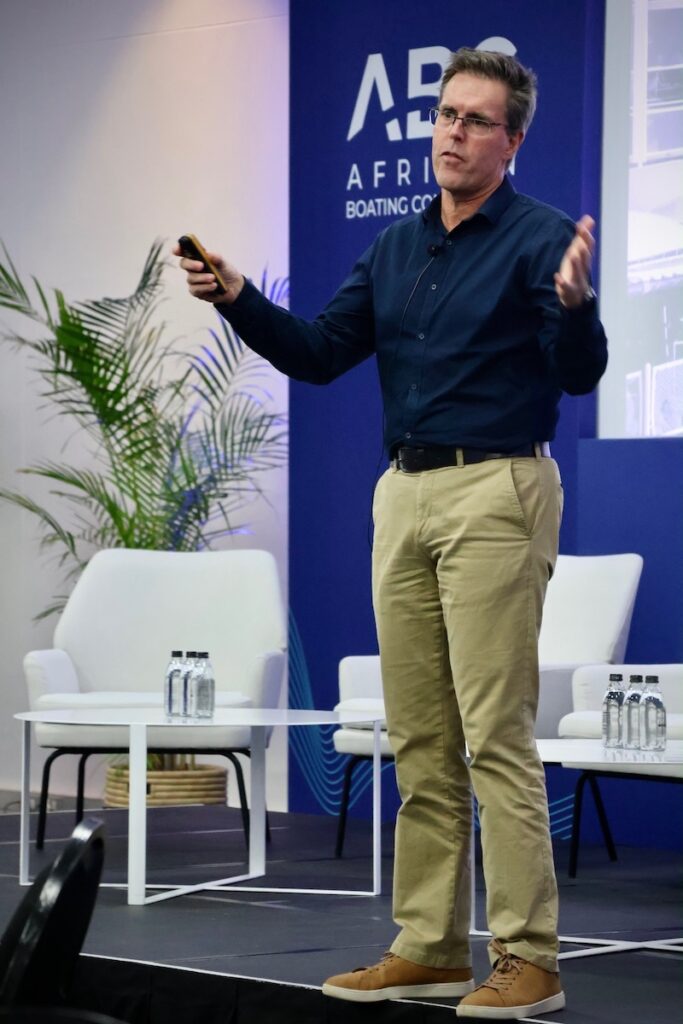
Graham Wood
Speaking at the African Boating Conference in Cape Town, Graham Wood, CEO of the V&A Waterfront outlined the ambitious vision for the precinct, including the new EDITION hotel, the development of Quay 7 superyacht facilities and longer-term plans to transform the surrounding waterfront into a vibrant new coastal neighbourhood.
The investment reflects considerable foresight in recognising that attracting the international superyacht market requires more than berthing facilities. It demands an integrated destination combining world-class hospitality, marine services, accessibility and exceptional visitor experiences.
Few destinations can offer the combination available at the V&A Waterfront. Superyachts can berth directly alongside one of Africa’s most recognised tourism precincts, with guests able to step ashore into an extraordinary selection of restaurants, luxury hotels, boutiques, cultural attractions and entertainment.
All of this is set against the spectacular backdrop of Table Mountain, visible from the decks of visiting yachts.
The new EDITION hotel, with its distinctive architecture and waterfront location, adds another dimension to this offering. Together with the Quay 7 development, it creates an opportunity to position Cape Town among the world’s most compelling urban superyacht destinations.
A growing market with significant economic potential
New BOATPro research presented at the conference reinforces the importance of this investment. Southern Africa recorded 36 visiting superyachts over 24 metres in 2025, compared with just 14 in 2019. Significantly, the average length of visiting yachts in 2025 was 60 metres, compared with a global average of approximately 34 metres.
The V&A Waterfront Marina already ranks among the region’s five leading marinas for visiting superyachts, demonstrating Cape Town’s established appeal and the opportunity to capture a greater share of this high-value market.
The economic benefits extend well beyond the marina. A superyacht valued at US$50 million could generate an estimated US$105,000 to US$330,000 in local expenditure during a two-week visit, supporting businesses ranging from marine engineering and provisioning to hospitality, transport and specialist services.
The scale of the V&A Waterfront itself is equally significant. The 123-hectare precinct records approximately 25 million visits annually, accommodates more than 1,000 tenants and supports a working community of approximately 26,000 people. Its ongoing development demonstrates how strategic waterfront investment can generate employment, support local enterprise and strengthen the broader visitor economy.
A gateway to a connected African cruising region
Importantly, the V&A Waterfront’s investment has implications extending far beyond Cape Town.
As the African Superyacht Working Group transitions into Superyacht Africa, a coordinated initiative to promote the region internationally, Cape Town is well positioned to serve as a principal gateway to cruising routes extending along Southern Africa’s coastline and into the Indian Ocean, including Mauritius, Seychelles and other emerging destinations.
The objective is not to compete with established Mediterranean or Caribbean cruising grounds, but to develop a distinctive African proposition built around adventure, wildlife, spectacular coastlines, luxury hospitality and increasingly sophisticated marine infrastructure.
The V&A Waterfront’s commitment provides an important foundation for this regional ambition, demonstrating the confidence and long-term investment required to establish Southern Africa as a credible international superyacht destination.
Government support strengthens industry confidence
This investment is complemented by strong support from the Western Cape Government and the City of Cape Town.
At the African Boating Conference, Western Cape Premier Alan Winde and Alderman James Vos reinforced their commitment to growing the marine economy, attracting investment and addressing regulatory and business barriers that can limit industry development.
Their emphasis on practical collaboration with industry, improving the ease of doing business and supporting employment-generating investment provides an encouraging environment for the continued growth of Cape Town’s marine and superyacht sectors.
The V&A Waterfront’s vision illustrates what can be achieved when private-sector foresight, destination development and government commitment align.
As Southern Africa works to establish itself on the international superyacht cruising map, Cape Town is increasingly demonstrating that it has both the destination appeal and the ambition to lead the way.
Collaboration Key to South Africa’s Boatbuilding Future
Innovation, skills development, stronger industry partnerships and government support are essential to maintaining South Africa’s position in the global boatbuilding market, according to industry leaders speaking at the African Boating Conference in Cape Town.
South Africa’s boatbuilding industry has established an international reputation for quality, craftsmanship and innovation. However, rising production costs, skills shortages, international trade pressures and growing competition are placing increasing demands on manufacturers to improve productivity and remain competitive.
These challenges were explored during the Boatbuilding in 2026 – Supply Chains, Trade Pressures & Opportunities Ahead panel at the African Boating Conference, moderated by Bruce Tedder, Chairman of the South African Boat Builders Export Council (SABBEX).
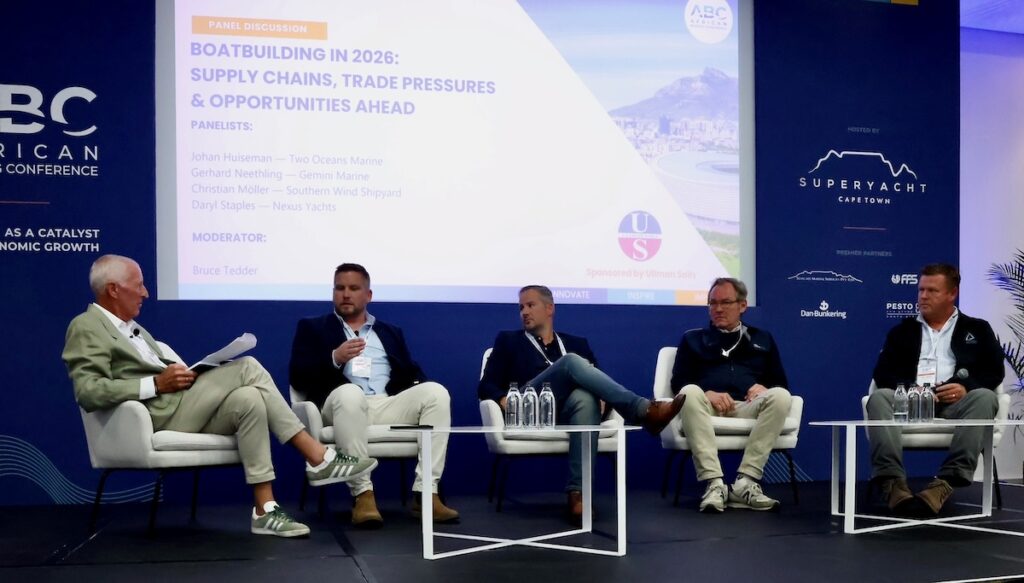
The discussion brought together four leading South African boatbuilders: Johan Huisman, Two Oceans Marine Manufacturing; Gerhard Neethling, Gemini Marine; Christian Möller, Southern Wind; Daryl Staples, Nexus Yachts.
Representing different sectors of the industry, the panellists shared perspectives on the challenges of manufacturing world-class vessels in South Africa and the opportunities to strengthen the country’s international competitiveness.
A central theme was that innovation does not necessarily require expensive technology or major capital investment. Often, the greatest improvements come from closer collaboration between boatbuilders, designers, suppliers and customers to identify practical solutions that improve efficiency, reduce waste and streamline production.
Examples discussed included the use of 3D scanning technology to improve manufacturing accuracy and accelerate production. In superyacht construction, combining digital measurement with advanced filler application techniques could potentially reduce a traditionally lengthy finishing process from nine to twelve months to just three to six months.
Advances in sustainable materials are also opening new opportunities, with one example demonstrating how approximately 46% of a material can be derived from sustainably sourced wood pulp rather than fossil fuel-based inputs.
However, technology alone is not the answer. Skills shortages, high equipment costs, inefficient production processes and increasing competition from Asian manufacturers remain significant challenges.
The discussion cautioned against simply adopting European manufacturing models without considering South Africa’s operating environment. Instead, the industry needs solutions suited to local workforce capabilities, supported by targeted training, mentorship and the practical application of new technologies.
Government support and international trade advocacy also remain critical to the industry’s future. The continued engagement of Cape Town’s Alderman James Vos and Western Cape Premier Alan Winde reflects continued recognition of boatbuilding as an important contributor to exports, investment, economic development and skilled employment.
Premier Winde’s efforts to engage the United States on trade tariffs are particularly significant given the importance of the American market to South African boatbuilders. Advocacy for more favourable trading conditions highlights the need for government and industry to work together to protect export markets and sustain the sector’s international competitiveness.
While external trade conditions remain a challenge, the panel reinforced that South Africa also has opportunities to strengthen its position through improvements within the industry itself.
Greater collaboration emerged as one of the most immediate opportunities for progress. Earlier engagement with suppliers, better production planning, sharing technical expertise and investing in the next generation of skilled workers could deliver meaningful productivity gains while building long-term manufacturing capacity.
South Africa’s labour-intensive boatbuilding sector also has the potential to turn its skills base into a competitive advantage, combining craftsmanship and specialist expertise with smarter production methods and selective technology adoption.
The overarching message was that South Africa does not need to reinvent boatbuilding to continue competing internationally. By improving efficiency, strengthening partnerships and investing in people, while working alongside government to address international trade barriers, the industry can build on its established reputation and create further opportunities for economic growth and employment.
The African Boating Conference continues to provide an important platform for these discussions, bringing together manufacturers, suppliers, government representatives and industry leaders to address shared challenges and develop the partnerships needed to advance Africa’s marine manufacturing sector.
For more information, visit www.africanboatingconference.com