As Australia works towards a lower-emissions maritime sector, responsible fire protection is an important part of the picture. The Australian Government’s Maritime Emissions Reduction National Action Plan (MERNAP) outlines priorities for reducing emissions across the maritime sector. For vessel operators and managers, this should include considering how fire suppression systems are maintained, serviced and managed throughout their working life.
Understanding the environmental impact of fire suppression systems is important. Gaseous fire suppression systems protect critical spaces aboard vessels, including engine rooms, machinery spaces and areas containing sensitive electrical equipment. However, some systems use scheduled extinguishing agents that can have significant environmental consequences if released into the atmosphere.
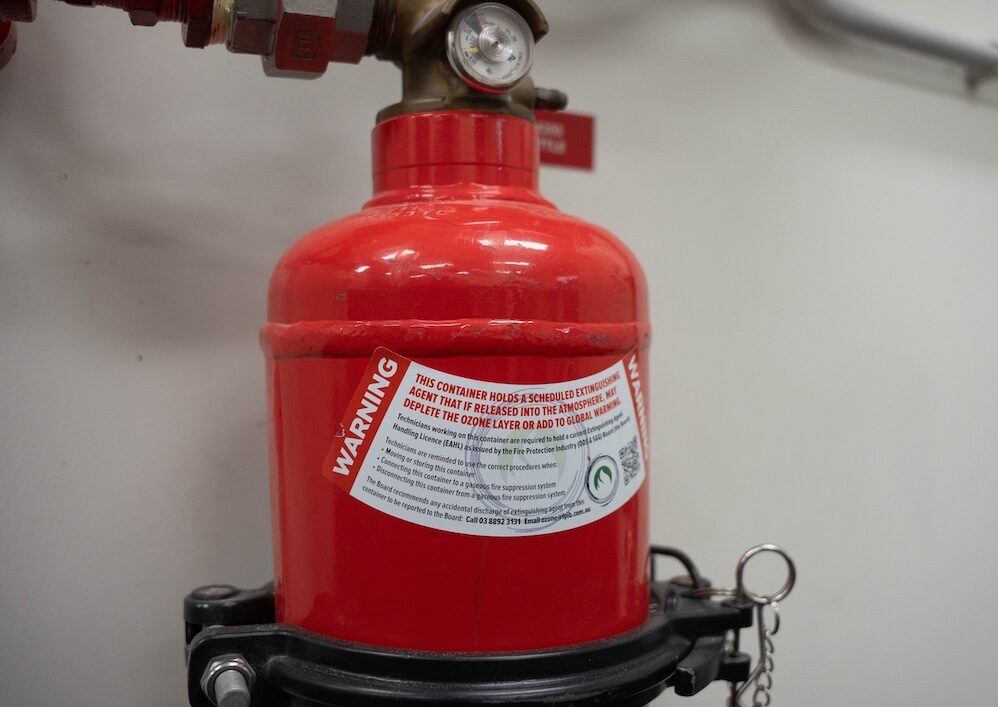
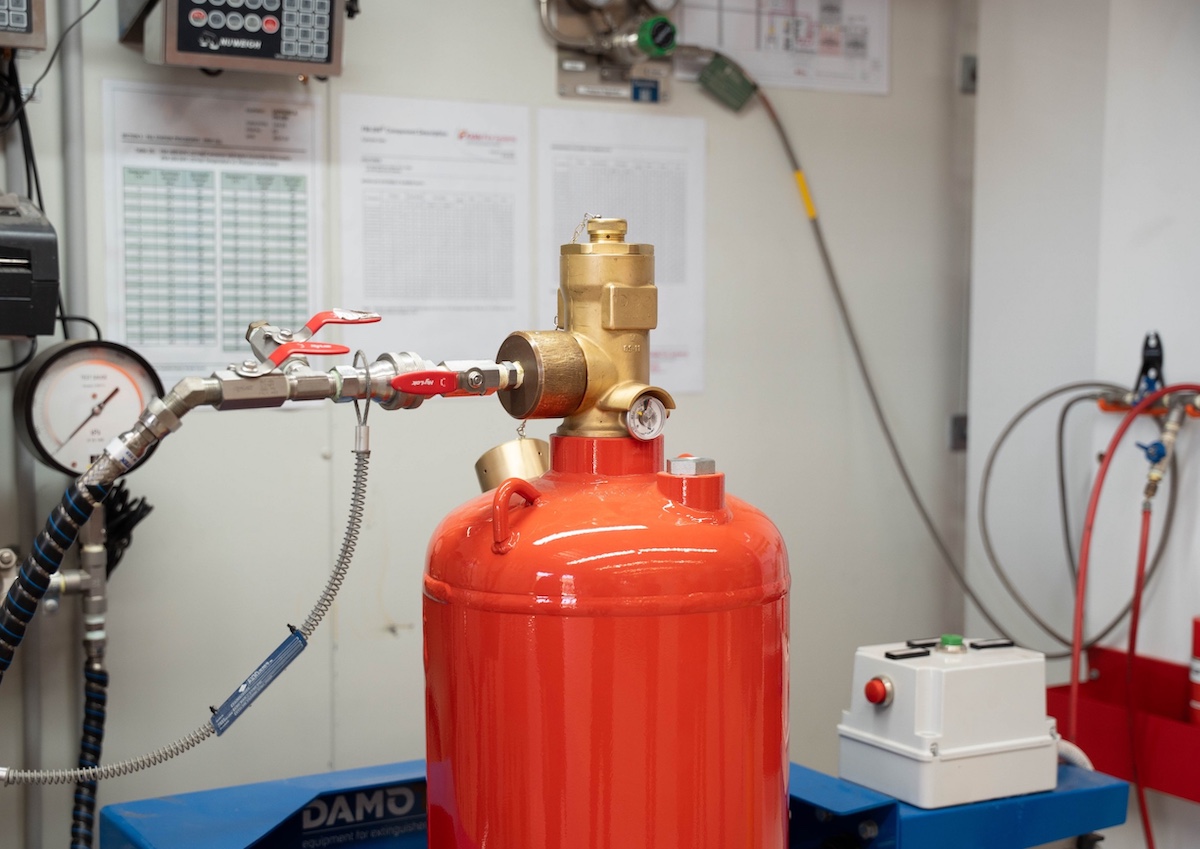
FM-200® (HFC-227ea), for example, is a common gas used in fire suppression systems on vessels that has a commonly cited global warming potential (GWP) of 3,220. A 10 kg release represents approximately 32 tonnes of carbon dioxide equivalent (CO₂-e). NAF-S-III, also known as HCFC Blend A, is another common agent found on boats that contains Ozone-Depleting Substances (ODS) and Synthetic Greenhouse Gases (SGGS) and has climate impacts that must also be considered.
Because scheduled extinguishing agents such as FM-200 and NAF-S-III can have such significant environmental impacts if released, their handling and maintenance is subject to licensing requirements designed to support responsible management. Anyone undertaking work involving these agents must hold the appropriate Extinguishing Agent Handling Licence (EAHL) for the activities they perform.
The Fire Protection Industry (ODS & SGG) Board (FPIB) administers Australia’s fire protection industry permit scheme on behalf of the Australian Government. The Board manages licensing and authorisations for relevant activities involving scheduled extinguishing agents and helps industry understand its obligations. For vessel operators and managers, this means checking that technicians hold the appropriate licence before engaging them to install, maintain or decommission fire suppression systems, and that businesses hold any required authorisations for their activities. Of course, in an emergency, these systems can be used by anyone.
Preventing avoidable releases through sound maintenance, responsible handling and appropriate technician selection is a practical way to reduce emissions while maintaining essential fire protection.
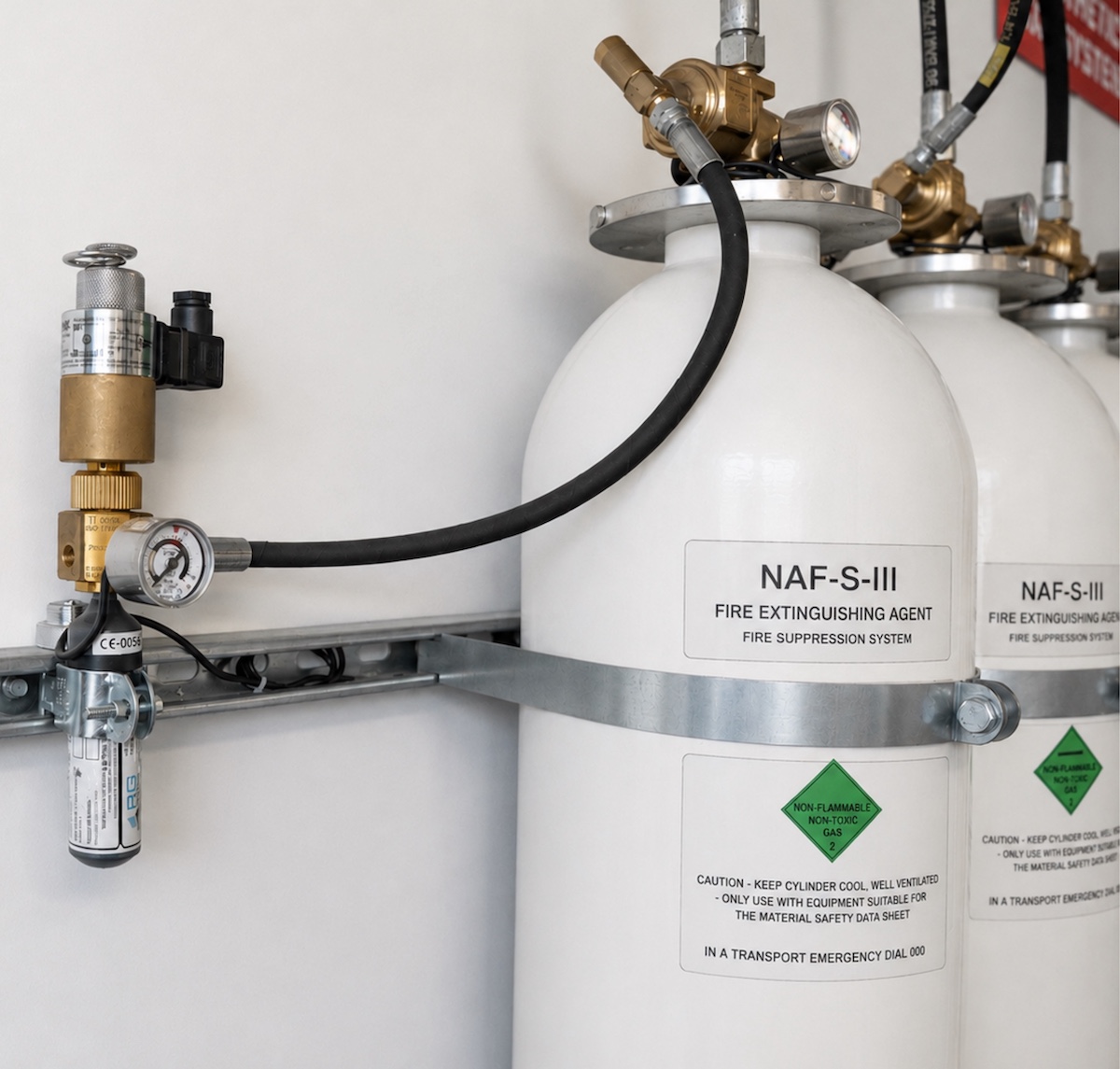
What should vessel operators or boat owners know? Best practice starts with knowing which agent a vessel’s systems contain, maintaining accessible service records, Inspections and maintenance should be carried out by fully licensed professionals.
When engaging a fire protection contractor, vessel operators and managers should ask:
- Is the technician appropriately licensed? Check that the technician you are working with holds an Extinguishing Agent Handling Licence (EAHL) that covers the work required.
- Does the business hold the appropriate authorisation? An Extinguishing Agent Trading Authorisation (EATA) is required for relevant activities involving the acquisition, storage or disposal of scheduled agents. Ask contractors to confirm they hold the appropriate authorisation for their activities.
- How will avoidable emissions be prevented? Discuss isolation procedures, suitable recovery equipment and how recovered agents will be managed.
- Are there risks? Look around the area of your vessel that the suppression system is installed in, are there any potential safety hazards that could cause a discharge?
- Will the work be documented? Request records of maintenance, defects, agent recovery.
- Has there been a discharge of scheduled extinguishing agent? If you have engaged a technician they should report this to the FPIB. Even if you’re not a permit holder or technician, if you witness a discharge of a scheduled extinguishing agent you should report this to the FPIB.
By engaging appropriately licensed technicians, checking relevant business authorisations and maintaining systems properly, vessel operators can help prevent avoidable emissions while ensuring essential fire protection remains effective.
As maritime decarbonisation progresses in the pursuit of limiting the risks associated with climate change, these everyday decisions can make a practical difference. Protecting vessels and the people aboard them remains paramount, and responsible management of scheduled extinguishing agents helps protect the environment too.
For more information on how to best manage your vessel safely visit here.

Robert Henningham
By Robert Henningham – Communications Leader, Fire Protection Industry (ODS & SGG) Board
Robert Henningham leads communications at the Fire Protection Industry (ODS & SGG) Board (FPIB), writing industry articles, educational resources and developing awareness campaigns.
Through his writing, Robert highlights industry best practice, promotes the responsible handling of scheduled extinguishing agents and showcases the work of permit holders and businesses in supporting a safer, more environmentally responsible fire protection industry.