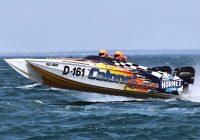
By Danny Casey – A cautionary tale
Several years ago, my family and I were on Sydney Harbour for the start of the Sydney-Hobart yacht race. The Harbour, as is its wont during the start of this magnificent spectacle, was at its worst – a tumultuous maelstrom of boat wakes, confused chop, with steep, angry waves and many boats screaming, yawing and buzzing about with little apparent regard for the COLREGS (Collision Regulations).
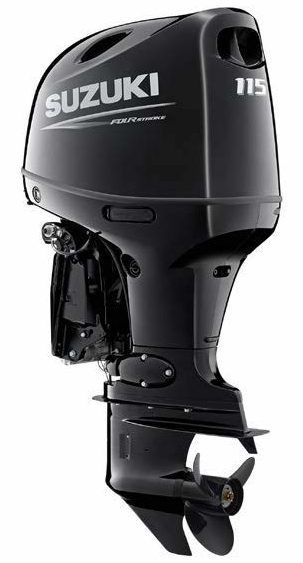
I was piloting a 5.0m bowrider with a then new 115 hp 4-stroke – a perfect “sweet spot” for a small boat as far as towing, launching/recovering, accommodating a family of four and parking handily and snugly in the garden at home were concerned. All was well, despite the ever present fact that piloting a boat on Sydney Harbour during events like the Hobart requires one to be wholly on one’s game and extremely vigilant.
We were meandering and weaving along at around 10-12 km/h, which was displacement speed and not an ideal rate of travel for a planing hull, when the bowsprit of a Sydney-Hobart competitor hove into view on the port bow at a furious and frightening rate of knots from behind a large flybridge cruiser – the skipper of the yacht obviously having to make a quick about-turn and tack to get him back in sync with the other boats to avoid crossing the starting line too early.
I urgently had to veer hard to port at almost 90 degrees to avoid what would have been a catastrophic collision – only to find myself confronted with a mountainous wash from a very large passenger vessel. I stabbed the throttle – not gradually but hurriedly – and the little bowrider started to gamely but hesitantly climb up what was a solid wall of water. However, about halfway up the wave, the motor started to groan and labour, and our ascent over the crest looked less than assured – I was, in fact, of the belief that we were going to slide sternwards down the crest. Eventually, and purely down to luck and not skill (my piloting and throttling capabilities had run their course), the prow poked haltingly over the top of the huge wave, and we started to skate (albeit now under some semblance of control) down the other side and to relative safety.
I used to race boats and have had some scrapes in the past (entirely of my own making and usually affecting nobody but me), and although I have a healthy and wary respect for the sea, it doesn’t scare me as such – but it certainly did that day. My kids, now quite experienced on boats, were very young then and didn’t detect the mild but spreading panic on my erstwhile impassive and inscrutable face – but my wife did.
As outlined earlier, the boat had a 115 hp outboard, which was comfortable, adequate and acceptable – but well under the boat’s maximum rating of 150 hp. I can unequivocally now state that had the boat been fitted with the maximum of 150 hp (or close to it), the heart-stopping incident with the errant wake would have been avoided, and we would have been able to literally “blast” our way out of harm’s way in a fraction of the time. This is the classic paradox regarding speed on the water – a lot of power in an automobile can endanger your life, whereas a lot of power on a boat can save it. Let’s examine this premise.
How much is too much?
Many years ago, in the marine industry in the UK, where one always had to strike a good balance between power and economy (the price of petrol being a constant concern), some manufacturers and dealers used to apply an elementary mathematical formula: if a boat’s minimum horsepower was, say, 90 hp and its maximum was 140 hp, one just added both figures together (for a total of 230) and then divided by 2. Therefore, one opted for a 115 hp motor. There was nothing wrong with this rather simplistic formula – except if one encountered an emergency like my Sydney Harbour incident.
Nonetheless, the basic concept of “ideal” power has changed somewhat over the last 3-4 decades. One can never, within reason, have too much power on a boat. As long as the boat is not overpowered (as per the manufacturer’s guidelines), it is almost certainly best to opt for a motor either right on or near the recommended maximum power. High reserves of power can be kept in check and applied only when needed, but with inadequate or lowish power, a boat can get into trouble quickly, but out of trouble too slowly or maybe not at all.
Just by way of quick familiarisation with the two types of conventional monohull boats: firstly, those which plod along in the water with a large immersed area are known as “displacement” craft (i.e. they displace their own weight as they move through the water). These boats have pretty much a “set” maximum speed regardless of power, which is usually the square root of the waterline length in feet x 1.5 knots. Therefore, a boat with a 25ft waterline will usually max out at about 7.5 knots (5 x 1.5 = 7.5).
The second variant of hull – the “planing” type – glides along on the surface of the water with no immersion of the hull at speed. A boat like this will always go faster with a) more throttle applied and b) more horsepower installed. One will never find either an inadequacy or excess of power on a new boat – a manufacturer or dealer would simply never compromise the buyer’s safety and their own reputation.
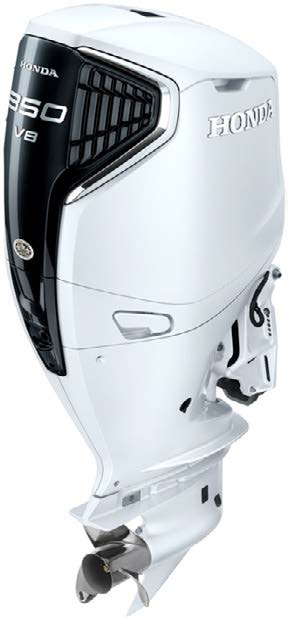
Where one occasionally strikes problems is in the vibrant and growing “repower” market, where long-term owners of iconic hulls (either no longer in production or of sentimental value) wish to fit a new motor or motors. Many of these boats will be pretty old and do not have builders’ plates, or else they were horsepower-rated back in the days when engines were rated at the flywheel rather than the propeller. Many of these owners are tempted to go for a larger motor, and this is sometimes down to the various outboard product “families”. With at least two of the major manufacturers, their 150/175/200 hp ranges are all on the same 4-cylinder platforms, and with three manufacturers, their 225 and 250 hp motors are on the same V6 platforms.
Although the weight of a higher horsepower variant will not be an issue, there could still be the problem of overpowering. It is tempting to overpower an old boat that is being repowered, and if the boat has had extensive shoring-up surgery done to the transom and either a pod or hull extension added to cope with a newer and maybe higher-horsepower motor, the owner may decide it might be worth rolling the dice.
But in relation to liability and insurance issues alone, a new boat, or a recent boat with a builder’s plate, must never, ever be overpowered.
Single or twins?
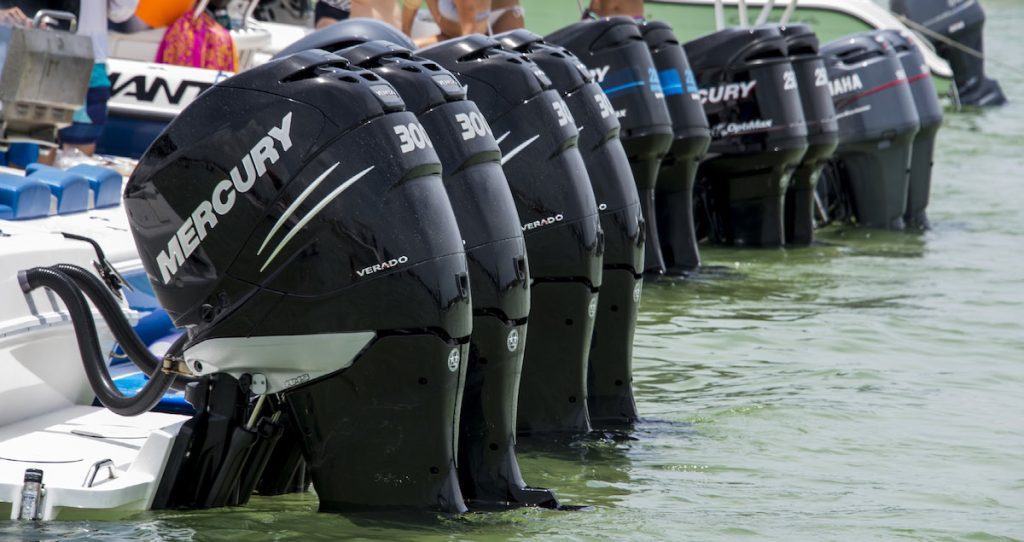
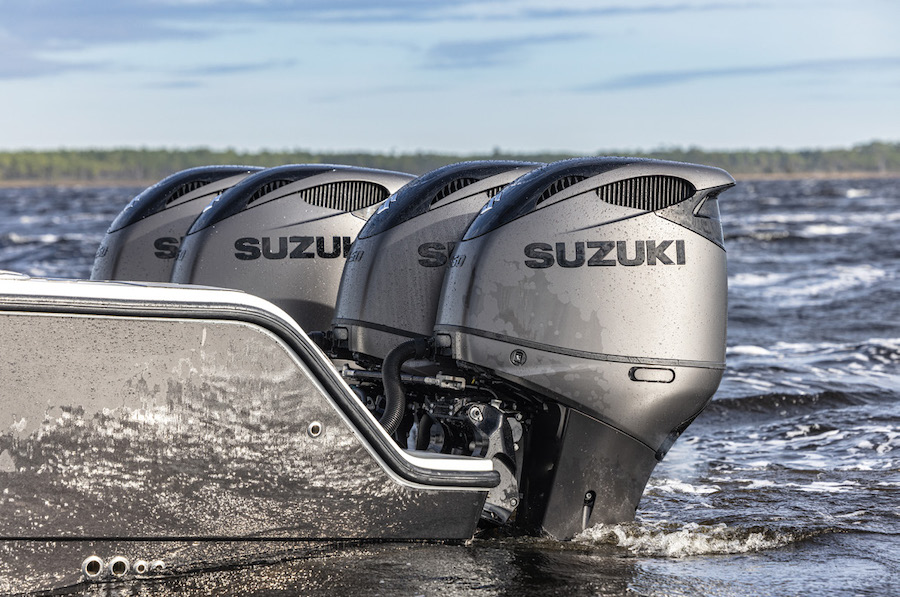
Nothing will be as fast, nimble, manoeuvrable and economical as a boat with a single engine that is at or near that boat’s maximum capacity. A single outboard will need less fuel, will weigh less, and will have relatively little drag. Nonetheless, for some boats (catamarans in particular, but many large plate aluminium monohulls too), twin outboards – and even in some cases multiples – will be de rigueur. Twins will give greater security and greater peace of mind for those who venture regularly to the shelf and beyond, not to mention that many large boats need the ability of twin (or multiple) propellers to really hook up and “grab” the water to propel and lift the boat properly.
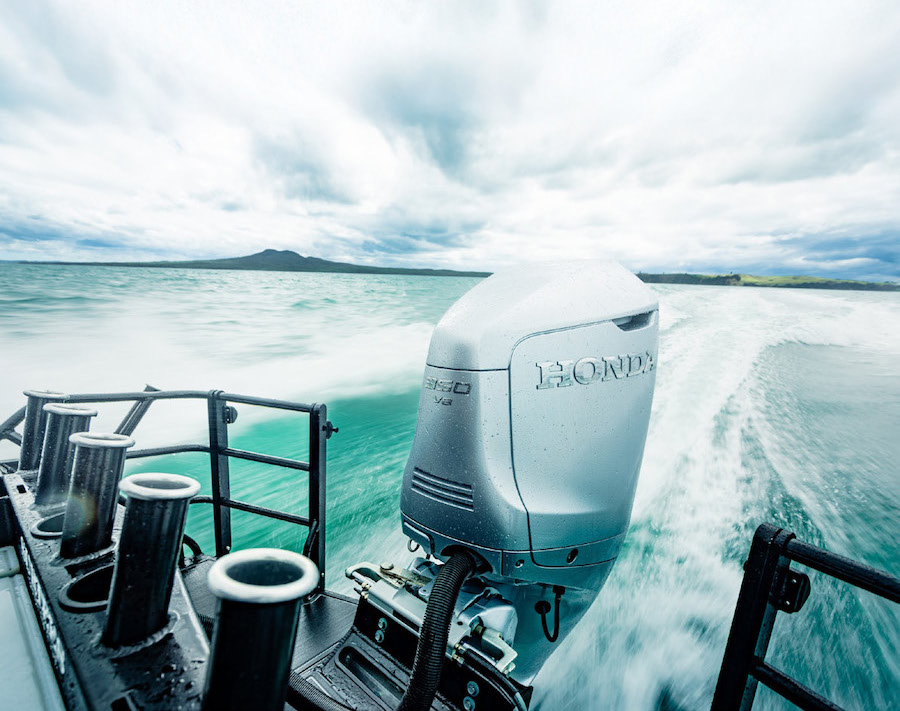
Twin outboards will traditionally be a counter-rotating pair, with the starboard motor using a standard right-hand (clockwise) rotation propeller and the port motor having a counterrotating (i.e. left-hand-rotation) propeller. I have seen an occasional and rare exception to this rule, particularly if a boat is stern-heavy and requires more lift, whereby the rotation of the outboards is reversed (i.e. the counter-rotating motor to starboard and the standard-rotation to port). This theory – somewhat nebulous – is that two props rotating inward (towards the keel of the boat) rather than outward will aerate the water better and give the stern a little more lift. Be warned, though, that anyone tempted to embark on a project by putting together a “cheap” twin-engine boat using standard-rotation outboards is asking for trouble, as the boat will never ride or trim properly. It will always want to list and “torque” to the left because both clockwise-rotating props will always want to throw the boat off its vertical axis.
One thing is certain about a twin-engine boat, however: it will not be as fast as with a single motor of the same nominal power – the extra motor weight, the drag from two lower units and props, plus the extra battery weight, will see to that.
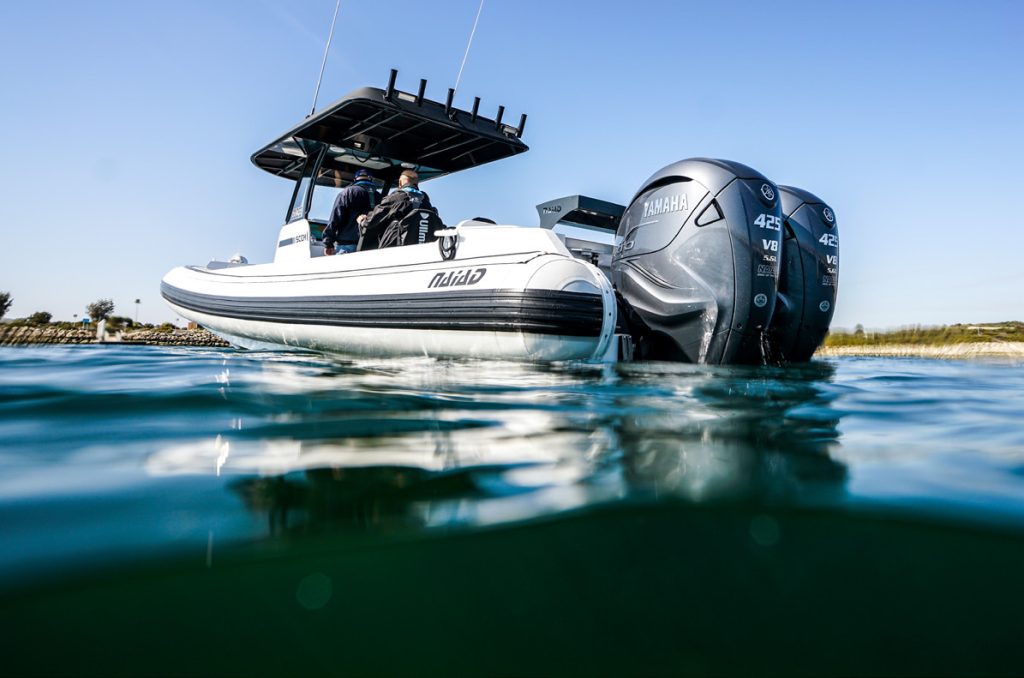
You will pretty much always be able to make it back home in a twin-engine boat if one motor fails (as long as it is not a fuelsupply issue with both motors fed from the same tank!), but you can pretty much forget about being able to make the boat plane on one motor – there would be too much propeller pitch to let the remaining motor “spool up” into anywhere near its power band. Even if the boat could plane on one motor (and some relatively light RIBs can), the stress on the sole outboard would in time prove terminal.
Even though twin outboard rigs are extremely manoeuvrable, anyone used to twin inboards with traditional shafts and propellers would find that you cannot “pirouette” a twin-outboard boat on the spot by using the engines only (i.e. one prop forward and the other astern) – this is because the outboards are mounted very close together, close to the keel and centreline and can’t give the “push-pull” motion of two wider-spaced inboards and props. The exception to this is, of course, catamarans, which, due to the wide-apart outboards (one on each sponson), will perform such “spin” manoeuvres flawlessly.
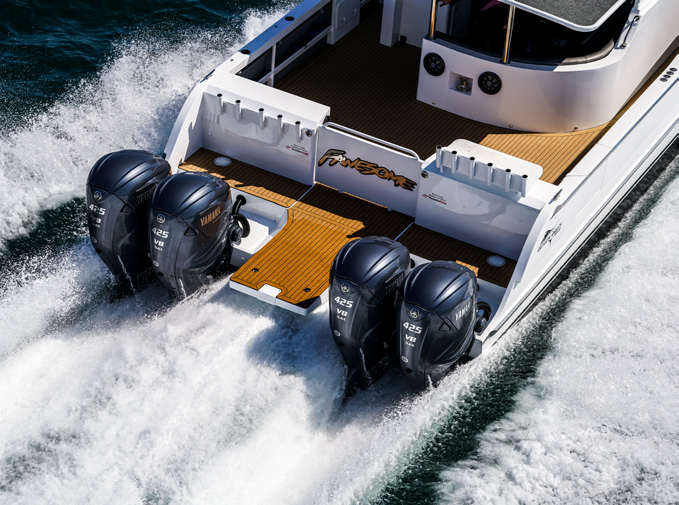
It’s all a matter of usage and budget.
There is little point in trying to make a pleasurable sport complex, convoluted or difficult to comprehend. All you need to know is that your boat will be set up and supplied with the power it demands – and safe, wholly usable power at that. There will always be those – such as buyers of specialised, bespoke offshore boats – who like to get involved in the theory and building of such custom craft. Such boaters may want to understand the mechanics and intricacies of their sport better, but when all is said and done, everyone’s enjoyment is the great leveller.
As seen originally in POWERBOATMAGAZINE.co.nz
Danny Casey is highly experienced, undoubtedly idiosyncratic, and immensely knowledgeable about things mechanical, new or old. His knowledge and passion are as a result of spending his whole life in or around anything power-driven – especially marine engines. His passion for boating is second to none, with his life a montage of fabulous memories from decades spent in or around water and boats, both here and in Europe. Danny has spent myriad years in the recreational marine industry in a varied career in which he has bamboozled colleagues and competitors alike with his well-honed insight.

His mellifluous Irish accent, however, has at times been known to become somewhat less intelligible in occasional attempts at deliberate vagueness or when trying to prevent others from proffering a counter-argument or even getting a word in. Frank and to-the-point, but with a heart of gold, it can be hard to convince Danny to put pen to paper to share his knowledge. Marine Business News is grateful for his contributions. Connect with Danny through LinkedIn.