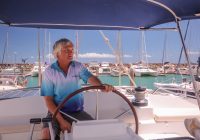
For the more than 550,000 boat licence holders and 240,000 registered vessels across New South Wales, time spent on the water is part of a lifestyle that blends adventure, relaxation and connection with nature. Whether it is fishing at dawn, cruising along the coast with family, or taking on blue-water challenges offshore, boating offers experiences that few other pastimes can match.
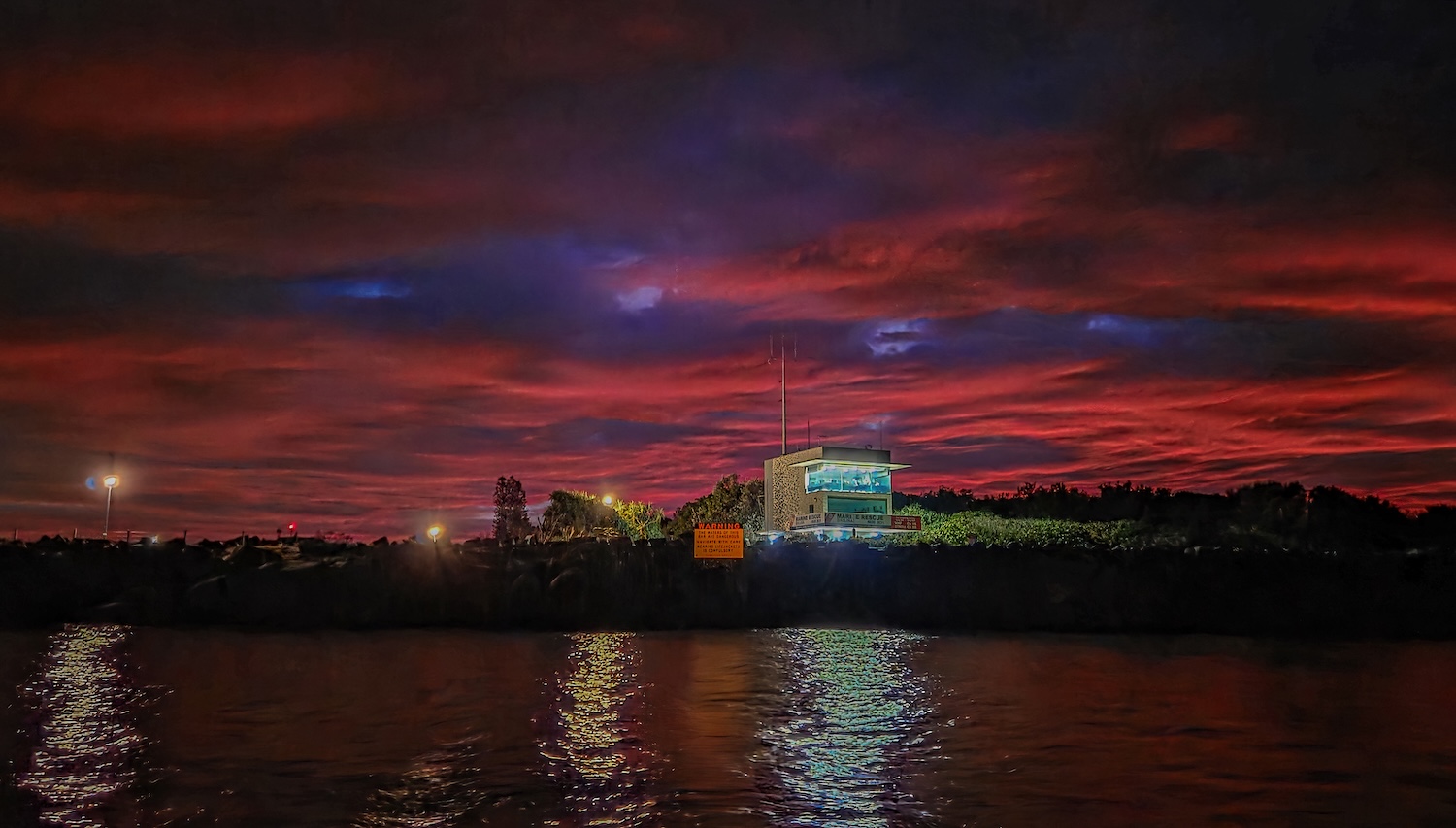
Marine Rescue Ballina overlooks the Richmond River bar
There is good science behind why people feel so drawn to the water. Studies have shown that when we are enjoying activities such as boating, fishing or sailing, our bodies release a combination of the so-called “four happy hormones” – dopamine, serotonin, endorphins and oxytocin. Together they create that unmistakable sense of wellbeing that so many boaters recognise: the calm of being on the water, the excitement of discovery, and the deep satisfaction of time spent outdoors.
But like any activity conducted in a natural environment, boating also carries risks. Weather conditions can change rapidly, mechanical issues can occur, and even experienced operators can encounter unexpected situations. When things go wrong offshore or along the coast, it is reassuring to know there are dedicated professionals and volunteers ready to respond.
Across New South Wales, that reassurance often comes in the form of the 3,500-plus volunteers of Marine Rescue NSW, men and women who give their time, skills and experience to protect lives on the water. These volunteers conduct thousands of missions every year, assisting stranded vessels, responding to medical emergencies, searching for missing boaters and helping swimmers in distress.
Among these volunteers are individuals whose commitment goes far beyond simply turning up for a shift. They are the quiet leaders within their communities, people who combine maritime experience, operational capability and a deep sense of responsibility to ensure that when someone calls for help, a trained crew is ready to respond.
One such person is Marine Rescue Ballina Master Geoff Hutchinson.
Geoff and his wife Deb joined the Marine Rescue Ballina unit in June 2020, bringing with them a passion for the ocean and a willingness to contribute to the safety of others. What began as volunteering soon evolved into a deep and multifaceted commitment to the unit.
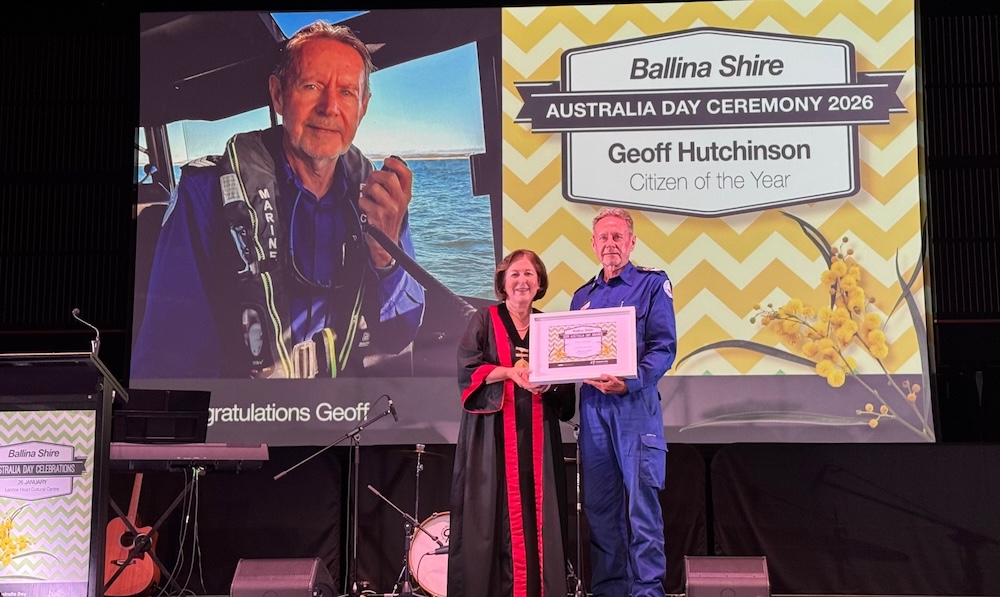
Geoff is named Ballina’s Citizen of the Year 2026
Today Geoff holds several roles within the organisation. In addition to serving as a Master on rescue vessels, he contributes as the unit’s Public Relations Officer, IT Officer, webmaster and a member of SOG (State Operations Group, flood response), while also undertaking training as a radio operator. Deb is equally involved, playing a key role in fundraising efforts that help support the unit’s operations and equipment.
Geoff’s connection to the sea stretches back decades. A passionate sailor, he has competed in multiple Sydney to Hobart Yacht Races and has also participated in trans-Pacific yacht deliveries, building a wealth of offshore experience and imparting this knowledge as a sailing and navigation teacher. That background provides valuable practical insight when responding to emergency situations, particularly in challenging environments such as the Ballina bar, known as one of Australia’s more demanding coastal entrances.
His commitment to Marine Rescue Ballina has also extended beyond operational duties. Recognising the constant need for modern, capable rescue vessels, Geoff sought creative ways to support the unit’s fundraising efforts.
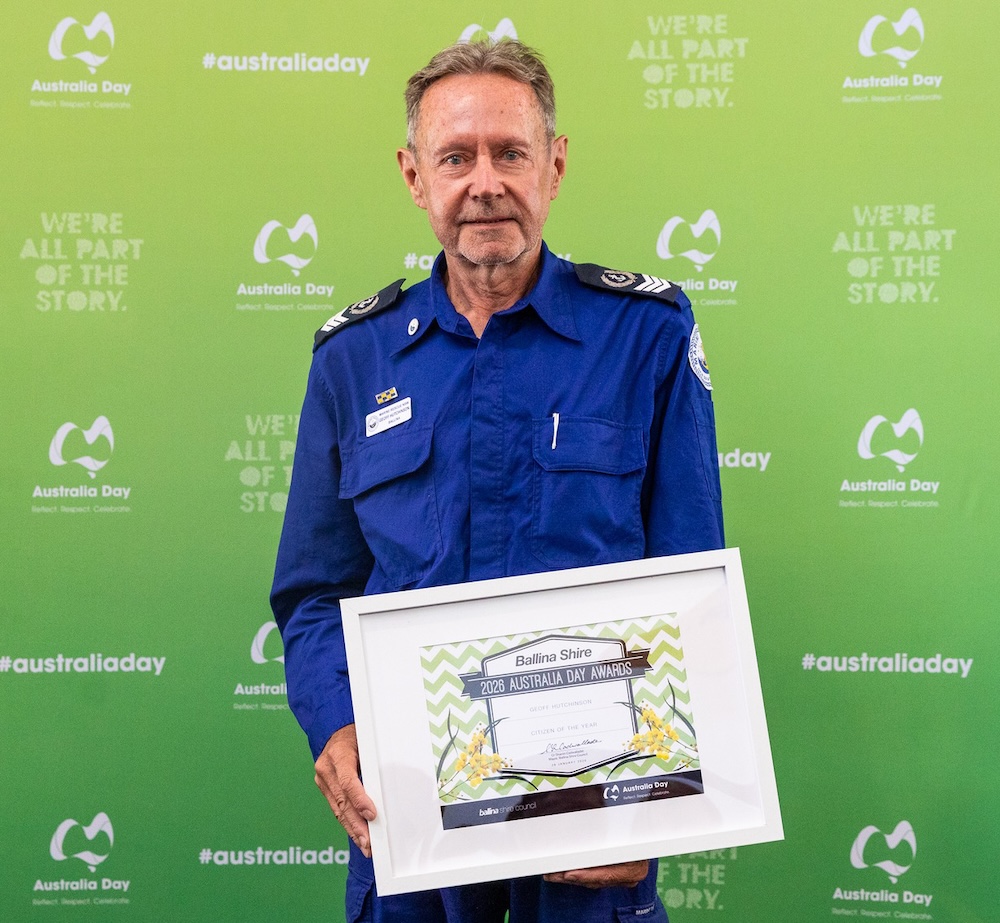
Event Photography by kate Holmes Photographer
He authored a book titled Shipwrecked, documenting the maritime history and wrecks around the Ballina bar.
Proceeds from the book contributed to the unit’s funding efforts for its new / replacement rescue vessel, Ballina 30.
The arrival of Ballina 30 marked an important milestone for the unit. During its delivery voyage from Yamba to Ballina, Geoff was at the helm as the vessel safely crossed the bar for the first time, an impressive demonstration of both the vessel’s capability and the crew’s professionalism.
In operational terms, Geoff has already participated in numerous search and rescue missions, including complex incidents involving missing boaters, distressed swimmers and vessels in danger. In one notable case, Marine Rescue Ballina crews responded to a vessel taking on water offshore at 3:00am, successfully rescuing two people before the situation escalated further.
These are the moments that highlight the real value of volunteer marine rescue organisations. When the call comes, it is not statistics or equipment alone that save lives, it is experienced people willing to respond quickly, operate professionally and put the safety of others first.
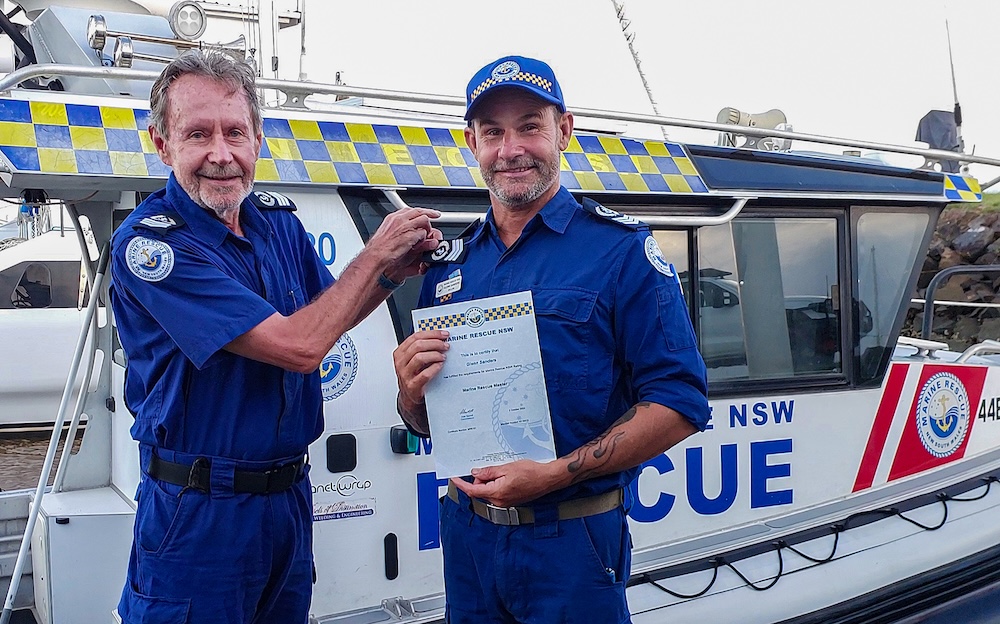
Geoff presents Glenn Sanders with his Marine Rescue Master epaulette
Geoff’s contribution to the Ballina community has not gone unnoticed. In recognition of his dedication and service, he was named Ballina Shire Council’s Citizen of the Year on Australia Day, a fitting acknowledgement of the many hours he has devoted to supporting both Marine Rescue NSW and the broader boating community.
For boaters across New South Wales, the presence of volunteers like Geoff Hutchinson is deeply reassuring. They are the “angels of the ocean”, skilled mariners who quietly stand ready to help when something goes wrong.
Marine Business News spoke with Geoff about his journey into Marine Rescue NSW, the realities of search and rescue operations, and what every boater should know about staying safe on the water.
What motivated you and your wife Deb to join Marine Rescue Ballina in 2020?
After retiring, Debbie and I spent three and a half years travelling around Australia with our caravan, which we affectionately called the “land yacht”. When that long journey came to an end, we decided to settle in Ballina.
Not long after arriving, we happened to walk past the Marine Rescue Ballina “BBQ @ the Beach”. We stopped to chat with some of the volunteers, and I mentioned that I held a Yachtmaster Offshore Certificate with an Instructor’s endorsement. At that time, however, the COVID-19 pandemic had disrupted many organisations, and Marine Rescue NSW had temporarily postponed the intake of new volunteers.
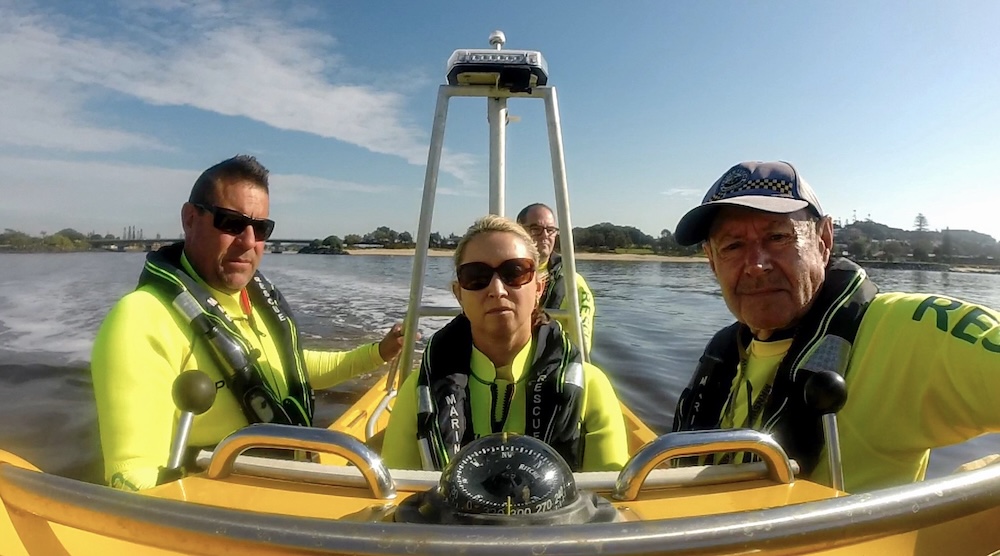
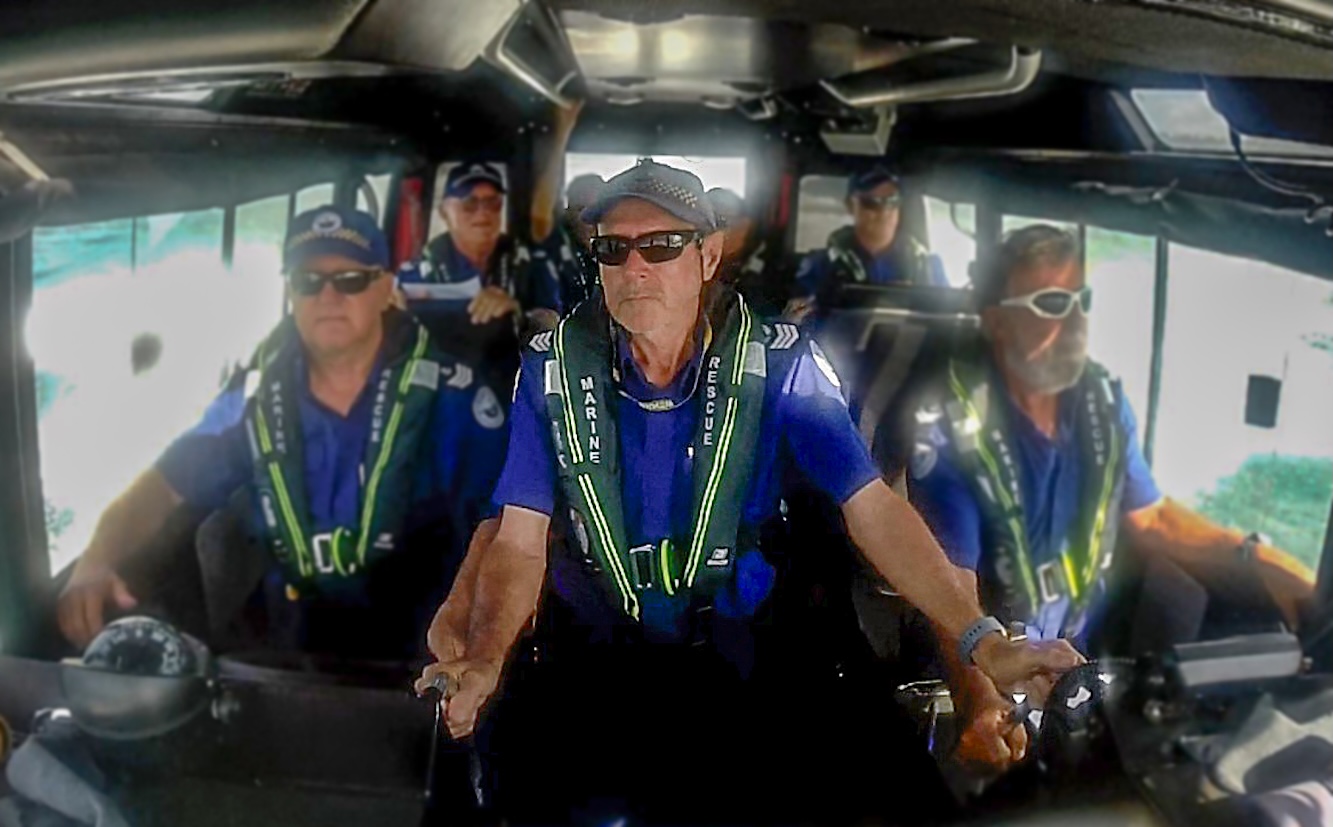
Geoff (far right) and crew depart for an assist on board the Ballina 21 jet boat
As soon as the unit was able to accept new members again, I joined immediately. I progressed through the training and operational ratings quickly, attending every training day available and volunteering for every assist whenever possible. It was a welcome return to the water and to the kind of work I had always enjoyed.
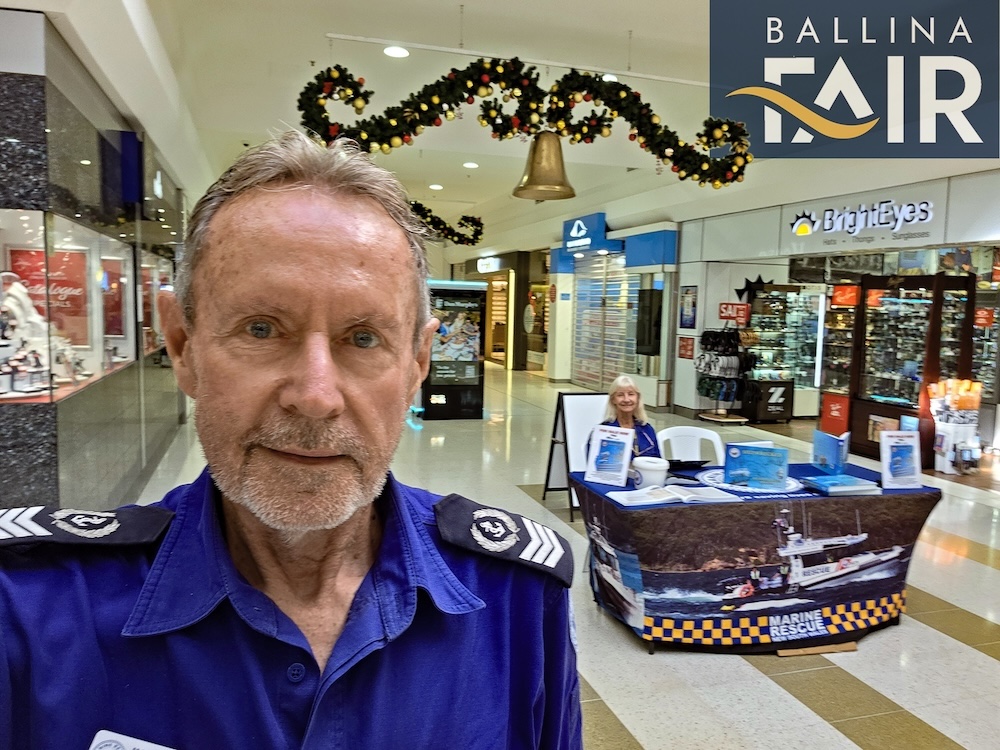
Debbie became involved a few years later. She helped by attending events and assisting with the sale of the Shipwrecked book, contributing in her own way to supporting the work of Marine Rescue NSW and the local community.
How did your volunteering evolve into the multiple roles you now hold within the unit?
Like most inventions it comes from there being a need. If I had the ability and I had the experience I put my hand up.
For readers who may not fully understand the role of Marine Rescue NSW, can you explain what a typical unit like Ballina does day-to-day?
By 06:00am the Radio Operator has arrived at the radio base on the north wall looking out over the notorious Ballina Bar, the entrance to the Richmond River. They do all the preparations for the day ready to Log On vessels going to sea for a day’s fishing offshore. The boat crew are gathering at the boatshed ready for a debrief for the days training exercises. If there is a call for assistance from a vessel broken down or in distress an SMS is sent by the Radio Operator and the duty crew respond, prepare the rescue vessel and depart.
What are some of the most common situations Marine Rescue Ballina responds to?
Mechanical failure, this could be battery, fuel, or just stopped proceeding.
You have participated in a number of search and rescue operations. Is there one mission that stands out in your memory?
A Jet ski six miles off Pottsville had reported engine failure at 4:30 pm we were tasked to respond. This is the most stressful assist I have done, it may have been added to by fatigue, but when you know there is someone out there in the dark and no contact and you can’t find them it is the worst feeling.
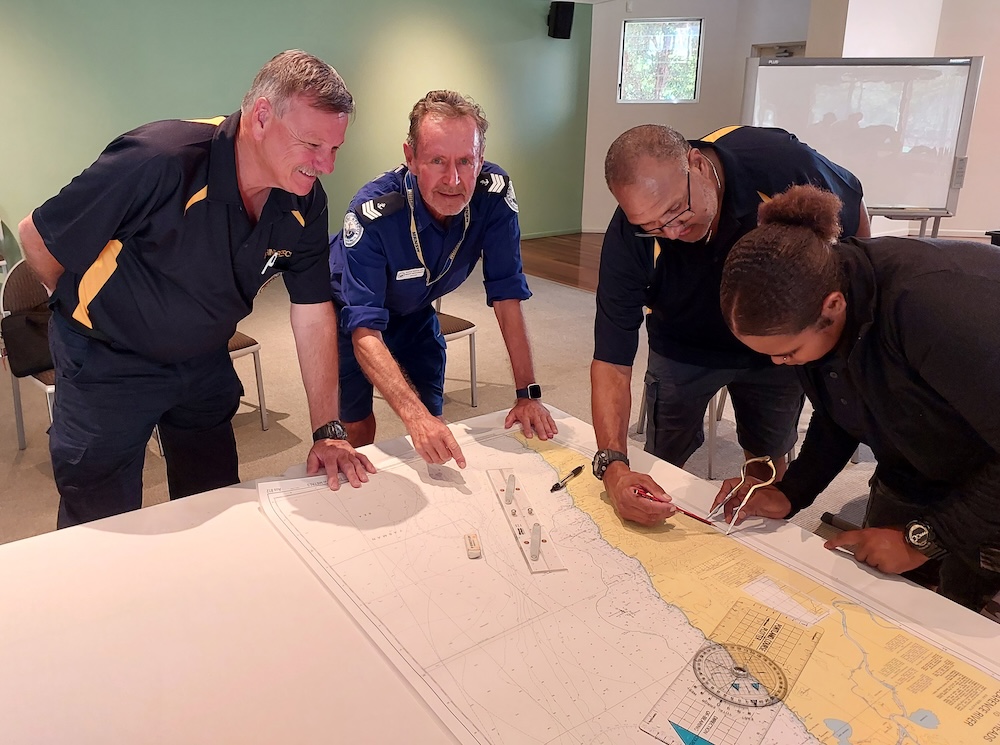
Below is the story I wrote about a rescue. I will attach a photo of the search area.
A Night-Time Rescue: A Life-and-Death Ordeal Off Windarra Bank
What began as a routine assist rapidly escalated into a life-or-death search and rescue operation for a stranded jet ski rider off the New South Wales coast.
At 5:00pm, Marine Rescue Ballina was activated to respond to a report of a jet ski breakdown with a sole occupant on board. Conditions were challenging: there was no moonlight, clouds dimmed the starlit sky, and the sea was rough, stirred by 25km/h westerly winds. The rider had no navigation lights, and his mobile phone battery had died, leaving him effectively invisible in the darkness.
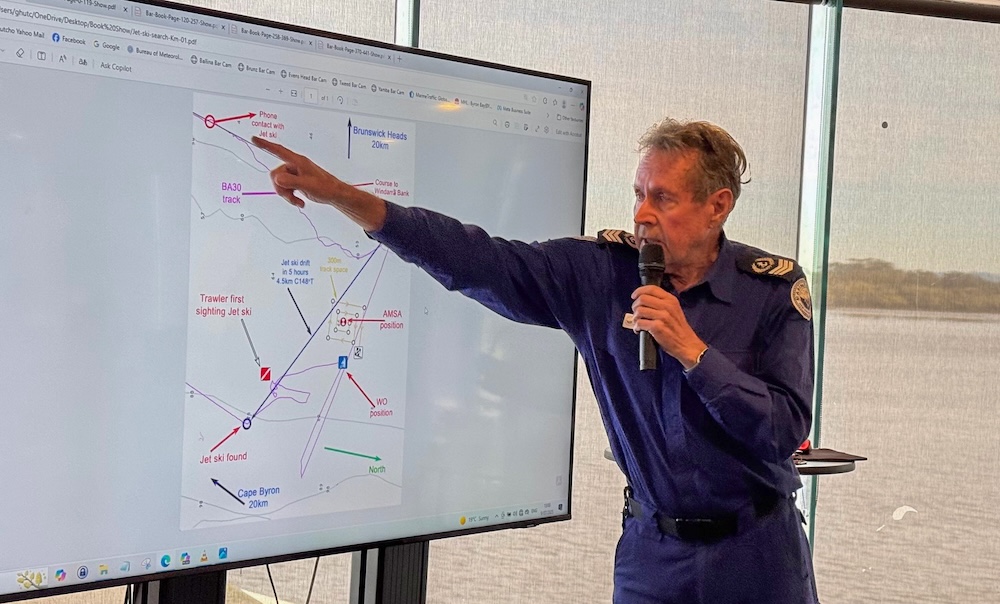
Captain Geoff Hutchinson, master of Marine Rescue Ballina‘s offshore vessel BA30, led the response. Reflecting on the seriousness of the task, Captain Hutchinson later stated,
“I was very concerned for the life of the jet ski rider. I was not sure if he could survive until first light, still 13 hours away.”
The rider had departed from Pottsville earlier in the day and travelled 18km offshore to Windarra Bank, a popular fishing ground located approximately 21km north-east of Cape Byron and 20km east of Brunswick Heads. After catching several snappers, he attempted to start his jet ski for the return journey, but a suspected electrical fault rendered the engine inoperable. With repeated attempts to restart the engine failing, the rider used his mobile phone to call his wife and friends around 4:00pm to seek assistance. The sun was setting quickly.
Captain Geoff Hutchinson, master of Marine Rescue Ballina’s offshore vessel BA30, led the response. Reflecting on the seriousness of the task, Captain Hutchinson later stated, “I was very concerned for the life of the jet ski rider. I was not sure if he could survive until first light, still 13 hours away.”
The rider had departed from Pottsville earlier in the day and travelled 18km offshore to Windarra Bank, a popular fishing ground located approximately 21km north-east of Cape Byron and 20km east of Brunswick Heads. After catching several snappers, he attempted to start his jet ski for the return journey, but a suspected electrical fault rendered the engine inoperable. With repeated attempts to restart the engine failing, the rider used his mobile phone to call his wife and friends around 4:00pm to seek assistance. The sun was setting quickly.
At 5:00pm, Marine Rescue Ballina received a formal call for help, and BA30 was immediately tasked. It departed Ballina, crossing the bar at 5:15pm for the 47km run north to the last known position. By 6:15pm, BA30 was 10km south of Windarra Bank, and night had fallen.
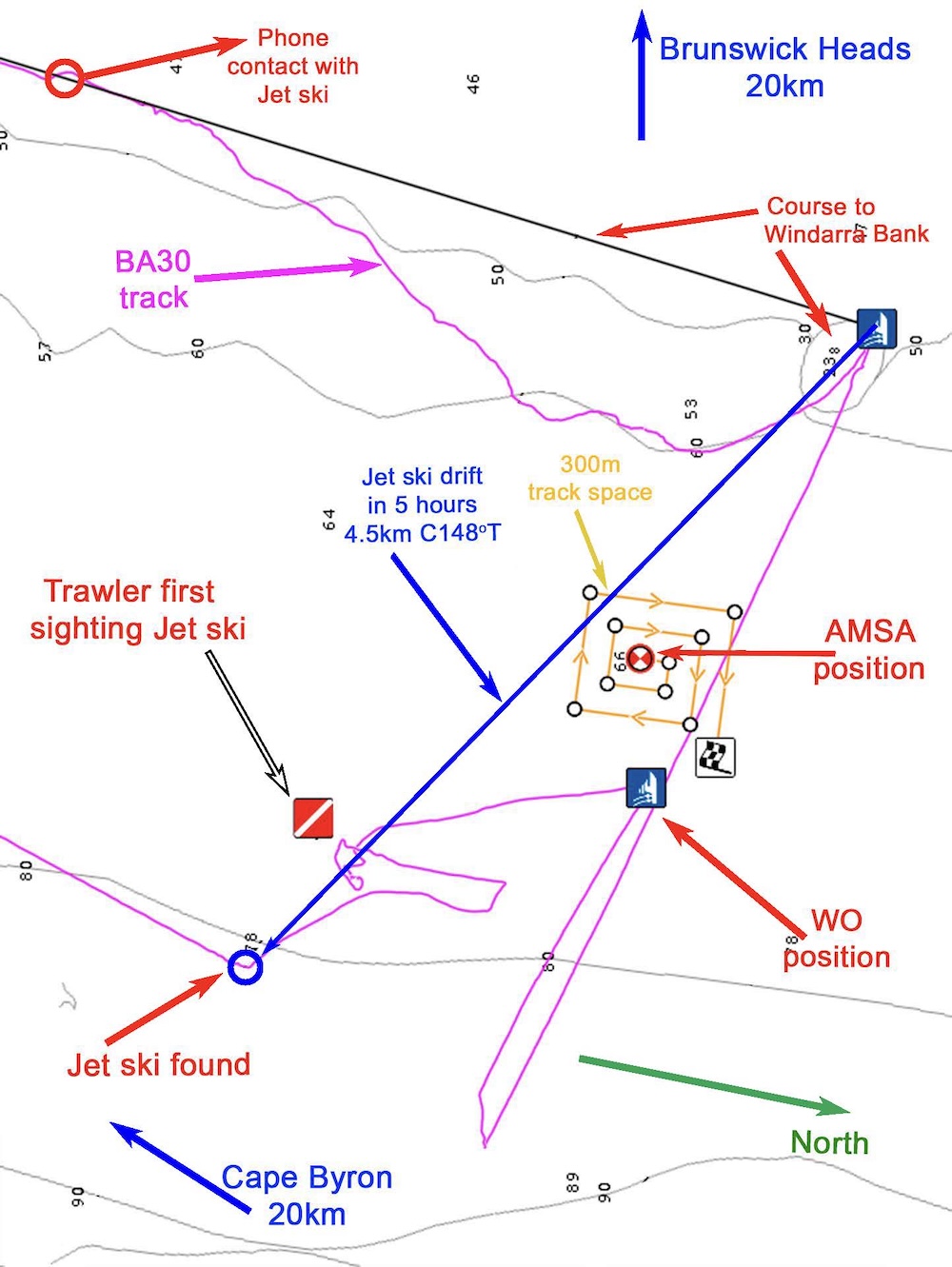
The crew managed to contact the rider by phone. He reported seeing BA30’s red and blue flashing lights and indicated he was north-east of their position. However, his phone battery was critically low, and the call soon dropped out. With two crew members in the cockpit operating spotlights, BA30 turned northeast to search the area.
Sea conditions were difficult: a confused 2-metre swell and persistent wind spray limited visibility in the beam of the searchlights. Occasionally, flying fish startled the crew as they burst through the darkness.
After advancing a further 4km, the crew attempted to re-establish phone contact, but multiple calls and an SMS message went unanswered. Captain Hutchinson, now gravely concerned, knew the search had to intensify. BA30 arrived at Windarra Bank and began drift calculations using current and wind to determine the likely set and drift. This data was sent back to the radio base in Ballina, where a Watch Officer and radio operator, Alan and Daryl, were coordinating the operation. They used the information to model an estimated position (EP) for further searching.
At 7:00pm, Captain Hutchinson requested that the search be escalated. By 7:20pm, additional assets had been tasked, including the Westpac Life Saver Rescue Helicopter from the Gold Coast, Marine Rescue Point Danger’s vessel PD31, and the NSW Water Police vessel WP27 from Tweed.
The helicopter arrived on scene shortly afterwards and was briefed by BA30. However, the lack of moonlight and cloud cover severely hampered aerial visibility. With no sightings and limited fuel, the aircraft was forced to return to base to refuel and change crews.
Meanwhile, the crew of the Queensland-based trawler Southern King had overheard BA30’s radio communications. As the trawler was towing nets southward through the area, its skipper offered to assist by keeping a vigilant watch.
At approximately 8:00pm, while BA30 was on route to a new search area provided by AMSA (Australian Maritime Safety Authority), a call came from Southern King. The skipper reported a possible sighting of the jet ski just south of BA30’s current position.
Captain Hutchinson immediately turned south, travelling at 35km/h to the trawler’s position just 4km away. Though the trawler’s nets were still deployed, limiting its manoeuvrability, both vessels began sweeping the area. “The trawler lost sight of the jet ski again,” said Captain Hutchinson, “but I felt more hopeful now that we were close.”
Finally, around 9:00pm, the crew of Southern King confirmed visual contact with the drifting jet ski. They guided BA30 alongside, and the fisherman was brought safely aboard. The jet ski was secured and prepared for tow. With 45km to return to Ballina at a cautious 10km/h tow speed, it was to be a long journey home.
At 2:30am, BA30 delivered the exhausted rider and his damaged jet ski into the care of the Tweed Water Police at the Fisheries Creek boat ramp.
The rescue concluded a gruelling 19-hour shift for Captain Hutchinson, who had already conducted a separate mission to Evans Head earlier in the day. “Out of 155 rescues over the last five years, this was one of the most stressful,” he said. “But all our training prepared us for nights like this.”
Marine Rescue Ballina extends sincere thanks to the crew of Southern King, without whom this rescue may not have had a successful outcome. The operation also relied heavily on the expertise and coordination provided by radio operator Daryl, Watch Officer Alan, and the BA30 crew: Captain Geoff Hutchinson, Dave, and Steve.
The rescued jet ski rider later admitted that his lack of safety equipment nearly cost him his life. “No torch, no EPIRB, no flares or radio—big mistake,” he said. “I honestly thought I was heading to New Zealand.”
Marine Rescue Ballina recently introduced its new rescue vessel Ballina 30. What makes this vessel such an important asset for the unit?
This vessel replaced an aging thirteen year old one. The new vessel has a different shaped hull giving it a better ride and a more positive feel in a sharp turn. It has more beam and wider sponsons giving better area inside for crew comfort and the wider sponsons give safer access for crew when they have to go forward, they also give good stability on a sharp turn. This vessel has twin 300hp engines with duo-props which almost eliminates prop cavitation which is most important when manoeuvring on and around the Ballina Bar.
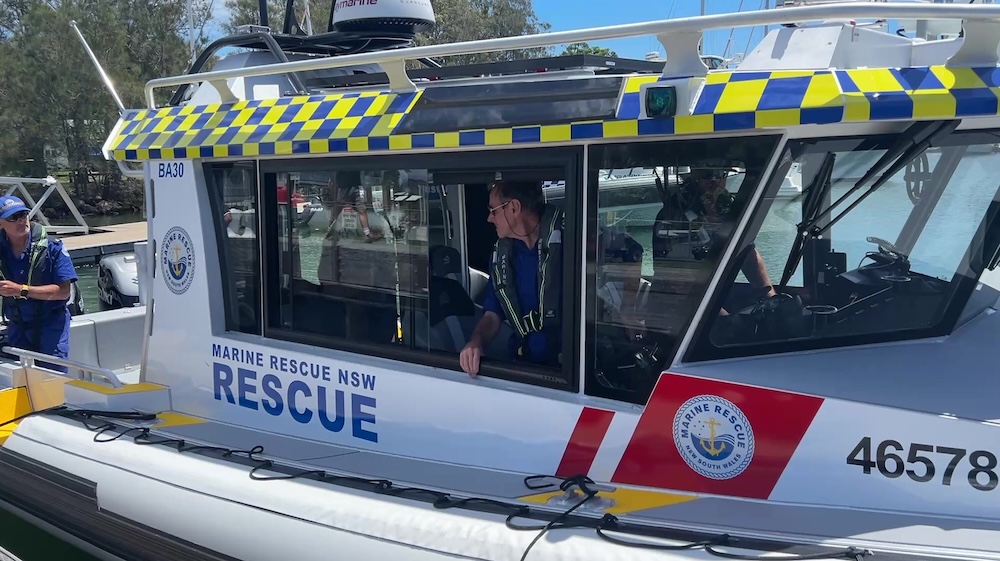
Geoff Hutchinson at the helm of the new Ballina 30 replacement vessel during crew induction
You took a unique approach to fundraising by writing the book Shipwrecked. What inspired you to write it?
After becoming aware of the many shipwrecks that had occurred around Ballina, and witnessing firsthand the dangers of the Ballina Bar, I developed an interest in learning more about the area’s maritime history. What began as a casual investigation soon grew into a much larger project.
My early research included several visits to the Ballina Naval and Maritime Museum. While the museum holds an impressive collection and provided valuable background, it did not contain all the detailed information I was seeking. This prompted me to broaden the search through historical archives, newspaper reports, and conversations with local historians and maritime identities.
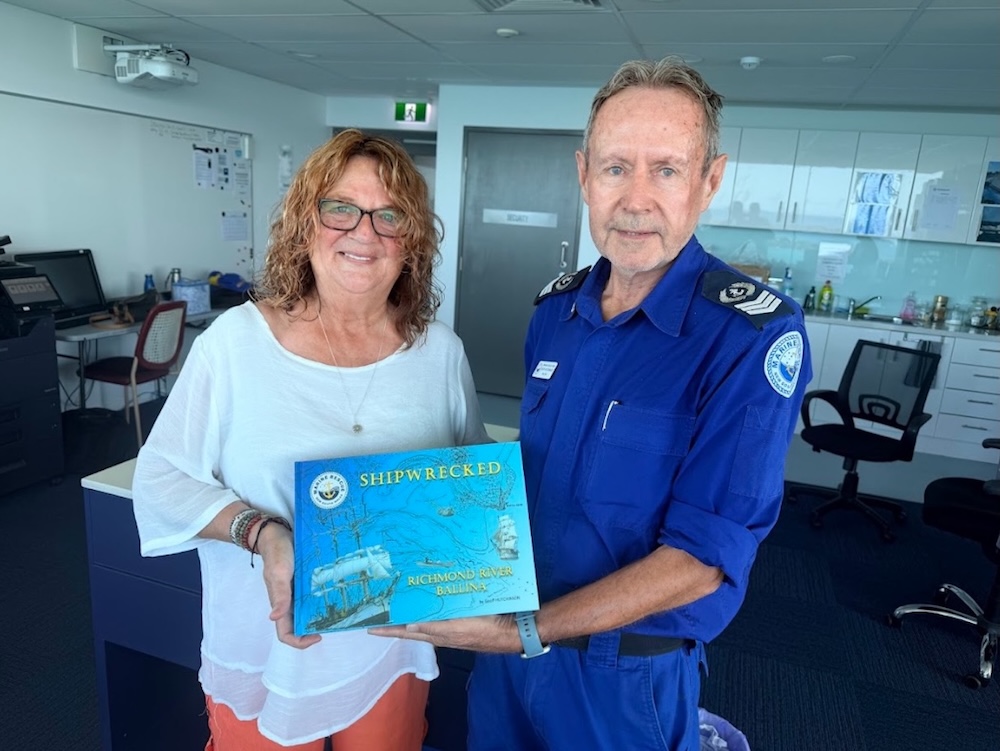
Marine Rescue Ballina Master and author Geoff Hutchinson presents Trish with a copy of Shipwrecked
At the outset I believed the project might result in a modest publication of perhaps one hundred pages. However, as the research continued, more shipwrecks, stories, and historical details emerged. After four years of research and writing, the project had expanded significantly, ultimately becoming a book of 440 pages documenting the many vessels lost around the Richmond River entrance.
Once the manuscript was completed, the next challenge was to fund the printing. Rather than relying on traditional publishing methods, I undertook a targeted fundraising campaign to cover the production costs. A total of $33,000 was raised to print the first run of books. This approach ensured that every dollar from book sales could be directed to support the work of Marine Rescue Ballina.
The response from the community has been very encouraging. To date, around 900 copies of the book have been sold, raising more than $46,000 for Marine Rescue Ballina. The project not only helped preserve an important part of the region’s maritime history, but also contributed directly to the ongoing work of a volunteer organisation dedicated to saving lives on the water.
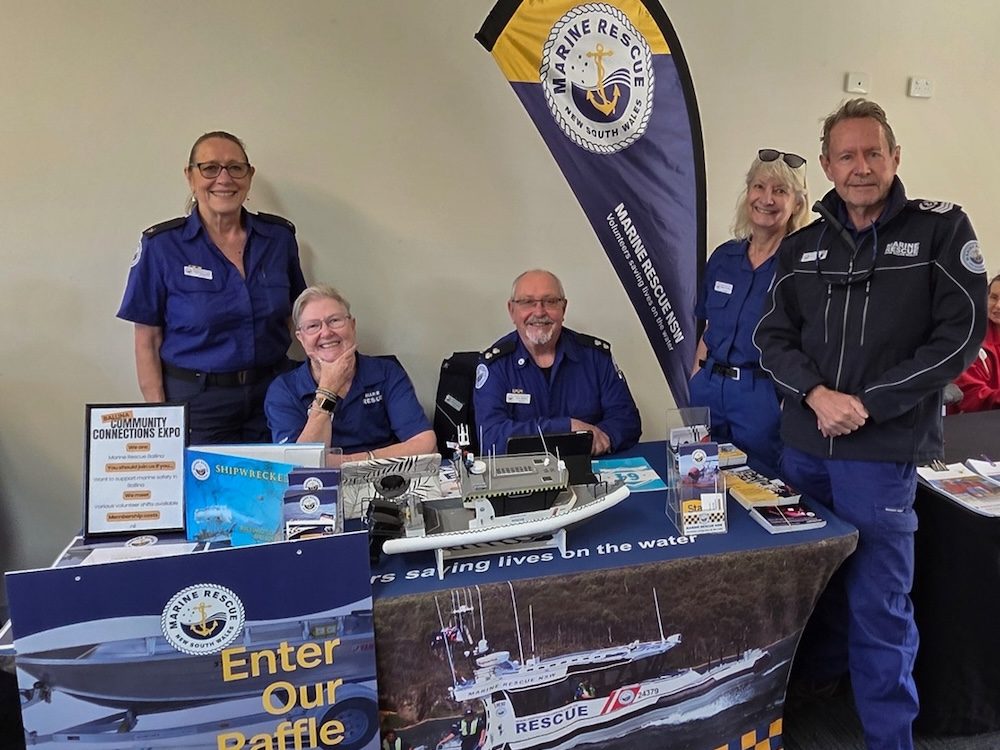
How important are community contributions and fundraising efforts to the operation of Marine Rescue units?
Marine Rescue NSW receives part of its funding from the New South Wales State Government, primarily for major capital items such as rescue vessels, equipment, and shore-based infrastructure. However, individual units are also required to contribute a significant portion of the cost of these assets.
For example, when the Ballina unit received its modern rescue vessel BA30, the local unit was responsible for contributing around 20 per cent of the total cost. This amounted to approximately $187,000 and included the installation of a new Airberth to properly house and maintain the vessel.
While the government support provides the essential equipment needed for rescue operations, the day-to-day running costs of each unit must largely be met through community fundraising. Units such as Marine Rescue Ballina must raise funds to cover operational expenses including vessel fuel, maintenance, and the ongoing costs of running the Radio Base. Even basic requirements such as electricity, communications systems, and building upkeep rely heavily on local fundraising efforts.
As a result, volunteers must devote a considerable amount of time and energy to organising events, seeking donations, and engaging with the community to raise the necessary funds. While this support from the public is vital, the effort required inevitably takes time away from the core activity for which volunteers train—Saving Lives on the Water.
What do you find most rewarding about the work you do?
I have always enjoyed being on the water. Whether it is inshore or offshore, during the day or at night, in calm conditions under a clear blue sky or in rain and rough seas, it makes little difference to me. The ocean has a way of drawing people in, and for many of us involved in marine rescue, that connection with the water is what first brings me to the service.
However, the most rewarding part of the role goes far beyond simply being out on the water. The true satisfaction comes when a rescue operation is successful and someone who was in trouble is safely returned to shore. Knowing that a person has been helped and reunited with their family is an experience that is difficult to describe.
Moments like that are what make the many hours of training, the late-night call-outs, and the demanding conditions worthwhile. For volunteers involved in marine rescue, there is a deep sense of purpose in knowing that their efforts have made a real difference. Bringing someone safely home is not just the completion of a task—it is a powerful and deeply satisfying reminder of why the work is done.
What advice would you give recreational boaters before heading offshore?
The message for anyone heading onto the water is very simple: be prepared. Preparation applies not only to the vessel and its equipment, but also to the skipper and crew. Many emergencies that occur on the water begin with small problems that could have been avoided with careful planning before leaving the ramp or harbour.
Regular maintenance of the vessel is essential. The engine should be serviced at the recommended intervals, batteries checked to ensure they are fully charged and in good condition, and all mechanical systems inspected. Fuel is another important consideration. Petrol that has been sitting for several months can deteriorate and cause engine problems, so fuel that is more than three months old should be replaced with fresh fuel whenever possible.
Reliable communication equipment is equally important. A marine radio should always be carried and tested before departure. In addition, modern safety devices such as an EPIRB (Emergency Position Indicating Radio Beacon) or a PLB (Personal Locator Beacon) can be critical in an emergency, particularly offshore or in poor weather. Mobile phones can also be useful, but they should never be relied upon as the sole means of communication, and they should always be fully charged before leaving shore.
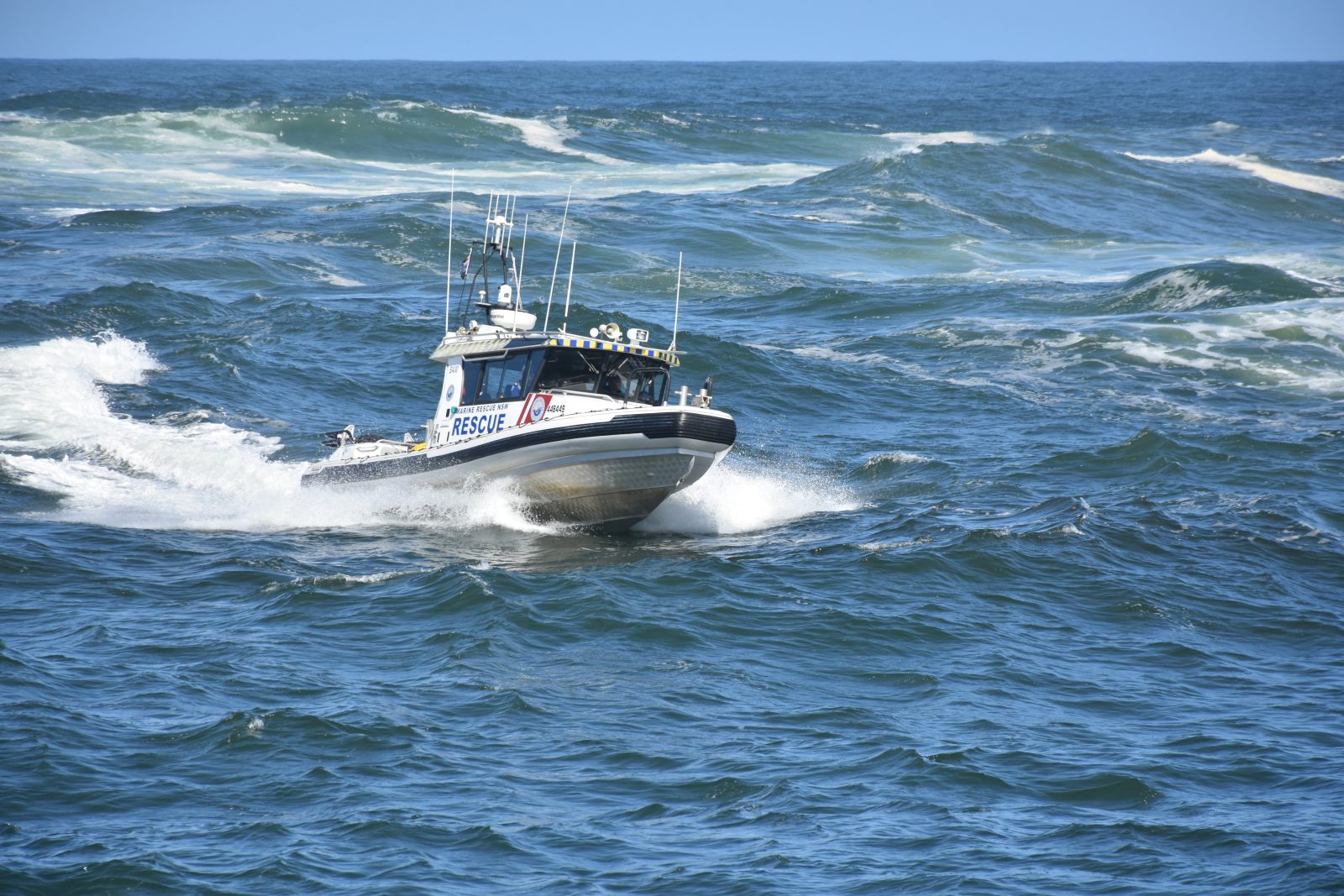
Geoff skippers the former Ballina 30 vessel across Ballina bar
Boaters must also ensure that all required safety equipment is on board and in serviceable condition. Lifejackets for every person on board are among the most important items, and they should be worn at all times.
Before departing, skippers are strongly encouraged to log on with their local unit of Marine Rescue NSW. Logging on allows rescue crews to monitor the vessel’s planned trip and expected return time. Equally important is remembering to log off once safely back at port so that volunteers know the vessel has returned without incident.
Another practical way to support the service is to join the local Marine Rescue NSW Radio Club through units such as Marine Rescue Ballina. Membership provides boaters with a unique radio call sign and contributes to the funding required to keep rescue vessels operating and radio bases staffed.
In simple terms, good preparation greatly reduces risk. A well-maintained boat, reliable communications, proper safety equipment, and a logged trip plan can make the difference between a routine day on the water and a situation that requires rescue.
Marine Rescue NSW is a volunteer based not-for-profit professional organisation dedicated to keeping boaters safe on the water and supporting local communities.