A discussion on how competing stakeholder priorities, development pressure, and investment realities are reshaping the future of marina infrastructure and waterfront use in 2026 and beyond.
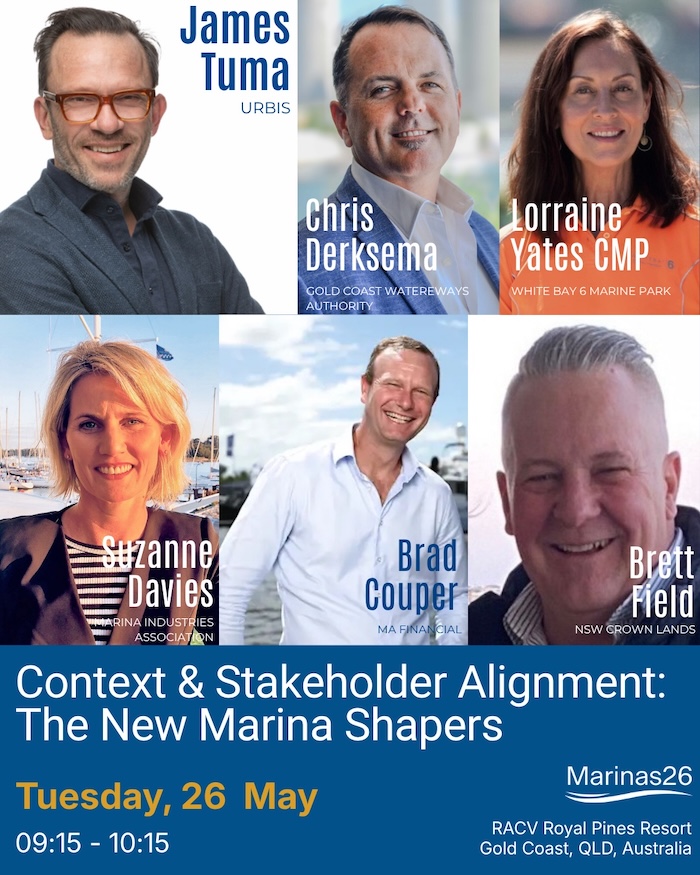
Date: Tuesday 26 May 2026
Time: 09:00 – 10:15
Marina design is increasingly shaped by competing priorities — from governments, developers, operators and boaters, through to the broader structural forces influencing each of them. As marinas evolve into more integrated, mixed-use precincts, the number of stakeholders continues to grow, along with the complexity of aligning their interests.
This panel examines the real decisions that will determine whether marinas continue to function as purpose-built boating assets or are gradually redefined by external pressures. It brings together perspectives across government, industry, investment and operations to explore how these tensions are playing out in practice.
Three key themes anchor the discussion:
Stakeholder alignment – what governments, developers, operators, investors, landlords and boaters actually need from marinas in 2026 and beyond, and how these needs differ from common assumptions
Working waterfront pressure – the increasing tension between boating infrastructure and housing or mixed-use development on contested urban waterways
Privately funded public infrastructure – including leasing models, tenure certainty, and what long-term investment confidence requires as costs and risks evolve
Together, these themes raise a central question: where do stakeholder interests align, where do they conflict, and what does that mean for the long-term viability of privately funded marina infrastructure?
SPEAKERS PANEL
James Tuma, Panel Chair
Managing Partner, Urbis
James is a strategist and future-focused thinker with 25+ years of international experience across government and the private sector. He has advised on new towns, innovation hubs, major events, tourism precincts, and strategic infrastructure.
A strong advocate for sustainable cities, James focuses on practical, imaginative solutions that inspire communities. His work includes the Brisbane 2032 Legacy Strategy, Brisbane City Centre Master Plan, lead design for Queen’s Wharf, and advisory roles on Orchard Road redevelopment and governance in Singapore.
Chris Derksema
CEO, Gold Coast Waterways Authority
Chris brings a waterways management and government perspective, focusing on strategic planning, public access, and balancing competing demands across the marine estate.
Lorraine Yates CMP
General Manager, White Bay 6 Marine Park
Lorraine brings an operator and industry advocacy lens, with direct experience engaging with government and stakeholders to retain critical boating services within a complex urban redevelopment environment.
Brett Field
Leasing Manager, NSW Crown Lands
Brett provides insight from the public landowner perspective, including marina leasing frameworks, tenure arrangements, compliance, and evolving expectations for maritime assets.
Brad Couper
Managing Partner, MA Financial (d’Albora Marinas)
Brad represents the investor and ownership perspective, addressing capital deployment, lease certainty, and what institutional investment requires for marinas to remain a viable infrastructure class.
Suzanne Davies
CEO, Marina Industries Association
Suzanne will provide an industry wide perspective, including how accreditation frameworks such as Clean Marina and Gold Anchor can help address stakeholder confidence across government, communities, landlords and insurers, and support more constructive engagement outcomes.
See the full List of Exhibitors here