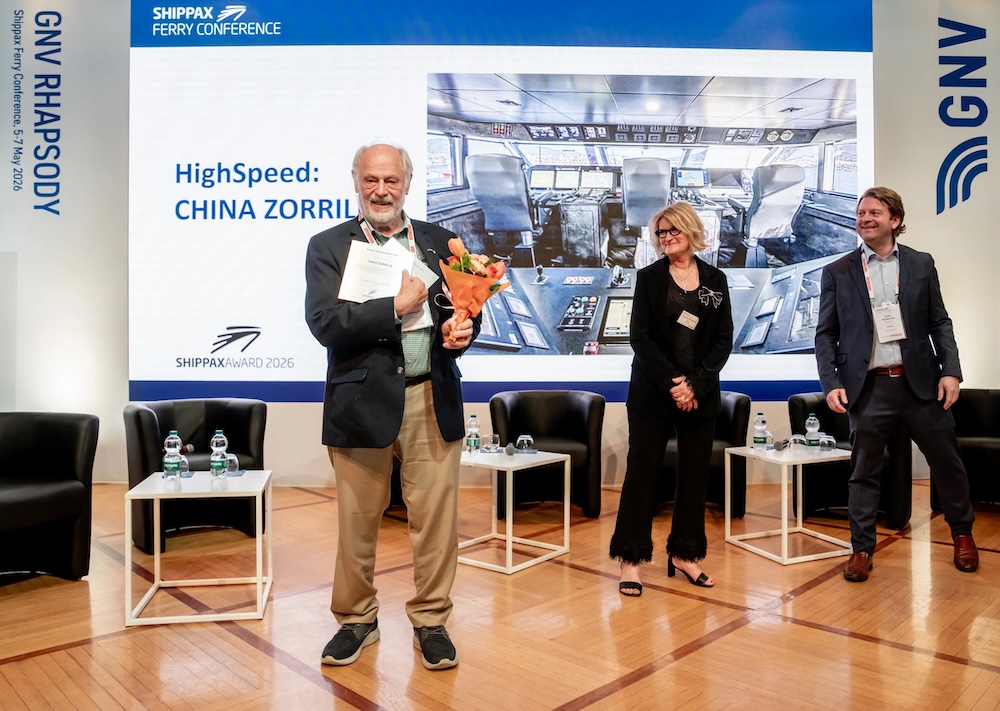
Tasmania is uniquely positioned to capitalise on rapidly growing international demand for large-scale electric ferries, according to Incat Chairman Robert Clifford following his return from the international Shippax Conference in Genoa, Italy, one of the world’s leading ferry and maritime conferences.
Mr Clifford said global ferry operators are increasingly recognising that lightweight vessel construction will play a critical role in the future of maritime electrification.
“For decades Incat has demonstrated the advantages of lightweight aluminium shipbuilding, and as the global ferry industry moves toward electrification those advantages are becoming even more important,” Mr Clifford said.
“The lighter the vessel, the less energy it requires to operate. That means lower power demand, improved efficiency, lower operating costs, and greater commercial flexibility for operators.”
Mr Clifford said the conversations taking place at the Shippax Conference reinforced the growing global appetite for large-scale lightweight electric ships, particularly as operators seek commercially viable pathways to decarbonisation.
“Electric shipbuilding is no longer a future concept, it is happening now, and operators around the world are looking very closely at the technologies and capabilities already being implemented here in Tasmania,” he said.
Incat has completed construction on the world’s largest battery-electric ship, Hull 096, at its Prince of Wales Bay shipyard in Hobart, while also delivering a series of large battery-electric ferries for a Danish operator as part of the world’s largest electrification project at sea.
Mr Clifford said the international interest being generated by these projects highlighted a major long-term opportunity for Tasmania and Australia’s advanced manufacturing sector.
“The opportunity in front of Tasmania is enormous,” he said.
“We have the skills, the experience and the capability to become a global centre for lightweight electric shipbuilding, but to realise that full potential we need support and alignment across all levels of government.”
Mr Clifford said continued investment in workforce development, industrial infrastructure and production capacity would be critical as global demand accelerates.
Incat is currently progressing plans for a major expansion of its Prince of Wales Bay operations, including the construction of a third major production hall to increase capacity and support future growth.
“This is about securing long-term advanced manufacturing jobs, growing Australia’s export capability and ensuring Tasmania remains at the forefront of one of the biggest transitions the maritime industry has ever seen,” he said.
“As the world moves toward electrification at sea, Tasmania has a genuine opportunity to lead.”
For more information, visit incat.com.au