Western Australia can sometimes sit outside the immediate line of sight of Australia’s east coast-dominated recreational marine industry. But look at the numbers, the economic fundamentals and the level of investment being made by boat owners, dealers and suppliers, and a very different picture emerges.
WA is a substantial recreational boating market in its own right, and one that deserves national attention.
There are now more than 104,000 registered recreational vessels in Western Australia and more than 313,000 Recreational Skipper’s Ticket holders. Those numbers alone speak to the scale of boating participation across the state.
Add one of the world’s great coastlines, a strong fishing culture, comparatively high household incomes, a significant resources sector and a population for whom outdoor recreation is an important part of life, and the foundations for a strong marine industry are obvious.
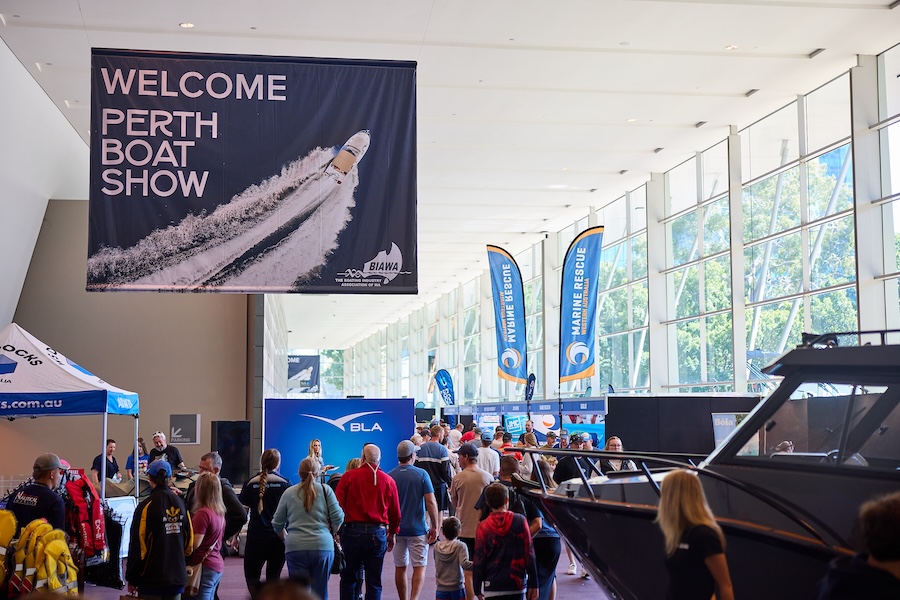
In the lead-up to the BIAWA Perth Boat Show, which returns to the Perth Convention and Exhibition Centre from Friday 4 to Sunday 6 September, Marine Business News spoke with Tony Spiteri, President of the Boating Industry Association of Western Australia and owner and operator of Hi Tech Marine, to get a better understanding of what is happening in the market.
Mr. Spiteri brings a particularly useful perspective. Hi Tech Marine has been serving boat owners for decades and describes itself as a multi-award-winning Mercury and MerCruiser certified dealer and one of Australia’s major suppliers and installers of marine engines, electronics and parts. The business has also represented a broad cross-section of the WA boating market, from repowers and electronics through to trailer boats and offshore packages.
From where Mr. Spiteri sits, the message is clear: Western Australian boating remains fundamentally strong.

“WA has always had a very committed boating community, but I think sometimes the size and diversity of the market can be underestimated from outside the state,” Mr. Spiteri said.
“When you have more than 100,000 registered recreational boats and more than 300,000 people holding a Recreational Skipper’s Ticket, that is a substantial boating population.
“Then you have the lifestyle. We have an enormous coastline and completely different boating experiences depending on where you are in the state. Boating is simply part of life for a lot of Western Australian families.”
A market proving more resilient than expected
There have, however, been some significant challenges.
Perhaps the most closely watched has been the closure of recreational boat-based fishing for demersal scalefish in the West Coast Bioregion.
The closure commenced on 16 December 2025 and is scheduled to remain in place until Spring 2027. It covers the West Coast Bioregion from Black Point, east of Augusta, north to the Zuytdorp Cliffs, and was introduced as part of measures designed to assist the recovery of demersal fish stocks.
For an industry in which offshore fishing has traditionally driven significant boat, engine, electronics and accessory sales, there were understandable concerns about how deeply the restrictions would flow through the marine sector.
According to Mr. Spiteri, there has been an effect, but the market has proven more nuanced and resilient than some initially expected.
“When the demersal changes were announced, I think everybody in the industry was concerned about what the impact might be,” he said.
“There has certainly been some pressure in that medium-sized boat market where the purchase is very heavily driven by offshore fishing. You would expect that.
“But what we are seeing is that it hasn’t translated into a downturn across every part of boating. Smaller boats are still appealing to families and people who want to get out on the water, and at the other end of the market the larger pleasure craft and luxury motor yacht sectors continue to perform well.
“So it is not one market moving in one direction. There are different segments doing different things.”
That diversity is important.
For some consumers, the boat is predominantly a fishing platform. For others it is about family day boating, watersports, cruising, socialising or simply accessing the coastline and waterways that define much of the Western Australian lifestyle.
The economic backdrop is also helping.
Western Australian Treasury Corporation figures show household disposable income per capita reached $93,662 in 2024–25, compared with $84,140 across the rest of Australia. WA households also recorded comparatively high levels of savings, while the State continues to benefit from strong employment, population growth and resources-sector investment.
For a discretionary purchase such as a boat, that matters.
“The mining and resources sector continues to generate strong incomes in Western Australia, and that gives a significant part of the market the capacity for discretionary expenditure,” Mr. Spiteri said.
“Boating competes with plenty of other things for that disposable income, but people here value their time on the water. If they have the opportunity to invest in boating, many of them will.”
At the upper end, Mr. Spiteri says there is continued confidence.
“We are seeing significant investment in larger luxury motor yachts,” he said.
“That tells you something about the depth of the WA market. It isn’t just about small aluminium fishing boats or one particular category. There are customers at very different price points looking for very different boating experiences.”
Technology is changing the boating experience
The other significant change Mr. Spiteri sees is what boat owners expect from the product itself.
Technology is increasingly influencing purchasing decisions, both when buying a new boat and when upgrading an existing one.
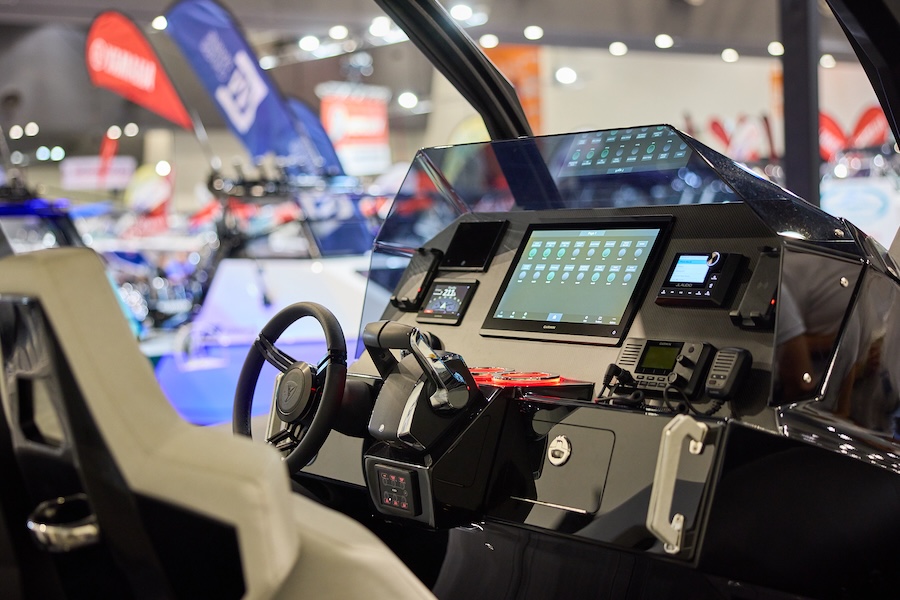
Outboards continue to advance in functionality and integration, while marine electronics have become an increasingly important part of the overall boating package.
“The technology available to boat owners today has moved enormously,” Mr. Spiteri said.
“Outboard engines are not just about horsepower anymore. Customers are interested in functionality, ease of operation, integration and how the whole package works together.
“Then you look at fishing electronics. Fish finders, sonar and chartplotters have developed very quickly, but what is particularly important is the way those systems can now be integrated across the boat.
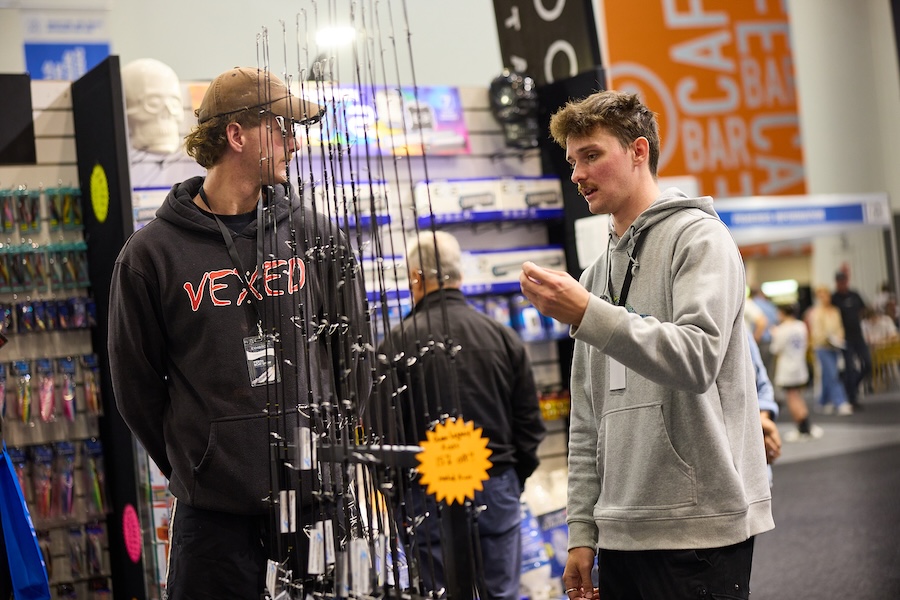
“The serious fishing customer is much more technology-aware than they were years ago and they are prepared to invest in equipment that improves their experience.”
That technology appetite extends beyond fishing.
Audio systems are becoming increasingly important in boats designed for leisure and social use, while a much larger accessory market means owners can progressively customise and upgrade their boats rather than necessarily replacing them.
Gyroscopic stabilisation and active ride-control systems are another area attracting attention as technologies once associated largely with larger or premium vessels migrate into a broader section of the recreational market.
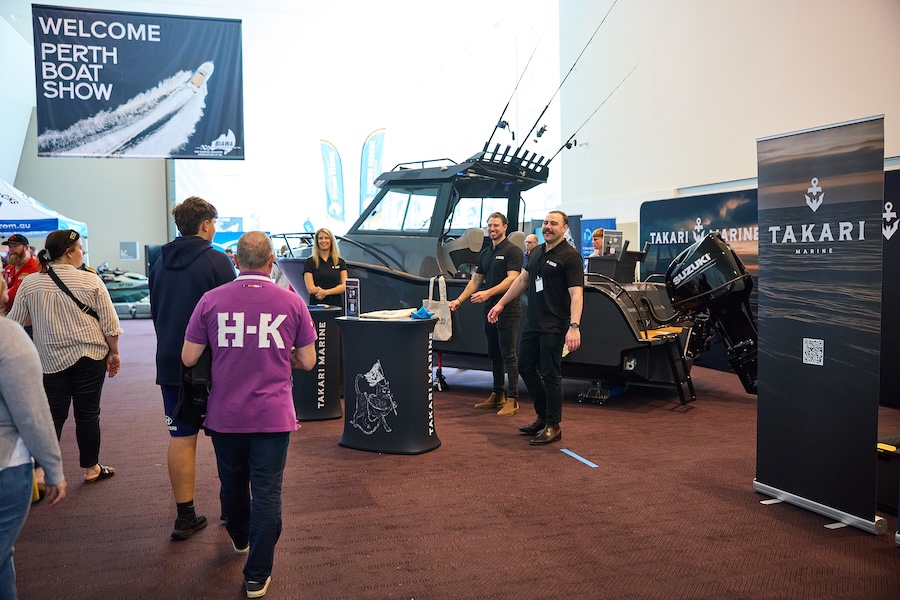
Fishing drones are another increasingly visible part of the fishing technology mix.
“The accessory side of the industry has become a market in itself,” Mr. Spiteri said.
“People might be very happy with their existing boat, but there is always something they can do to improve it. Electronics, audio, stabilisation, ride control, fishing equipment, there are now so many ways of making the boat more capable or making your time aboard more enjoyable.
“That creates opportunities right across the industry, from dealers and installers through to distributors and service businesses.”
Boating and the WA lifestyle
Ultimately, however, technology and economics only partly explain the strength of boating in Western Australia.
Geography does much of the rest.
From boating in the Southern Ocean and around the south-west, through Perth and the metropolitan coastline, to the vastly different conditions and experiences available further north, WA provides an extraordinary variety of opportunities to get on the water.
For families, day boating remains particularly important.
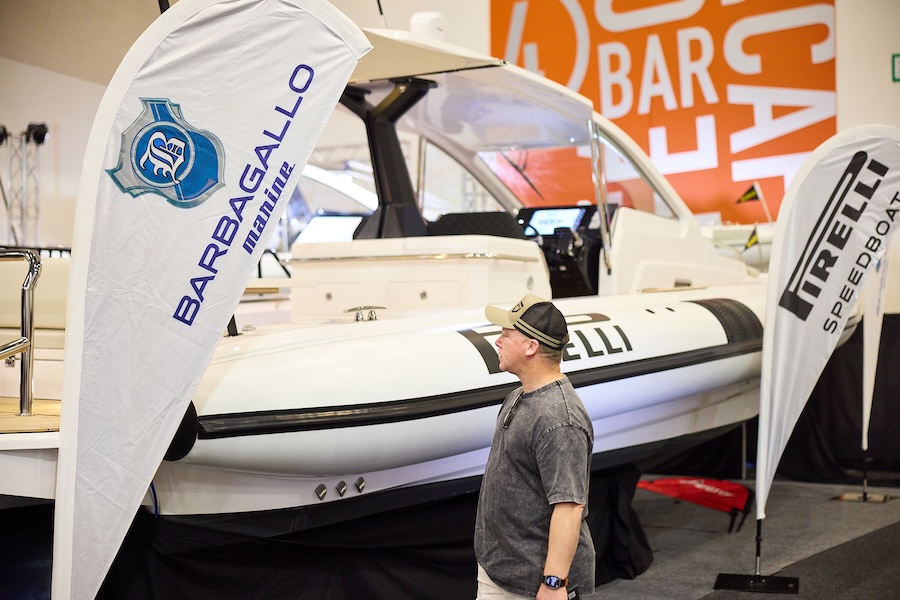
“Family boating is a big part of the lifestyle here,” Mr. Spiteri said.
“You don’t necessarily need a large boat or have to be heading offshore chasing demersal fish to enjoy boating. There is a strong market for smaller trailer boats and RIBs because they give families a relatively straightforward way to get on the water and enjoy the day.
“We are also fortunate to have a good group of boat builders and dealers in Western Australia who are very proactive. They are constantly looking at what is new, what is improving and what they can bring to their customers.”
There is, however, an infrastructure issue that Mr. Spiteri believes will become increasingly important.
For all the coastline Western Australia enjoys, suitable marina berths and pens are finite.
As ownership of larger vessels increases, ensuring there is sufficient infrastructure to accommodate them will be an important consideration for the industry and government.
“We can have all the coastline in the world, but you still need somewhere to keep the boats,” Mr. Spiteri said.
“As demand for larger boats grows, access to pens can become a constraint. That is something we need to keep looking at because infrastructure has to keep pace with the market.”
Why the BIAWA Perth Boat Show matters
It is against this backdrop that the Perth Boat Show takes on greater significance.
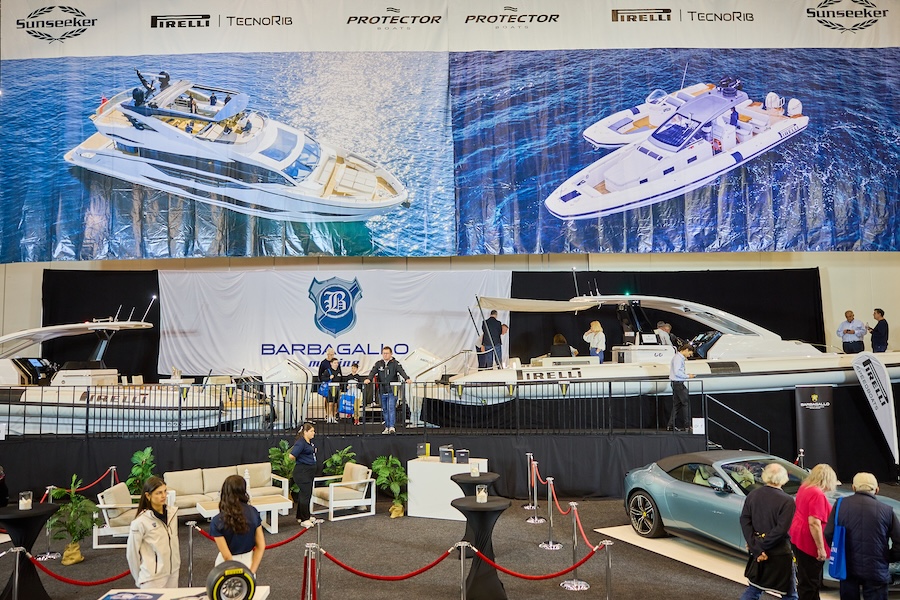
The 2026 event will occupy all six pavilions of the Perth Convention and Exhibition Centre, with more than 90 exhibitors and more than 150 craft expected across the three days. Boats alone will represent more than $40 million in value, with engines, electronics, accessories, fishing equipment, safety products and other marine and recreational products taking the total value represented on the show floor towards $50 million.
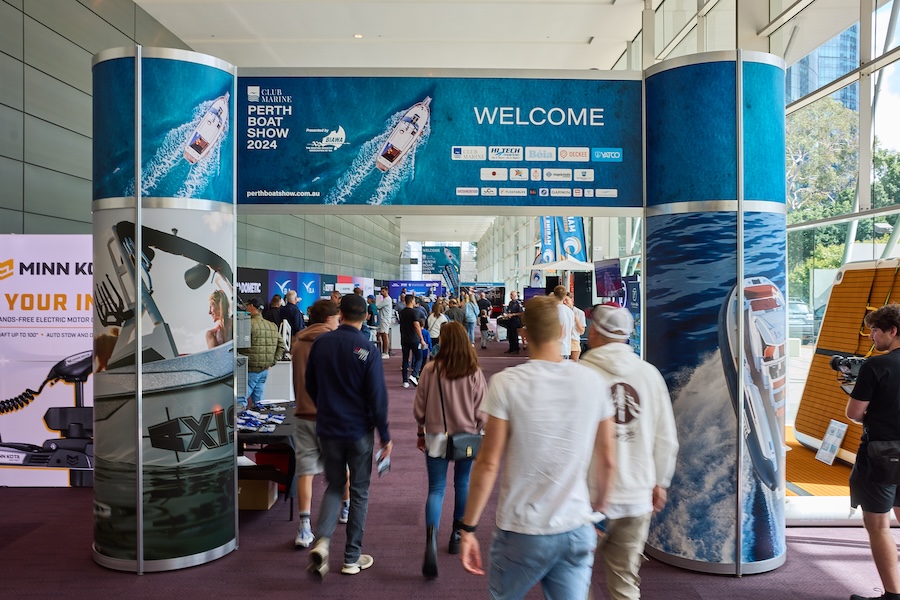
The event is owned by the Boating Industry Association of Western Australia and organised by CMS Events.
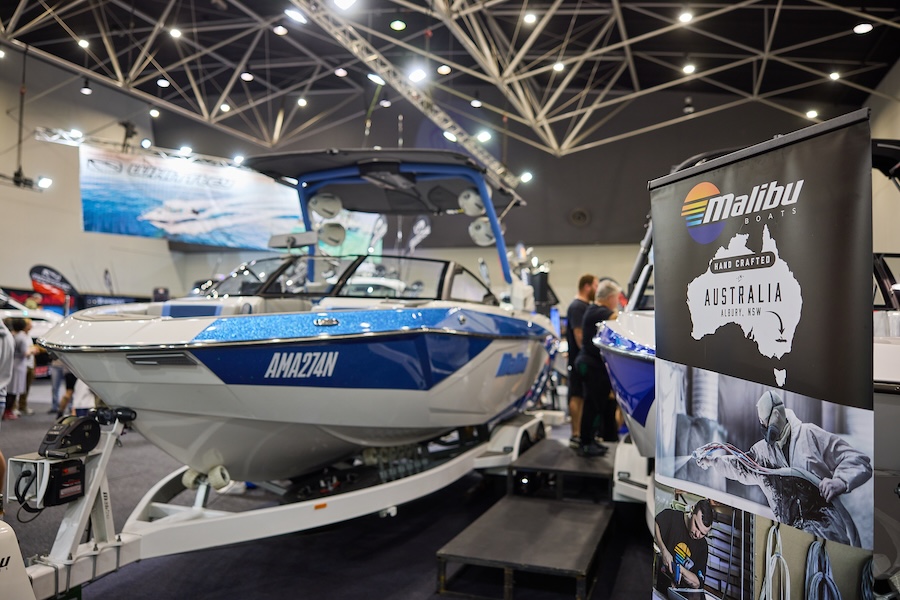
Importantly, the breadth of the exhibitor list mirrors Mr. Spiteri’s description of the market. Alongside trailer boats and fishing equipment are outboards, electronics, stabilisation systems, RIBs, premium day boats and larger motor yachts, as well as insurance, finance, safety equipment and marine services.
For Mr. Spiteri, the increased industry participation in 2026 is significant.
“The response from exhibitors this year is very encouraging,”he said.
“I think businesses saw what was delivered in 2025 and recognised the importance of being in front of the WA boating public.
“If you are serious about this market, you need to remain visible in it. A boat show gives the industry the opportunity to put the latest boats, engines, electronics and equipment in front of a large number of people who have made the decision to come and look at boating.
“That is a very valuable audience.”
It also makes the show more than a three-day retail exercise.
For boat builders, manufacturers, distributors and national suppliers, the BIAWA Perth Boat Show provides an opportunity to assess the WA market firsthand: to see which categories are attracting attention, talk to dealers, understand consumer sentiment and watch how customers engage with new technology and different types of boats.
Marine Business News has already argued that the BIAWA Perth Boat Show deserves greater attention from the national recreational marine industry. The picture painted by Mr. Spiteri strengthens that case.
Western Australia has a large established boating population, an economy capable of supporting discretionary expenditure, multiple active market segments, strong marine businesses and consumers continuing to invest in better boating experiences.
There are challenges. Fishing regulations are reshaping parts of the market. Marina capacity will need attention as the larger-vessel fleet grows. Like every discretionary industry, marine businesses must continue to work hard for the consumer dollar.
But none of those factors changes the underlying proposition.
Western Australians like boats.
They have the coastline to use them, the businesses to supply and support them, and an increasingly sophisticated appetite for the products and technology that make their time on the water better.
The BIAWA Perth Boat Show provides the place where all of that comes together.
For an industry wanting to understand the real strength of recreational boating in the west, that makes the show about much more than what happens inside six exhibition pavilions over three days.
It is a window into one of Australia’s most important recreational boating markets.
The 2026 Perth Boat Show will be held at the Perth Convention and Exhibition Centre from Friday 4 to Sunday 6 September.
For more information, visit the Perth Boat Show website HERE