By Danny Casey.
As you may know, I’m a real tragic when it comes to old outboards, and have been slowly but steadily building a collection for when I do actually get around to retiring definitively.
I wish I could claim that the magnificent find featured here – definitely rare and a curio but also one of the great “mightabeens” – is mine, but that, unfortunately, is not the case.
A very good mate of mine – one of the best marine mechanics I have ever known, who recently took over an established dealership with his equally professional spouse and made it even more successful – lucked into this gem.
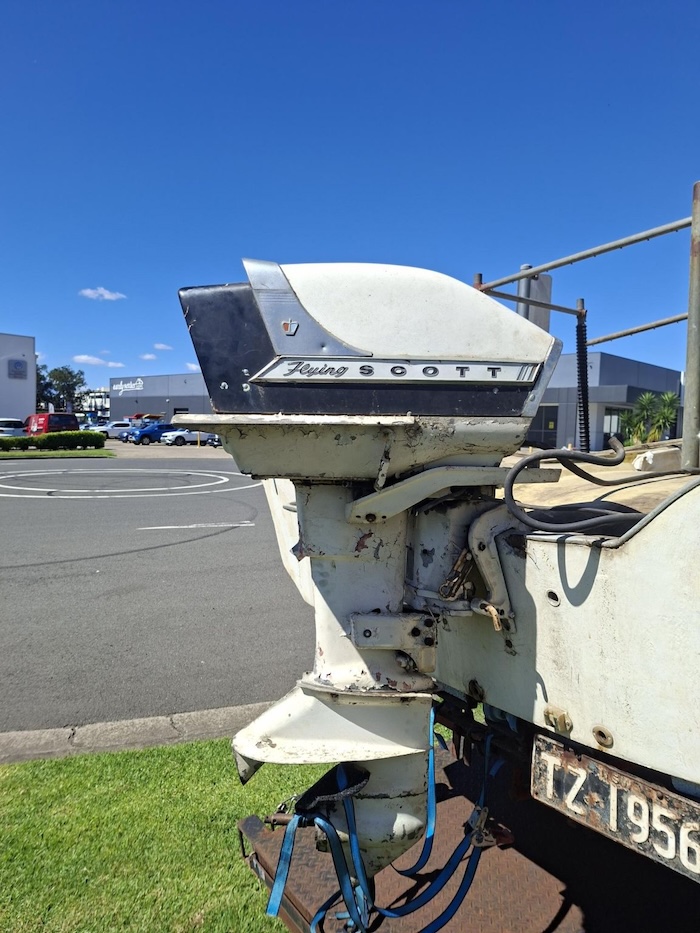
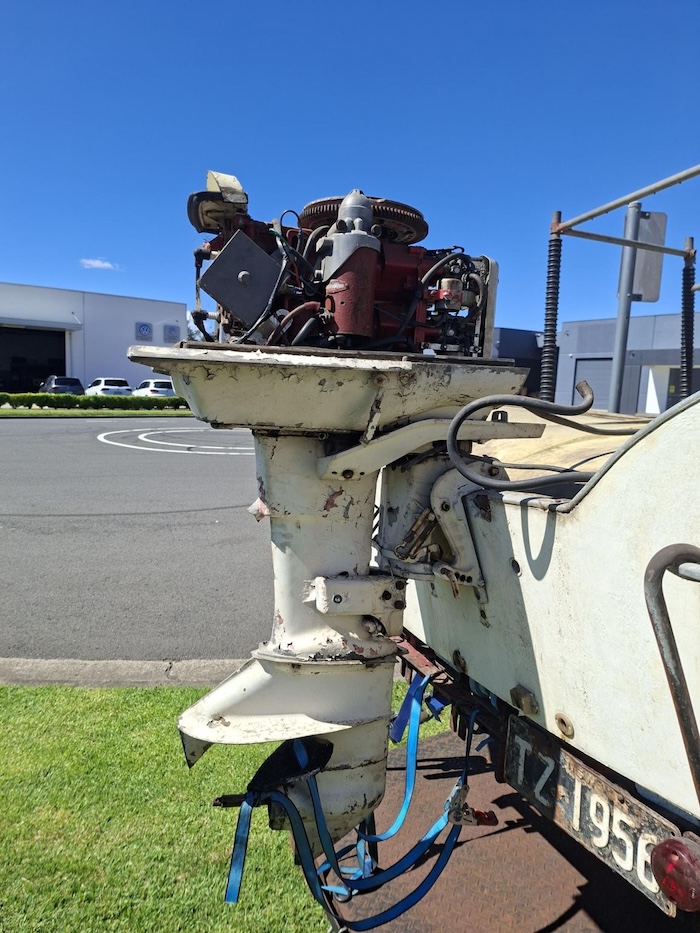
And what a find this is. It is a McCulloch Flying Scott, built by Robert McCulloch of chainsaw fame – exact year unknown but circa 1960-1962. It might even be the absolute apotheosis of the breed, a 75 hp (which, in that era, would have been second only to Mercury, whose largest motor at that time was 85 hp). It is, however, more likely to be the more popular (relatively) 60 hp variant. But that’s not to say it lacked in power, torque or speed. Quite revolutionary, compact and light for the era, the Flying Scott is an inline 3-cylinder of 1,032 cc, which weighs just under 77 kg – by way of reference, the last of the 920 cc OMC 60/70 hp 2-strokes in the late ’90s weighed about 108 kg.
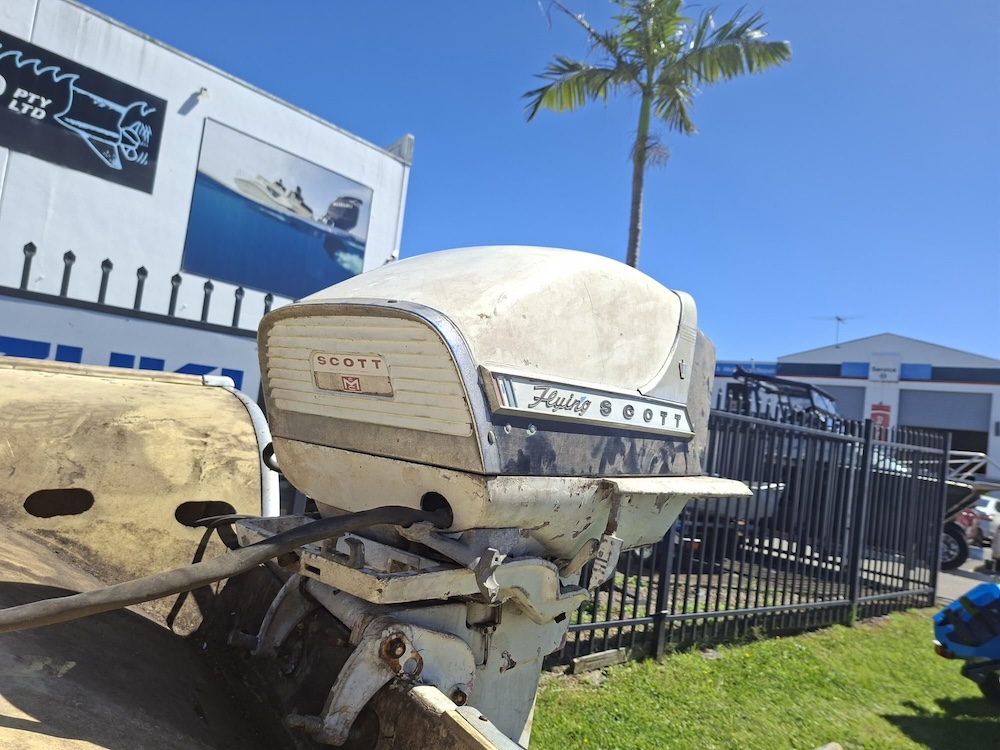
They didn’t skimp on componentry, either, with Delco-Remy electrics and three Carter carbs – one per cylinder. Similar to the Mercurys of the period, the McCulloch used a belt-driven distributor and, under the flywheel, had a set of contact breaker points and a condenser for each cylinder. And styling wasn’t an afterthought, either. When Robert McCulloch bought the rights to produce what were originally Scott-Atwater outboards, he hired the renowned designer, Raymond Loewy (of Studebaker fame), to sharpen up the styling.
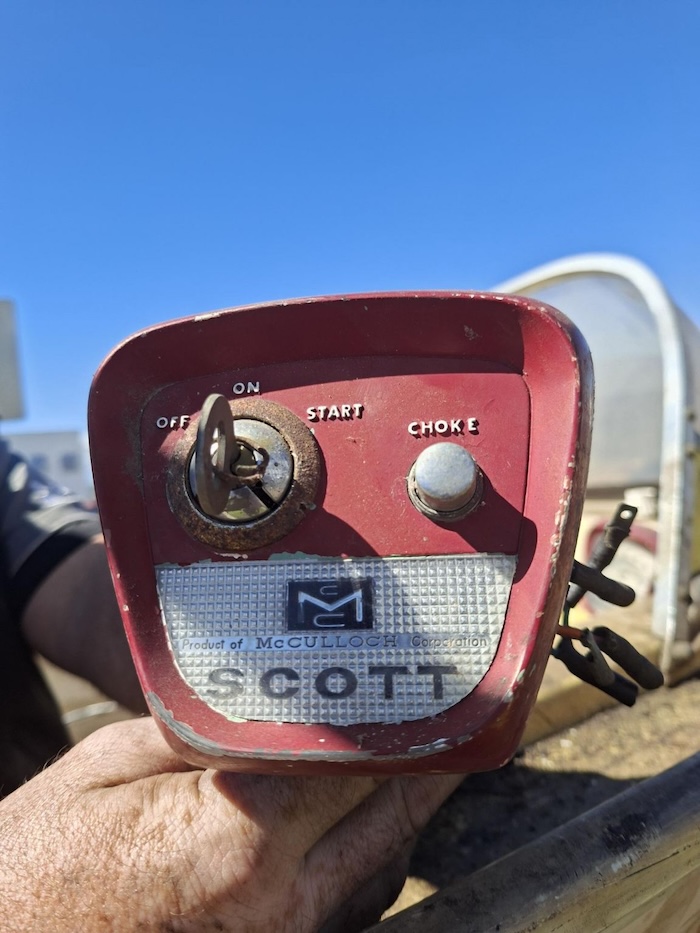
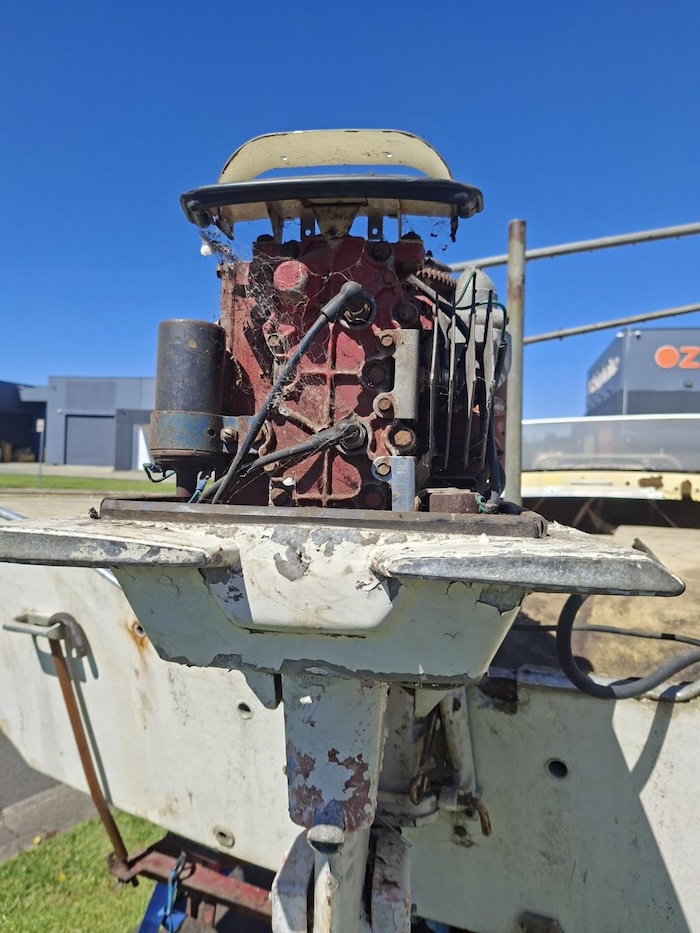
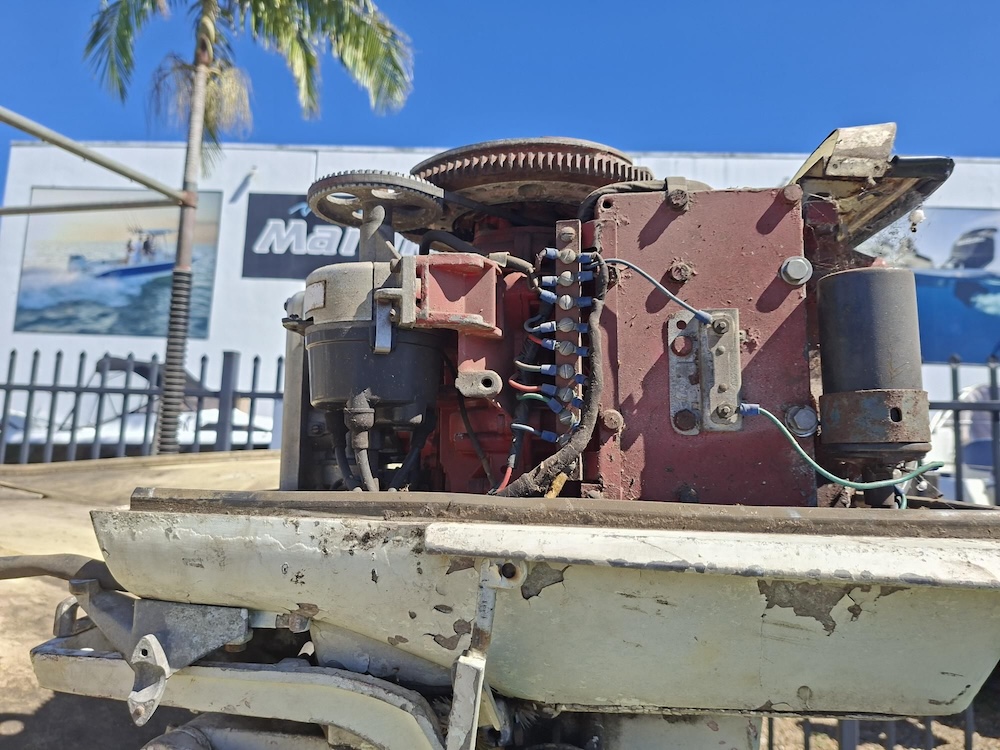
Despite all the inspiration, McCulloch, although wealthy (he had bought the original London Bridge and had it transported then rebuilt brick by brick on Lake Havasu, Arizona), struggled to keep up with the flurry of development from the mid-’60s onward by OMC and Mercury and decided to close the outboard business to concentrate on his real estate concern.
This is a great pity, as McCulloch was actually the first company to confidently go out on a limb with 100:1 oiling on a 2-stroke with their own proprietary oil and intricately engineered check valves and hoses to capture and recirculate puddled oil. And 100:1 oiling was an innovation supposedly “pioneered” by Yamaha in 1977!
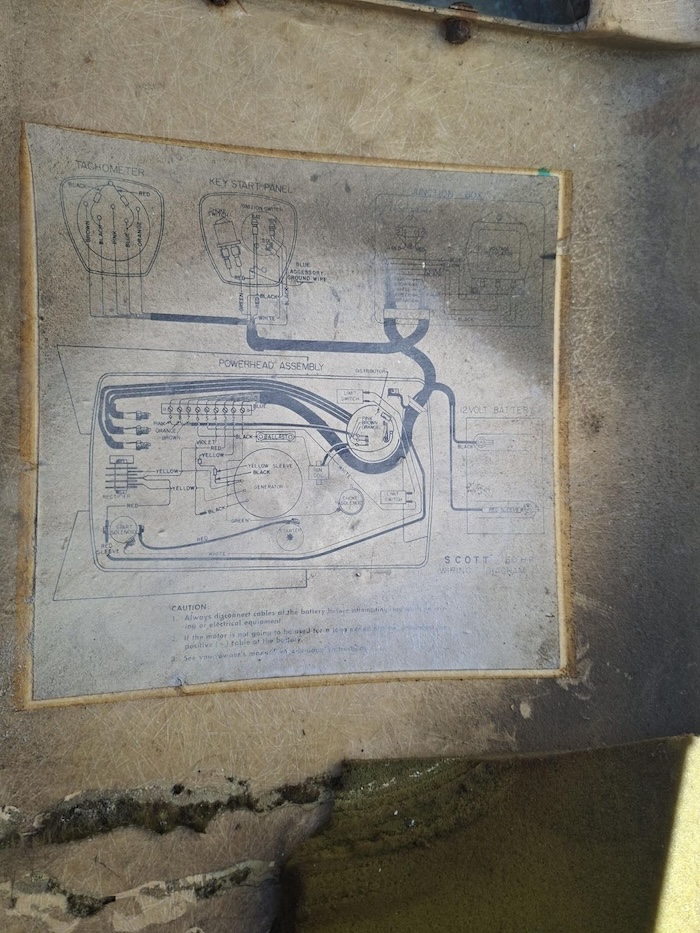
One of my photos even illustrates the thought processes of true engine people: the full motor wiring schematic affixed to the underside of the top cowling. We live, today, in a supposedly ground-breaking and creative world, but I think we have a bit to go to get anywhere near the quantum leaps in technology, innovation and ingenuity practised regularly in the 1960s – the decade that will never really leave us.
Danny Casey is highly experienced, undoubtedly idiosyncratic, and immensely knowledgeable about things mechanical, new or old. His knowledge and passion are as a result of spending his whole life in or around anything power-driven – especially marine engines. His passion for boating is second to none, with his life a montage of fabulous memories from decades spent in or around water and boats, both here and in Europe. Danny has spent myriad years in the recreational marine industry in a varied career in which he has bamboozled colleagues and competitors alike with his well-honed insight.

His mellifluous Irish accent, however, has at times been known to become somewhat less intelligible in occasional attempts at deliberate vagueness or when trying to prevent others from proffering a counter-argument or even getting a word in. Frank and to-the-point, but with a heart of gold, it can be hard to convince Danny to put pen to paper to share his knowledge. Marine Business News is grateful for his contributions. Connect with Danny through LinkedIn.