Signalling a transformative moment for Blackwattle Bay and the redevelopment of Sydney’s harbour foreshore, the now open new Sydney Fish Market demonstrates how thoughtfully designed public realm and contemporary market space can unite to create a landmark urban destination. By prioritising waterfront access and public amenity, the project reimagines one of Sydney’s most important civic assets for generations to come.
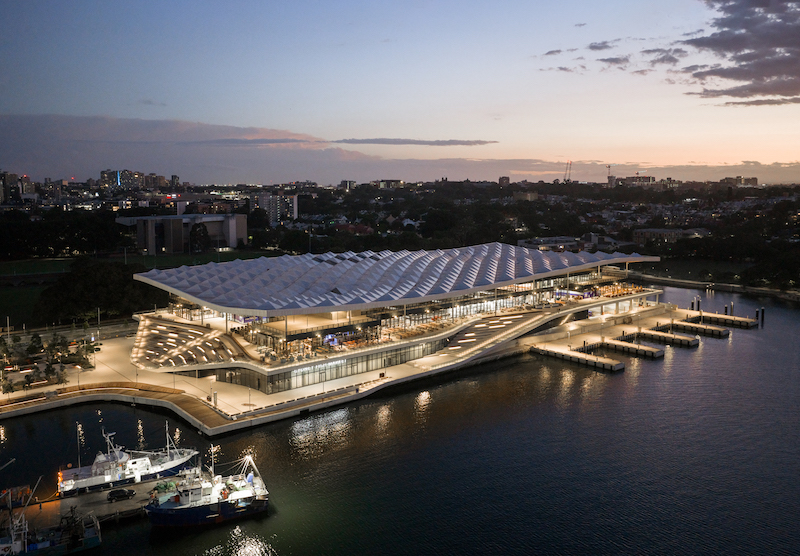
The new Sydney Fish Market designed by 3XN GXN, in association with BVN Architecture and Aspect Studios © Rasmus Hjortshøj
The new Sydney Fish Market on Sydney Harbour opened to the public yesterday. The building, designed by 3XN GXN in association with BVN Architecture and landscape architects ASPECT Studios and delivered by Infrastructure NSW on behalf of the NSW Government, is the largest fish market in the southern hemisphere and a major new civic landmark for the city. It establishes a 24/7 community hub where workers, locals and visitors can come together to celebrate the fishing industry in a world-class waterfront setting.
Audun Opdal, Senior Partner, 3XN: “The new Sydney Fish Market is transforming an underutilised harbour area into a vibrant public realm filled with programs that attract both locals and visitors. The fish market uniquely blends a fully functioning commercial operation with high-quality public space, delivering an authentic market experience rooted in the context of its prime waterfront location while enhancing the entire surrounding precinct.”
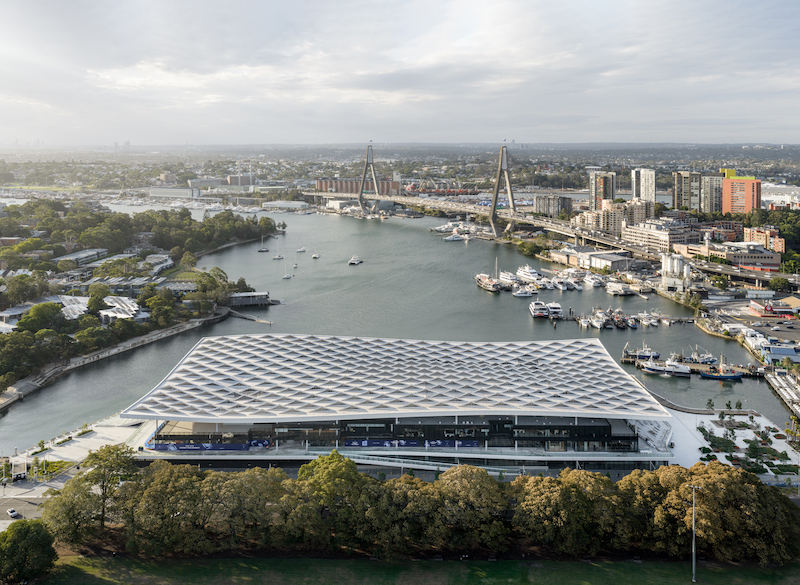
The first project to be delivered by Infrastructure NSW as part of the urban renewal of Blackwattle Bay, the 10.4-hectare site joins a string of the city’s iconic harbour sites, including Sydney Opera House, Royal Botanic Gardens, Circular Quay, Sydney Harbour Bridge, Barangaroo, and Darling Harbour, and expects to attract over six million visitors per year.
Catherine Skinner, Principal, BVN: “BVN collaborated with 3XN to realise the project’s ambition and develop a building that could carry both the weight of industry and the joy of public life. The project’s location demanded a structure capable of managing salt water and air, humidity, cold-chain logistics and heavy machinery – all while welcoming millions of visitors a year. Achieving that balance of opposing pressures shaped every decision that was made.”
Where working industry meets public life
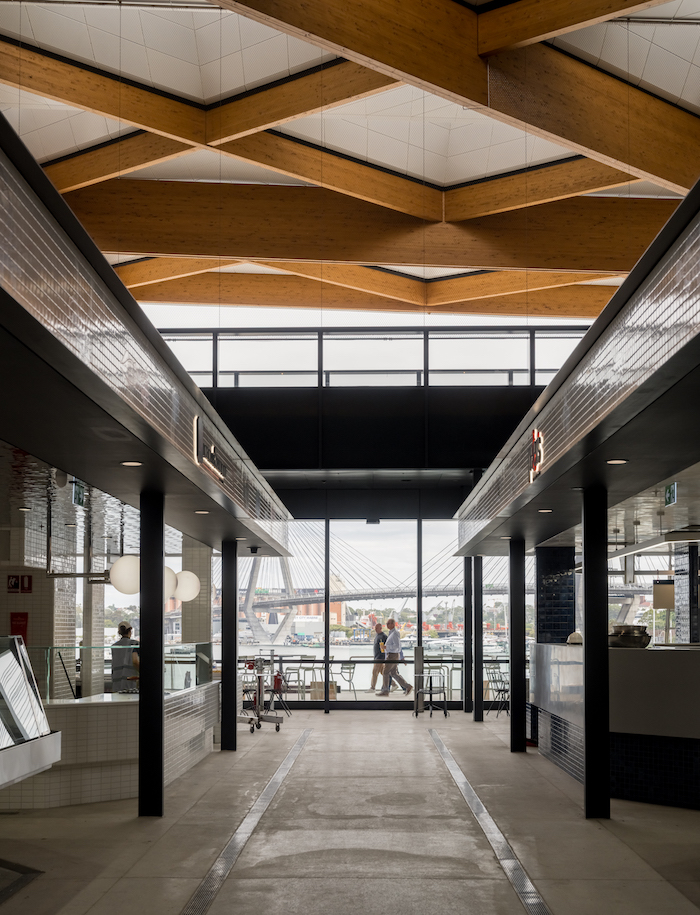
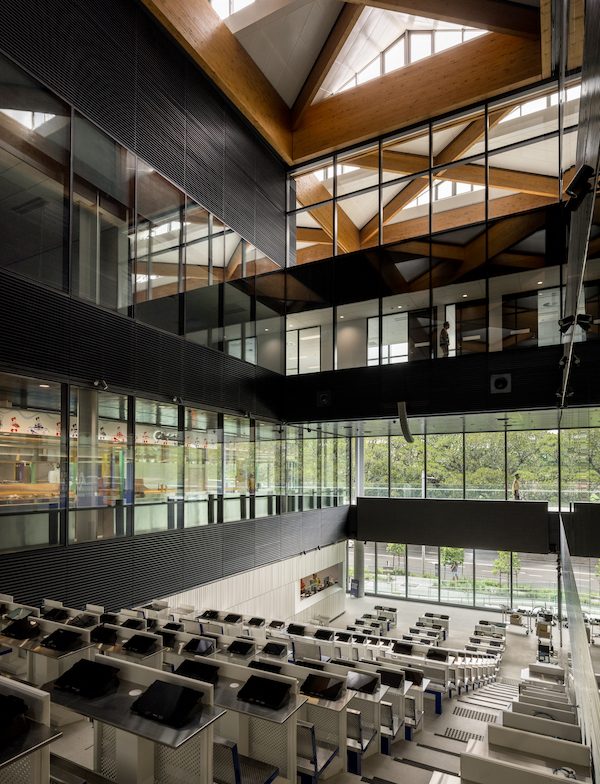
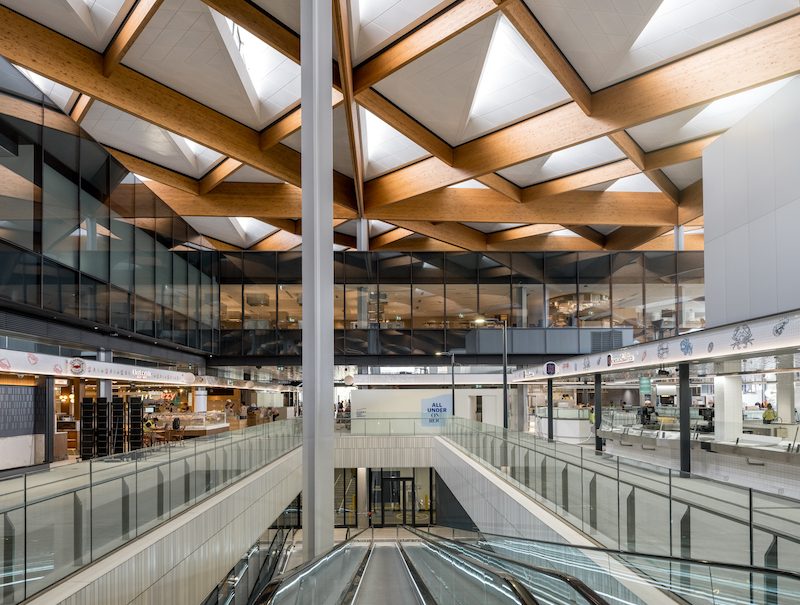
The publicly accessible market hall level will accommodate 12,200 sqm of fishmongers, restaurants, cafés and specialty vendors, creating the atmosphere of a lively, intimate marketplace. The design carefully separates various circulation flows, enabling the daily operations of a working fish market to safely coexist with public visitors. Expansive, glazed facades create strong visual connections to the harbour, ensuring an authentic open-air market feel.
Integrating retail, tourism and wholesale operations under one roof, the project reveals the daily choreography of trade, offering visitors an authentic, behind-the-scenes insight into the inner workings of the market. The Auction Hall accommodates 160 buyers who will bid in a modern, Dutch-style auction where bidding always starts at the highest offer. Large screens display auction information, and visitors can watch the daily activity from the adjacent market hall or from the southern promenade through extensive glazing that provides a peak into the industrial backbone of the market.
Fred Holt, Partner and Australia Director, 3XN: “We have turned an introverted industry inside out, putting the back-of-house operations on display and making the theatrics and intense choreography of seafood trading and movement part of the public experience. The recognisable SFM blue bins with fish on ice remain at the heart of it all, but now visitors can witness an authentic, behind-the-scenes performance of one of Sydney’s biggest attractions.”
Within precisely controlled climate zones, bespoke equipment supporting live seafood, sorting the daily catch and producing up to 70 tonnes of ice per day is visible to the public as they move through the retail market, offering rare insight into the complex logistics that keep the market operating from pre-dawn hours.
Twenty-six lifts service four distinct levels, enabling seamless movement of product and personnel between an underwater basement, trading floors and administrative offices. Highly complex design solutions were required to meet stringent humidity, hygiene and operational demands, while also achieving 5 Star Green Star certification. Reimagined industrial processes have been incorporated throughout, diverting up to 80% of waste away from landfill.
Catherine Skinner, Principal, BVN: “This is a deeply technical building, but it never loses sight of its civic role. Our job was to reconcile intricate logistics, auction operations and industrial infrastructure with a challenging over-water public location in order to develop an environment that remains generous, intuitive and culturally grounded.”
A canopy of function and form
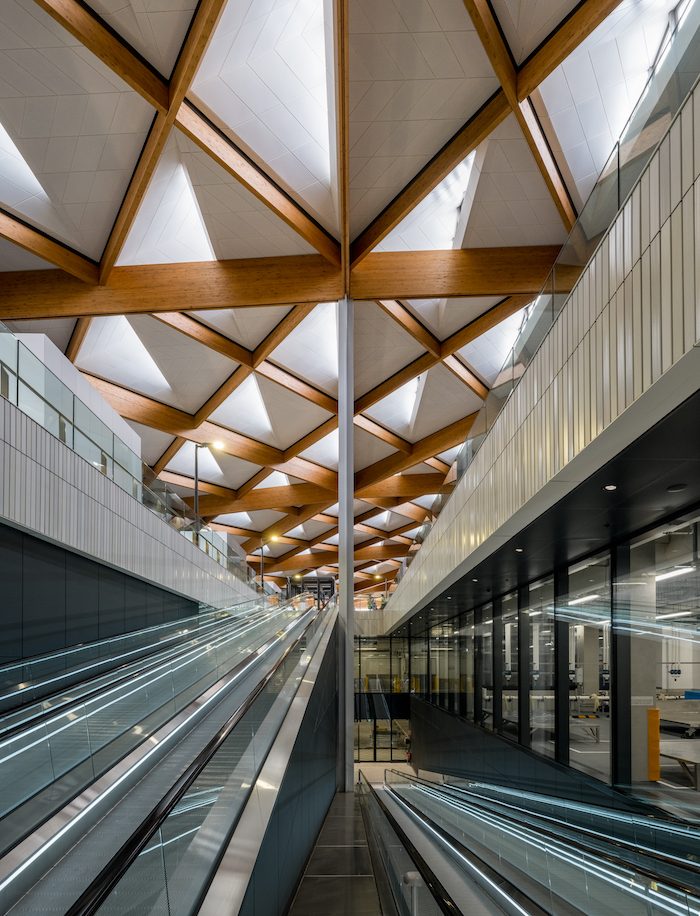
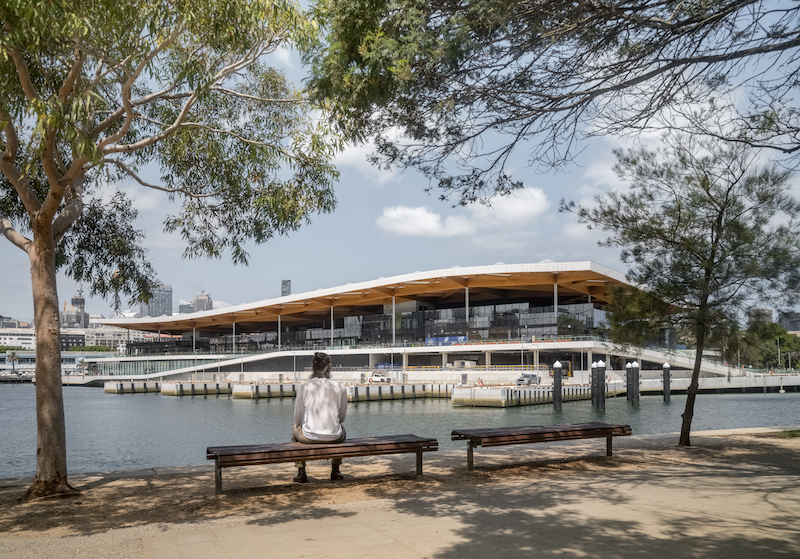
An undulating 20,000 m² floating roof unifies the entire complex with sustainable technology and stunning design. Weighing 2,500 tonnes, the 230-metre-long floating roof is composed of 594 glued laminated ‘glulam’ timber beams and 407 pyramidal aluminium cassettes lined with solar-panels, reducing the building’s daily energy consumption.
The form of the structure of the roof has been optimised to favour efficiency and sustainability, with the geometry and orientation of the cassettes designed to allow natural daylight into the space while also providing shading. The roof’s modular construction simplifies construction, significantly reducing the need for internal artificial lightning; and therefore, reducing energy loads.
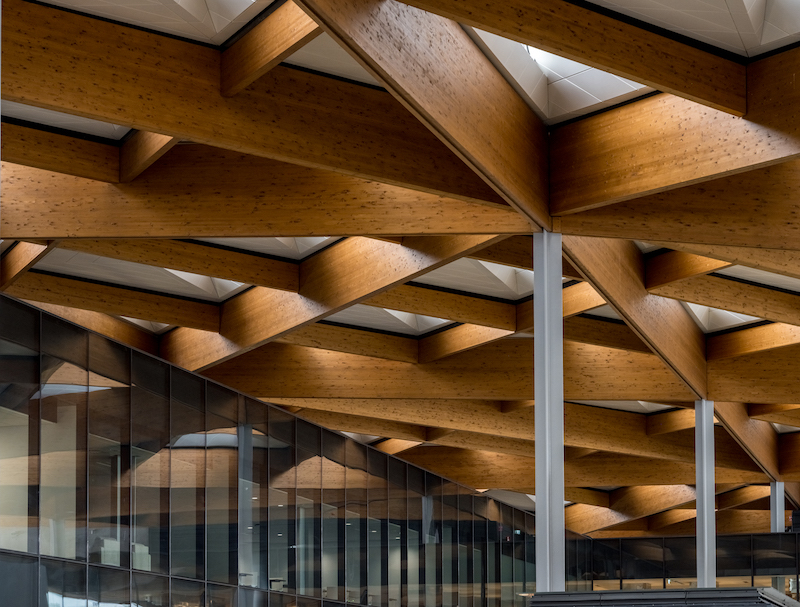
In addition, its undulating geometry, informed by the programme below and topographically modelled, allows rainwater harvesting through the collection at two locations. Collecting every drop of rainwater that hits the roof and filtering half for reuse – as well as the introduction of a wastewater treatment plant – halves the potable water consumption of the new market. The two-hectare roof canopy hovers above the upper ground market hall and office spaces, providing a mixed-mode solution for climatic control, reducing energy loads by up to 35% due to natural ventilation and daylight.
Lasse Lind, Partner and Head of Consultancy, GXN: “We’re redefining what a sustainable market can be. This modular roof harvests every raindrop, generates solar power, provides natural ventilation, and enables complete space reconfiguration as needs evolve – reducing potable water use without compromising authenticity or architectural ambition.”
Naturally ventilated retail spaces embrace passive design principles, using the breeze blowing across the harbour water to naturally cool the air. The plazas’ indigenous landscape palette includes wetland flora to filter stormwater. The sustainable ambitions of the project also extend to the restoration of fish habitats, where 3D-printed artificial coral panels cover the tidal edge of the market’s wharves and underwater lattice structures suspended from the underside of market provide new habitats for sea life.
A new scale of public engagement
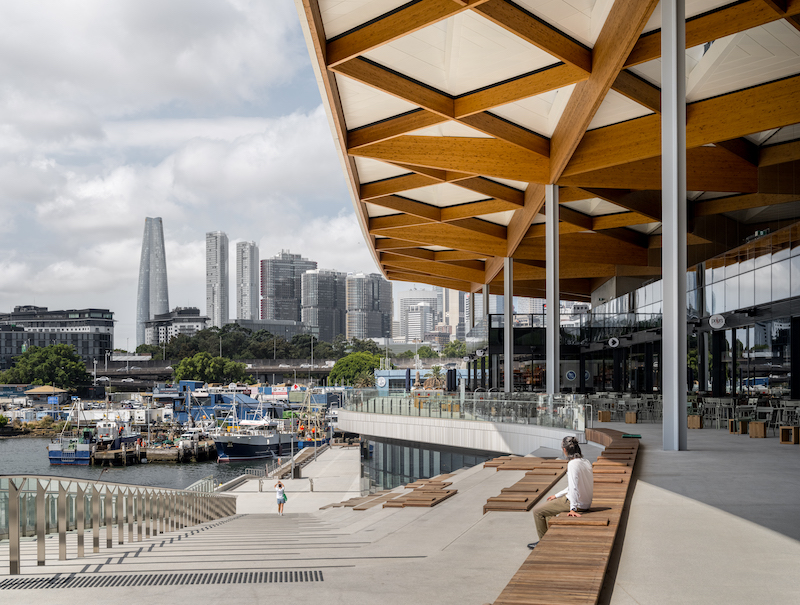
The new building becomes part of the harbour’s edge, linking the Rozelle to Woolloomooloo foreshore walk, completing the scenic 15km path. It features over 6,000sqm of accessible public open space and establishes a generous, welcoming connection to Blackwattle Bay from neighbouring Wentworth Park.
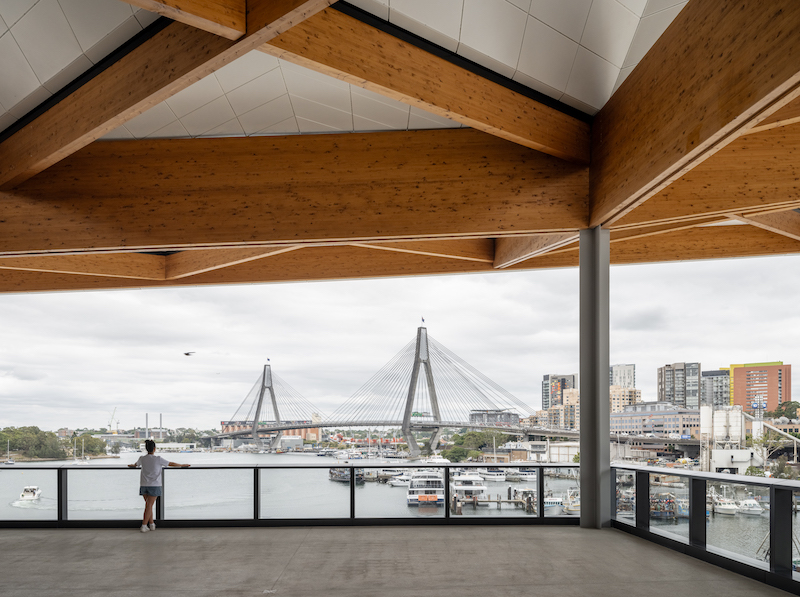
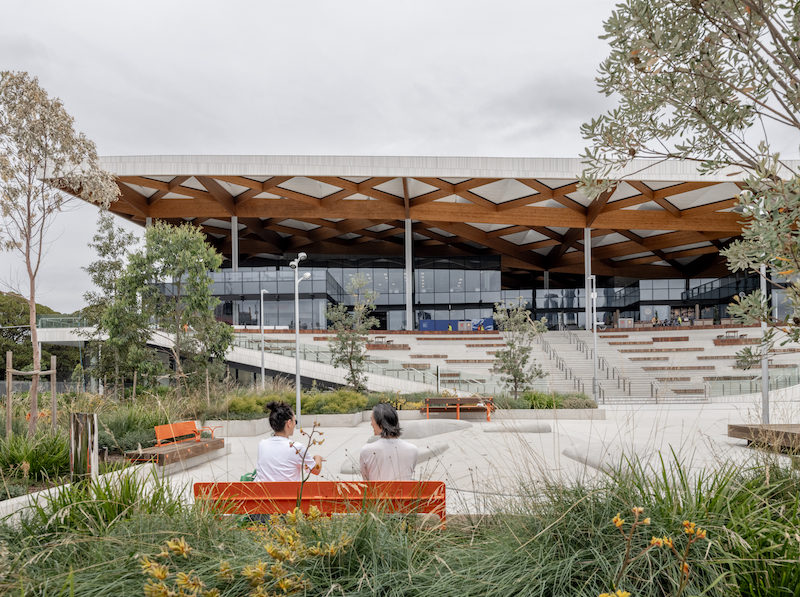
Generous, external stairs gently ascend each face of the building’s perimeter, guiding visitors from the public domain into the heart of the public market experience, forming a seamless and active water’s edge. The stairs overlooking Blackwattle Bay double as informal seating creating an elevated public dining experience that extends the landscaped public realm into the heart of the market.
The new Sydney Fish Market aims to realise Blackwattle Bay as a vibrant, connected, inclusive and resilient gathering place for Sydneysiders and visitors alike. It represents more than a new building; it acts as an exemplar of harbourside development, integrating industry and the public realm, demonstrating that the two functions are not mutually exclusive.
Design Approach
Audun Opdal, Senior Partner, 3XN: “Our practice has worked on waterfront projects around the world, consistently opening the edge between land and water to public life. The new Sydney Fish Market continues this approach: not simply as a beautiful and functional building, but as a civic threshold where harbour and city meet, inviting movement, exchange, and everyday encounters, and giving the waterfront back to the community.”
Kim Herforth Nielsen, Senior Partner, 3XN: “With the new Sydney Fish Market, our ambition was to design more than a building that houses a fish market. We aimed to create a cultural global food destination that also serves as a centre for the local community. We always strive to give our designs greater meaning and functionality beyond their basic purpose, because, as we believe, architecture shapes behaviour, and we can with the right design make life better for the public.”
Sydneysider Experience
Fred Holt, Partner and Australia Director, 3XN: “Every Sydneysider has a story about the Fish Market, often dating back to their youth. With the new Sydney Fish Market, our aim is to retain the authenticity and spectacle of a working market, while transforming it into a catalyst for community life. Central to this vision is a commitment to the highest standards of sustainability and a deep respect for its unique Sydney Harbour setting. Our hope is that the new Sydney Fish Market becomes a place where Sydneysiders and visitors alike gather throughout the year.”
Embedded Sustainability
Lasse Lind, Partner and Head of Consultancy, GXN: “With this building we are redefining what a sustainable and resilient market can be. The modular roof is not only a sculptural structure that gives the market its identity; it also supports many functions. It harvests every raindrop and holds solar cells, it provides natural daylight and passive ventilation, and it enables complete reconfiguration of spaces below as the market needs evolve. We’ve cut potable water usage by 50% and significantly lowered the energy consumption without compromising on the market’s authenticity or architectural ambition.”
Catherine Skinner, Principal, BVN: “The market is now capable of redirecting up to 80% of its operational waste away from landfill – even as visitor numbers are expected to increase by 100%. That step-change wasn’t achieved through a single innovation, but through a suite of integrated systems engineered to handle higher volumes with significantly lower environmental impact.”
“One of the greatest achievements is that the technical demands never overwhelm the visitor experience. Beneath the calm public realm sits an intricate operational engine, resolved to perform with the same clarity and confidence as the architecture above it. While the public enjoys effortless movement through a generous waterfront market. What lies beneath is an extraordinary depth of coordination that enables four levels of industrial and public activity to operate without conflict.
“The ambition was always to create a building that could carry both the weight of industry and the joy of public life. The project demanded a structure capable of managing salt water and air, humidity, cold-chain logistics and heavy machinery—all while welcoming millions of visitors a year. Achieving that balance of opposing pressures shaped every decision that was made.
“This is a deeply technical building, but it never loses sight of its civic role. Our job was to turn intricate cold-chain logistics, auction operations and industrial infrastructure into an environment that remains generous, intuitive and culturally grounded.
“A project of this scale can only succeed when delivery embraces innovation. BVN worked closely with engineers and contractors to develop unique prefabrication strategies, workflows and detailing approaches that made the architecture achievable.”
Landscape Design
Louise Pearson, Studio Director, ASPECT Studios: “Perched at the heart of Blackwattle Bay, the waterfront emerges as an inviting edge of water play and public art, celebrating cultures old and new. Native plantings and generous seating define the harbour, while an amphitheatre elevates the public realm into a lively stage. Green pockets and abundant seating introduce subtle ‘fishy’ references, while flashes of safety red offer a crisp nod to the site’s industrial past.”
Daniel Jarosch, CEO, Sydney Fish Market: “The opening of the new Sydney market marks a defining moment for our organisation and for Sydney. This once-in-a-generation investment that supports the future of Australia’s seafood industry while opening the workings of a real, operating fish market to the public. We’re proud to bring together wholesale trading, retail, dining, education and public space under one spectacular roof, right on the harbour, creating a market that serves industry, locals and visitors alike, today and for decades to come.”
Minister for Lands and Property Steve Kamper: “The new Sydney Fish Market is set to become one of Australia’s must-visit destinations, ready to welcome up to six million visitors a year and deliver a major boost to Sydney’s tourism economy. The Sydney Fish Market is the state’s newest landmark and another icon to Sydney Harbour, set to achieve global recognition on par with the Sydney Opera House. The Sydney Fish Market is an architectural and engineering triumph. Featuring state- of-the-art systems, cutting-edge facilities and a purpose-built design that supports a fully operational wholesale and retail hub, it’s built to serve generations of seafood lovers and visitors from across Australia and around the world. With its waterfront dining, fresh seafood experiences and vibrant public spaces, it’s designed to draw locals and travellers back time and again.”
3xn.com
www.bvn.com.au
www.aspect-studios.com
Photographer credit: © Rasmus Hjortshøj