I was watching the ABC News the other night when Defence Minister Richard Marles announced something, frankly remarkable: for the first time in Australia’s history, a woman has been appointed as Chief of Army, Lieutenant General Natasha Fox.
What made me sit up wasn’t just the appointment itself, though that’s significant enough, it was the moment Marles shared what sparked it for him. He spoke about something Fox had said to him earlier, a line that made him stop and think, and it was this:
“You can’t be what you can’t see.”
I had to smile. Because that exact line is the one I used in my funding pitch to the NSW Rec Fishing Trust Fund for WRFL’s FiSHEr Leadership Forum funding grant.
Different field. Different uniform. Same barrier.
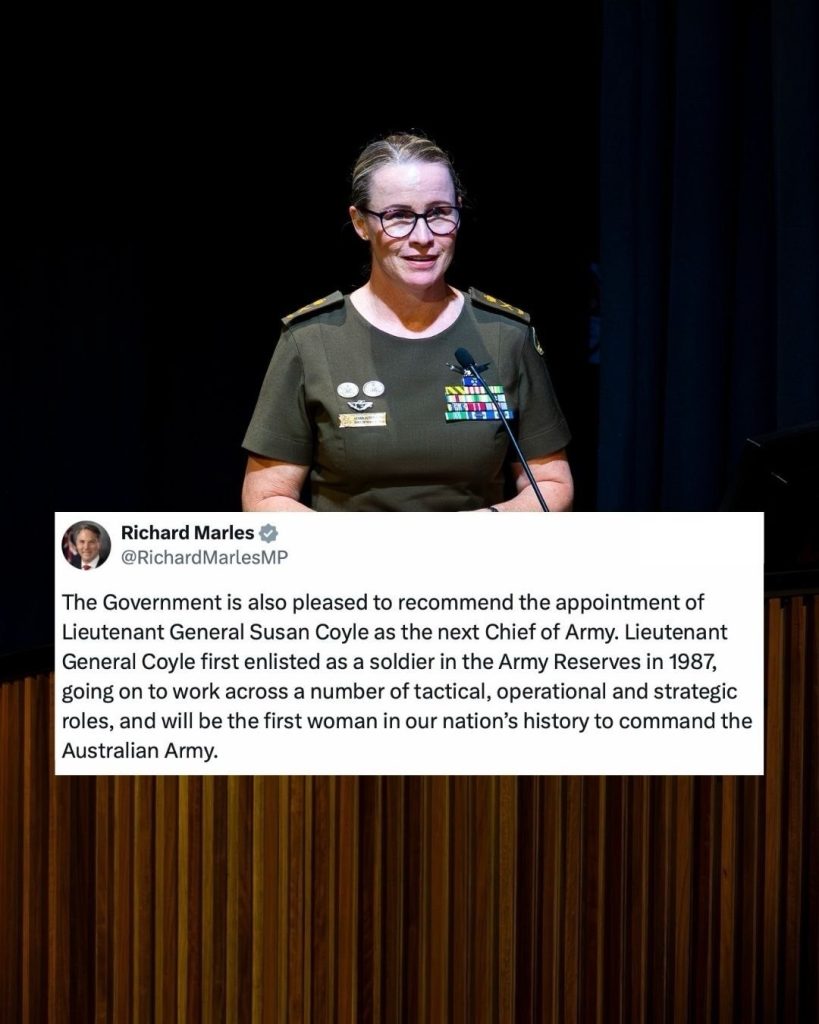
This image is direct from Hon. Richard Marles, MP Facebook: https://www.facebook.com/richardmarlesmp
For decades, recreational fishing has carried its own version of that invisible ceiling, not through rules or regulations, but through perception. Who belongs. Who gets taken seriously. Who gets a clear run at leadership in a space that has long been coded “male” (even when the sport itself isn’t). And when I say “shift culture”, I want to be really specific: I’m talking about the culture of gendered participation who feels welcome, who feels credible, and who feels confident enough to stay in the game long enough to lead.
And I also want to say this plainly: a lot of the people reading this are men. Good men. Men who want the ledger balanced. Men who’ve encouraged daughters, partners, mates, and club members to have a crack without getting side-eyed into the carpark. That support matters more than most people realise because culture doesn’t shift through slogans. It shifts through what’s permitted, encouraged, and normalised by the people already in the room.
Which is why I’ll be watching Lt Gen Fox’s tenure closely and barracking for her all the way. Not just because she’s earned the role, but because every visible success at that level quietly rewrites what’s possible for the next one coming up behind her. Fishing may not come with medals and marching bands… but the principle is exactly the same.
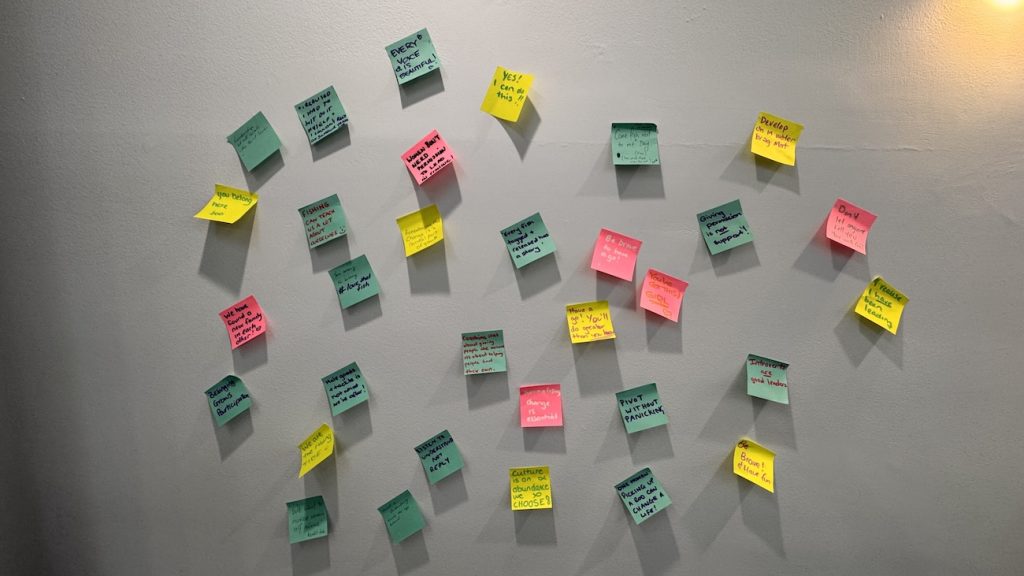
Delegate “epiphanies” posted on the Graffiti Wall at the FiSHEr Leadership Forum shows how culture can shift one person at a time.
Every now and then, something you’ve been working on quietly in the background steps into the light and shows you what it’s really capable of. For me, WRFL’s FiSHEr Leadership Forum was one of those moments.
The Forum was designed to tackle that leadership gap head-on. Not a “come and try” day. Not a social weekend (although there was plenty of that woven through). A deliberate step into capability, confidence, and connection with women learning to lead, organise, speak up, and build something that lasts.
What I probably underestimated going in was how much it would stretch everyone involved, not just the participants, but the women who stepped up to lead parts of the program. This was a first. No template. No playbook. Just a clear vision and a group of women willing to back themselves.
And they did.
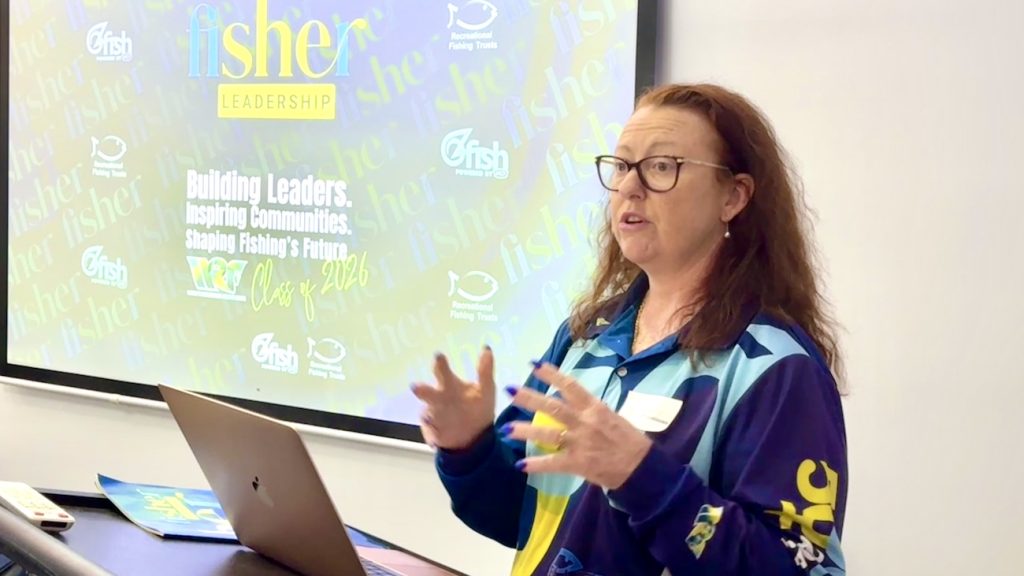
Emma-Louise Harvey, WRFL’s NT Chapter President, delivers the keynote to open the 2026 FiSHEr Leadership Forum in Newcastle, NSW.
I watched leaders step into roles they hadn’t held before, facilitating, presenting, leading conversations, holding space. Not perfectly polished, not rehearsed to within an inch of their lives, but real, grounded, and impactful. That kind of growth doesn’t come from staying comfortable. It comes from stepping forward anyway.
And then there was the room.
It’s hard to put into words without it sounding like a brochure, but there was a point somewhere across those two days where it was obvious this wasn’t just working… it was landing properly. The feedback since has only reinforced that:
“I didn’t realise how much I needed this… I’ve found me tribe!”
“Not just another corporate leadership event.”
“An inspiring weekend… I’m excited to see where this leads.”
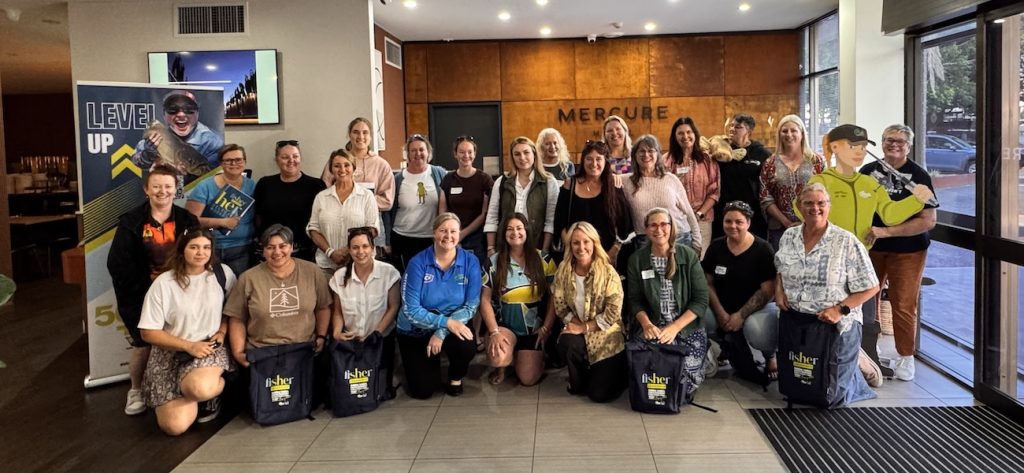
Delegates and presenters alike, everyone who participated in the FiSHEr Leadership Forum is calling for more such events.
What stood out wasn’t just what people learned, it was what shifted. You could feel it in the way people spoke by the end. The way they carried themselves. The way they talked about what they might do next.
And here’s a ripple I want to share that’s already emerged, not from a delegate, but from one of the leaders who stretched.
Emma-Louise Harvey almost baulked when she was asked to deliver the keynote. You know that moment, the one where your body says nope, your mind scrambles for excuses, and the old story tries to drag you back into the shadows. But she straightened up and got on the plane.
Then she stood at that podium and told the truth: that exclusion had quietly stolen fishing from her, a pastime she’d been raised with and that the loss had reached further than “not going” anymore. It hit her sense of self. Her identity. Her belonging.
And the part I love most?
Since stepping up to share that story, she’s created a new site and that keynote has become the first blog in what I suspect will be a very powerful body of work. If you want a real example of what “you can’t be what you can’t see” looks like in fishing life, not theory, not motivational fluff – go read it. It’s honest, grounded, and it carries the exact kind of resonance that makes other women feel brave enough to return to the water.
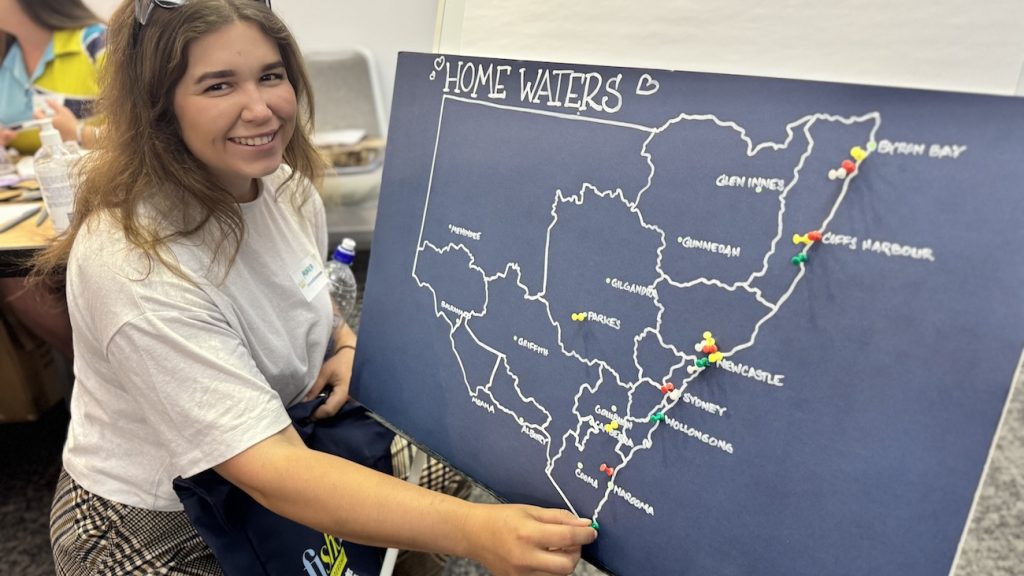
Monica Karmadonoff of Merimbula pins her home waters on the Forum’s “heat map”, showing the reach of this first Forum.
Now, one more piece that matters, especially for those who still think parity is simply “nice”.
Parity isn’t just wellbeing. It’s not just fairness. It’s economic.
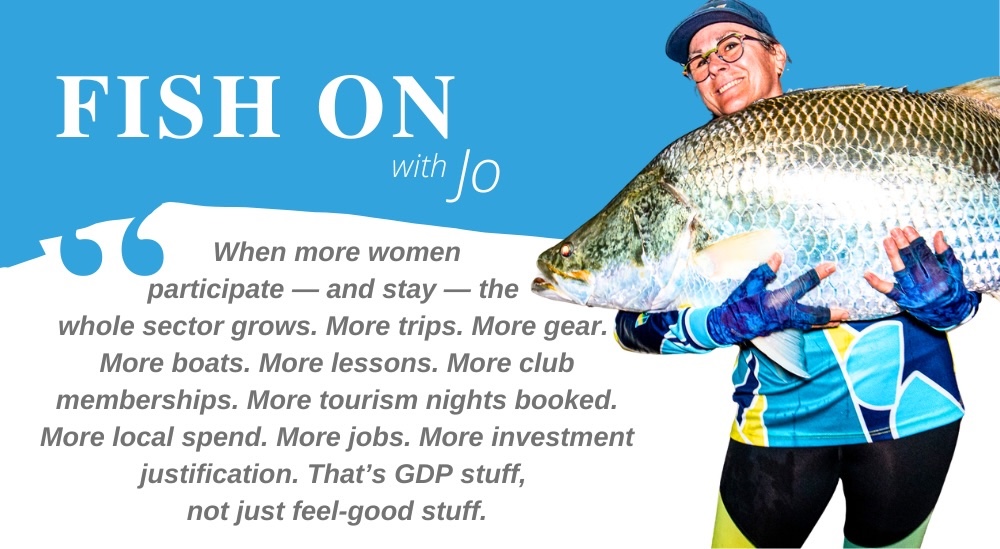
When more women participate, and stay, the whole sector grows. More trips. More gear. More boats. More lessons. More club memberships. More tourism nights booked. More local spend. More jobs. More investment justification. That’s GDP stuff, not just feel-good stuff.
When, not if, we reach gender parity in fishing, the change won’t just be numbers on a participation chart. It will show up in stronger, more connected communities. In better stewardship of waterways. In more diverse thinking around how the sport evolves. And perhaps most importantly, it will show up in the next generation, where young girls grow up never questioning whether they belong on the water.
WRFL’s FiSHEr Leadership Forum was one step along that path. A significant one.
And if the past few months are anything to go by… we’re only just getting started.
Until next time, FISH ON!

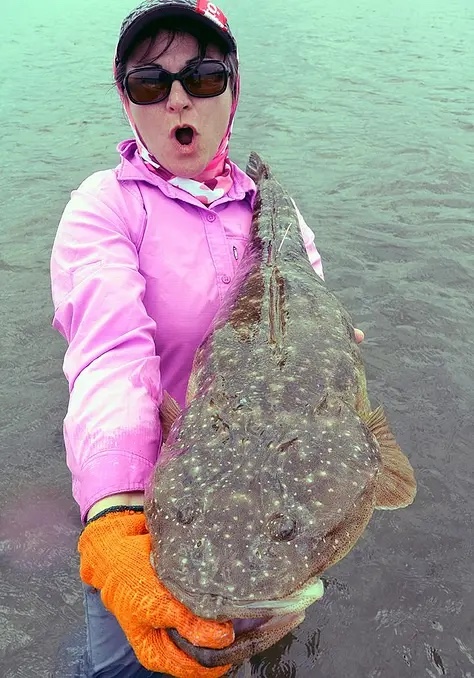
For three decades Jo has worked with businesses and personalities, helping them to promote themselves in one form or another, whether through graphic design, advertising, promotions or marketing.
She has owned a fishing rod for just as long, but it’s only been in this new century that it hasn’t been allowed to gather dust.
Jo is a passionate advocate for the sport of fishing and its promotion as a healthy lifestyle for women.
To find out more about Jo visit her website HERE
Or you can visit her Fishtopia Web site HERE or on the banner below.
Jo is also the founder and National President of the Women’s Recreational Fishing League (WRFL) Inc. The work they do is very important in balancing the participation ratios of fishing in Australia, thus making the collective voices of Aussie anglers more harmonious and powerful, as well as shoring up the economy of the sector. For more information visit their Website at womensrecfishingleague.org