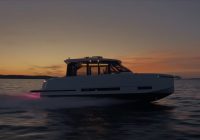
Grand Banks V-WARP Technology®, introduced with the Grand Banks 60 in 2017, resolves the long-held trade-off between range and speed. Through a warped hull form, carbon fibre superstructure, and monocoque construction, every Grand Banks model now delivers greater range, higher speed, and a more comfortable offshore ride.
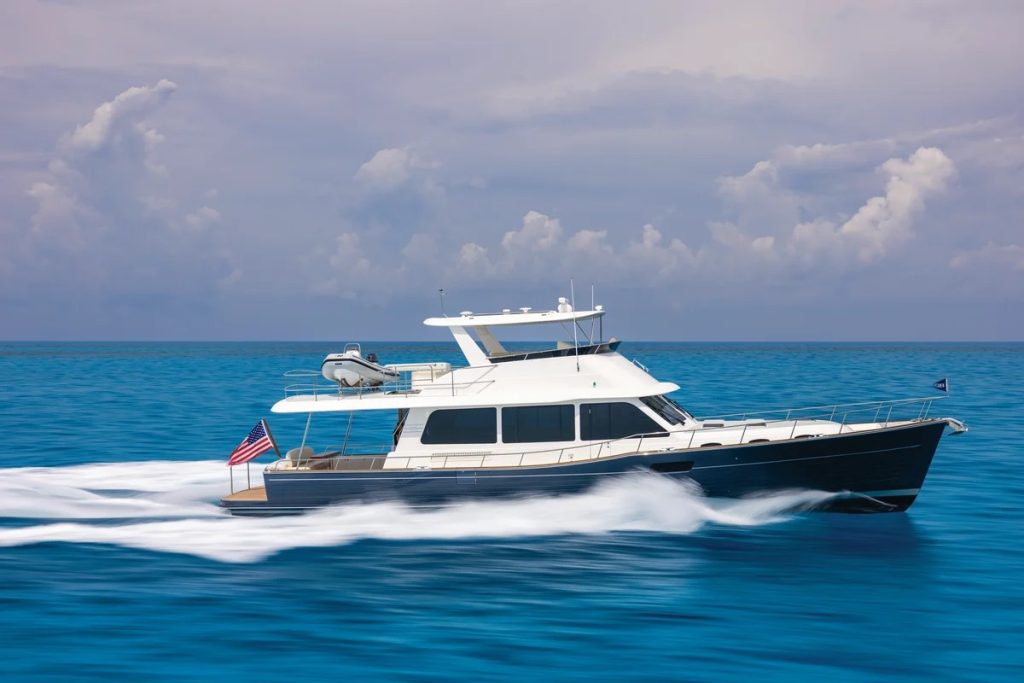
The cruising community has long operated on a principle that range demanded patience, seven knots was respectable, nine was ambitious, twelve felt extravagant. If you wanted to cross oceans reliably, you throttled back, way back. Staying true to its 70-year pioneering history, Grand Banks decided to challenge this assumption.
In 2017, CEO and Chief Designer Mark Richards introduced V-WARP Technology® with the launch of the Grand Banks 60. The premise was simple, yet bold: what if a yacht could travel farther, burn less fuel at speeds previously considered incompatible with long-range cruising designs? For nearly a decade, that platform has underpinned every Grand Banks launched.
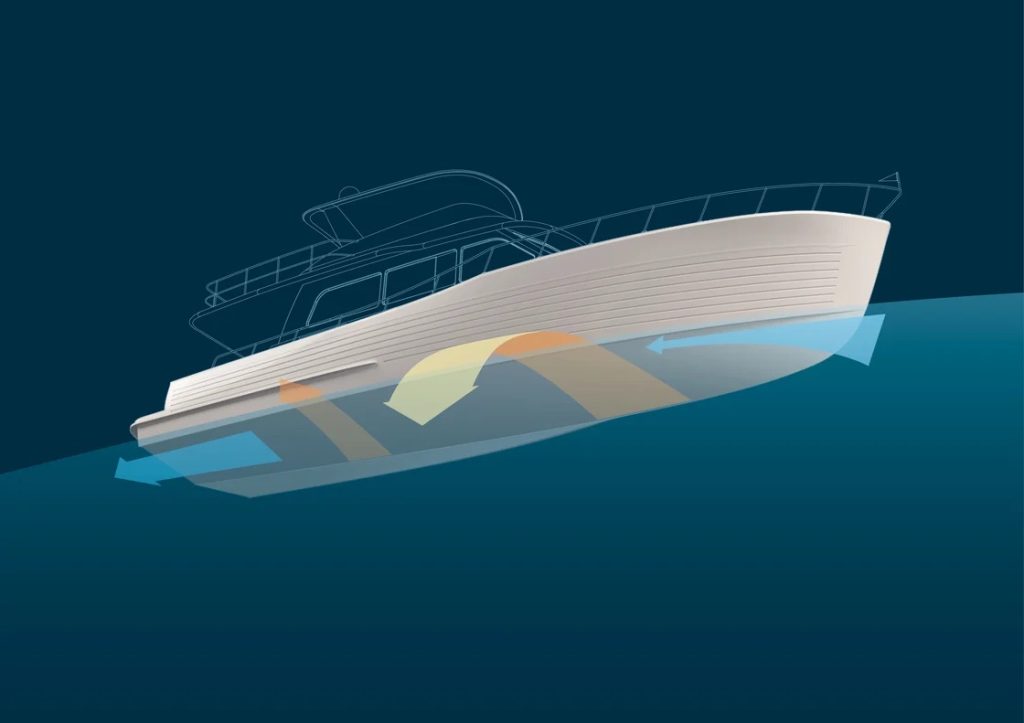
How Does V-WARP Technology® Pioneer the Hull Form?
The hull is where V-WARP Technology begins, and where it departs most sharply from conventional hydrodynamics. Many modern semi-displacement and displacement hulls carry their beam far forward to maximise interior volume. The result is fuller forward sections that push through water rather than slice it, demanding more horsepower and, by extension, more fuel. Richards, drawing on a background as a world-class competitive sailor, approached the design differently. The hull features a fine bow entry that cuts cleanly through head seas, paired with a warped deadrise that carries just six degrees at the transom. A refined, smaller keel enhances tracking while minimising drag.
The evidence is visible astern. Running a Grand Banks, the wake behind you is remarkably small. The yacht is not clawing to get on plane, stressing engines and wasting energy to get over a hump like conventional hulls. Instead, a Grand Banks moves efficiently through sea conditions balanced, level, and composed. Reduced wake reflects reduced wasted energy, and reduced wasted energy means more miles per gallon.
The flattened aft sections of a Grand Banks deliver further advantages. The yacht planes quickly at lower speeds, sits exceptionally stable at anchor, and unlike deep-V or traditional semi-displacement hulls grows more stable as speed increases. Push the throttles forward and the running attitude doesn’t change, only the speed over ground does.
For the adventure-seeker, that translates directly to freedom. Run at displacement speeds for maximum range, or open up the throttles to outrun weather and make a distant harbour before dark.
What Role Does Carbon Fibre Play in the Grand Banks Platform?
Material science is the second pillar of V-WARP Technology®, and Grand Banks applies it with structural intent rather than visual effect.
Every Grand Banks superstructure is built entirely from carbon fibre. The goal is straightforward: by reducing weight aloft, the yacht’s centre of gravity stays low, offshore stability improves, and fuel efficiency increases. Less weight requires less power. Less power burns less fuel. And less fuel burned means longer range.
Carbon fibre components are pre-cut with unidirectional fibre orientation, placing structural strength precisely where loads demand it.
What Is Monocoque Construction and Why Does It Matter Offshore?
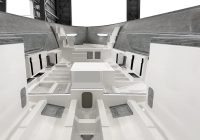
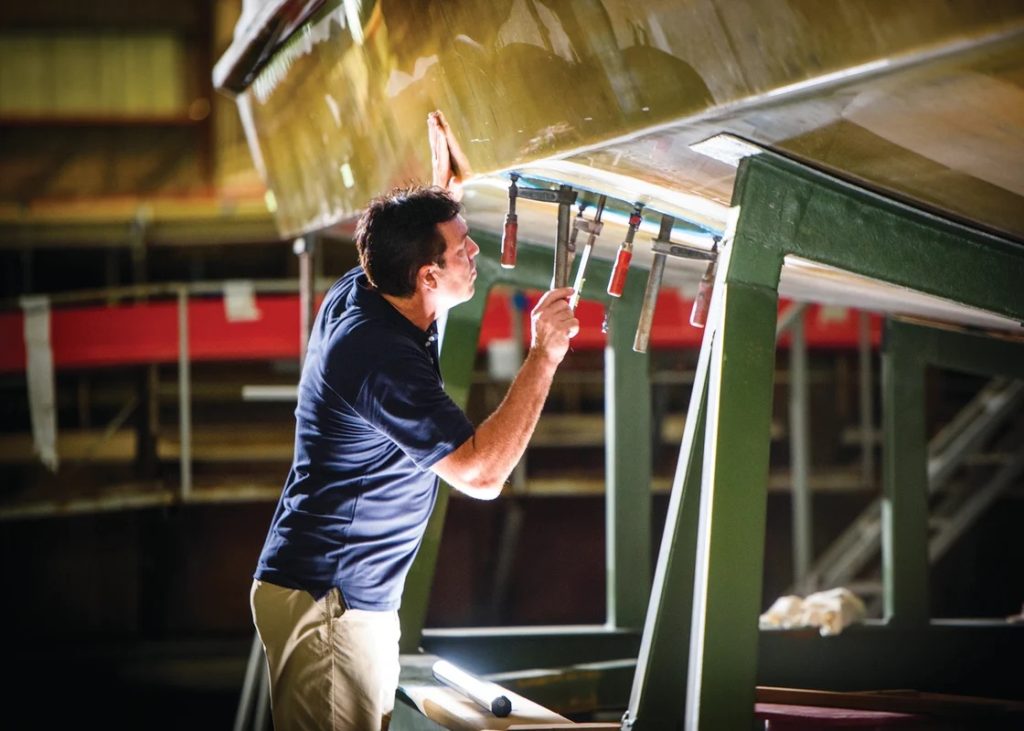
Where many builders bond plywood bulkheads onto flanges, Grand Banks employs fully infused composite bulkheads laminated directly into the hull structure. This monocoque construction method is borrowed from advanced racing sailboats and is true to Richards’ roots.
The outcome is a unified, rigid structure free from the creaks and flex that can undermine confidence in challenging seas. It requires additional time and precision to build. The difference, once underway offshore, is felt immediately.
The Modern Grand Banks Passagemaker: What Has Actually Changed?
Seventy years ago, Grand Banks established its reputation on dependable, seaworthy yachts capable of crossing oceans. That purpose hasn’t changed.
What V-WARP Technology® changes is what’s possible within it. Owners can now travel farther on less fuel, cruise comfortably at speeds once thought at odds with range, maintain a composed running attitude in challenging seas, and return to a stable, settled platform at anchor. V-WARP Technology® advances the Grand Banks tradition; it doesn’t replace it. Richards’ philosophy is clear: engineering exists in service of the cruising life, not as an end in itself.
For the owner who wants more range, more speed, and more freedom, that distinction matters.
For more information, visit www.grandbanks.com/v-warp-technology