Spring has sprung, and so have the strong winds
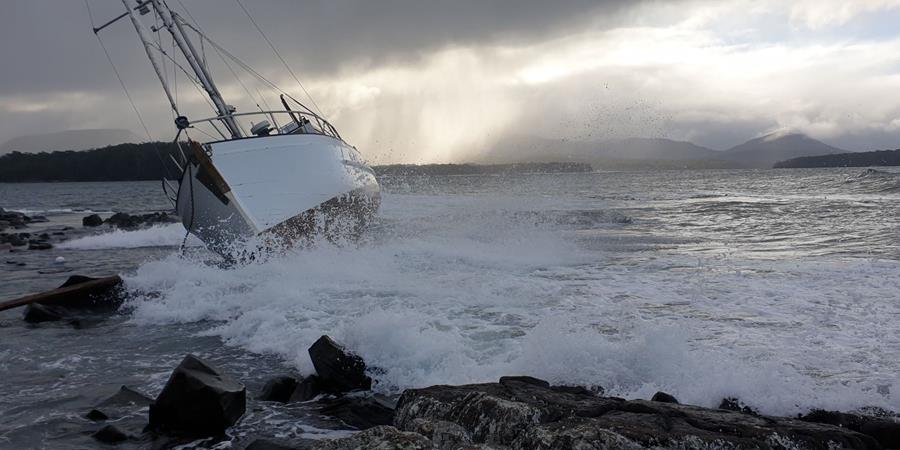
Enjoy your time on the water this season by planning and checking the conditions before every trip.
Changing temperatures and pressure differences across Australia can create stronger, more variable winds, so conditions on Tasmanian waterways can change quickly.
Before you head out this spring:
- Check the forecast and wind conditions from multiple sources.
- Consider how the expected conditions will affect your vessel and crew.
- Allow extra time for possible changes in the weather.
- Make sure your safety equipment is ready.
- Tell someone where you are going and when you expect to return.
Safety spotlight: Fire extinguishers – Know your requirements
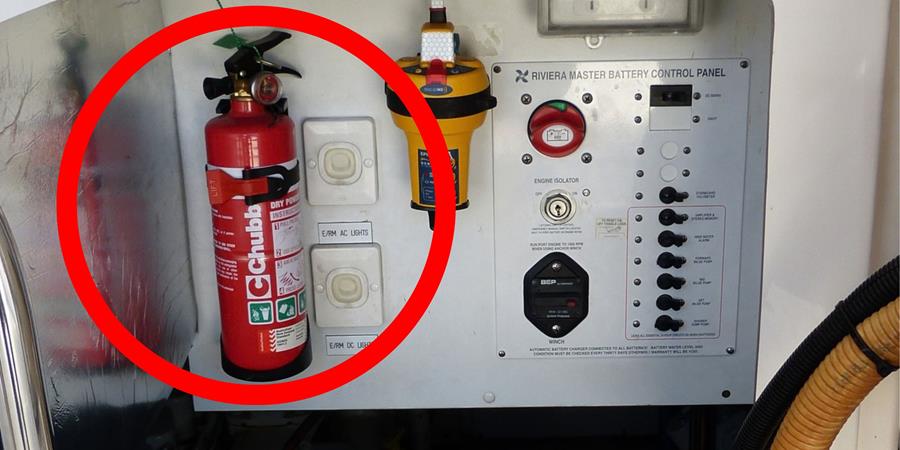
Fire extinguishers are a mandatory piece of safety equipment for all motor boats on Tasmanian waters.
There are several potential sources of a small fire on a boat, and each can quickly become an emergency. Having the correct, well-maintained fire extinguisher within easy reach can help prevent a minor incident from becoming a major one.
Recent change to fire extinguisher regulations
For personal water craft (PWCs), the required fire extinguisher size is now 0.6 kg, down from 0.75 kg.
Fire extinguisher requirements for Tasmanian boaters
- PWC: 1 × 0.6 kg fire extinguisher (minimum 5BE rating).
- Motor boats under 8 m: 1 × 0.9 kg fire extinguisher (minimum 5BE rating).
- Motor boats 8 m to under 12 m: 2 × 0.9 kg fire extinguishers (minimum 5BE rating each).
- Motor boats 12 m and over: 3 × 0.9 kg fire extinguishers, or 1 × 0.9 kg and 1 × 1.5 kg fire extinguisher.
Fire extinguisher checklist
Make sure your fire extinguisher is:
- the correct type and size for your vessel
- in good condition and within its service life, where applicable
- secured and easy to access
- located where everyone on board can find it.
Learn more about fire extinguishers
Know your boat: Capacity labels and builders plates
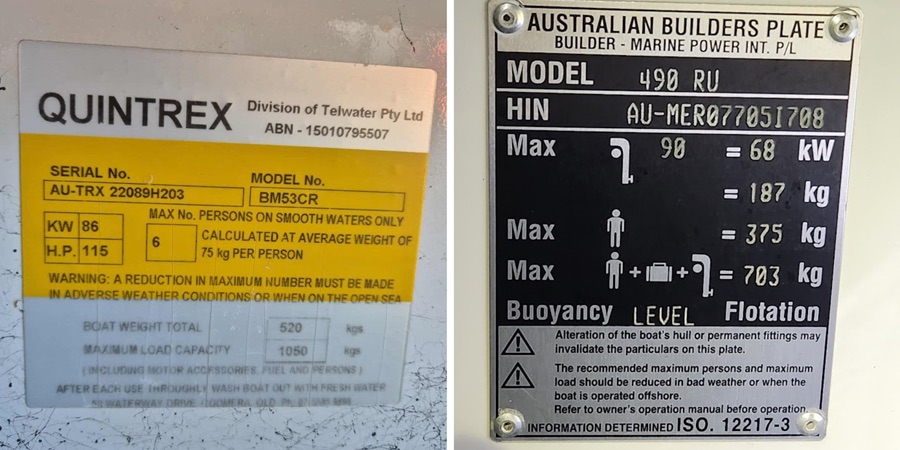
How much can your boat safely carry?
A builder’s plate provides important information about your boat’s limits, and manufacturers set these limits to help you operate your vessel safely.
Depending on your vessel, the label or plate may include information such as:
- maximum number of people
- maximum load or weight
- maximum outboard engine power
- type of buoyancy.
All vessels manufactured after 2006 must have a builders plate, and older vessels require a capacity label. A capacity label uses a calculation to determine how many people you can have onboard.
How to order a capacity label
Existing MAST customers can order capacity labels by accessing the MAST portal via MyServiceTas.
Why does it matter?
It is easy to underestimate how quickly weight adds up on a boat.
Passengers, fuel, fishing gear, eskies and other equipment and luggage all add to your vessel’s total load. Carrying more weight than your vessel is designed for can affect its stability, handling and performance on the water.
Knowing your boat’s limits is an important part of being a responsible skipper, so before you leave:
- check your vessel’s capacity label or builders plate
- consider what you are carrying for your planned trip
- double-check that the number of people and the total load are within the manufacturer’s specified limits.
Learn more about your boat’s capacity
What are Notices to Mariners?
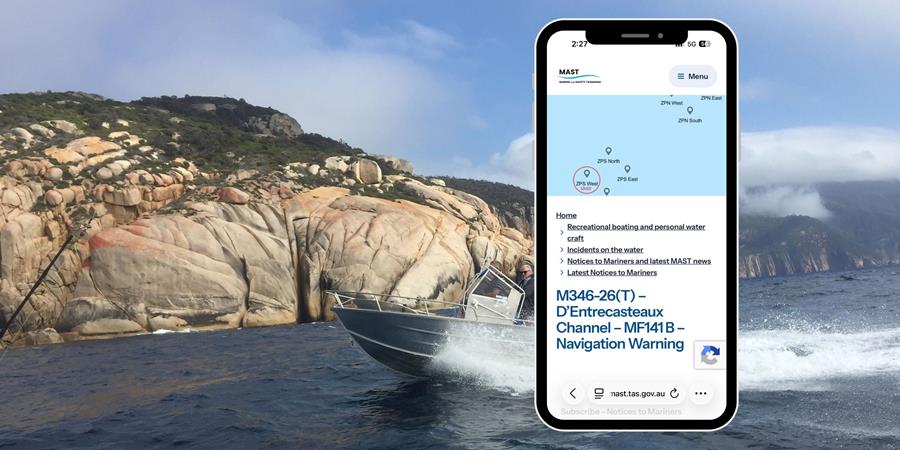
Simply put, Notices to Mariners provide important information that helps boaters stay safe on Tasmania’s waterways.
You may have seen a Notice to Mariners on our website, social media channels or in your local newspaper and wondered what it means. A Notice to Mariners is an official notice issued by MAST that provides information about changes or conditions that may affect navigation and the safe use of waterways.
As part of your trip planning, check the latest Notices to Mariners on the MAST website for information that may affect your route.
To receive Notices to Mariners directly in your inbox when they are issued, subscribe now.
View and subscribe to Notices to Mariners
Tune into Tas Maritime Radio
Tas Maritime Radio also broadcasts Notices to Mariners during its scheduled radio skeds three times a day on VHF channels 67, 68 and 69, depending on your location.
Broadcast times:
- 0745 hrs
- 1345 hrs
- 1733 hrs
GPS made simple: Common terms every boater should know
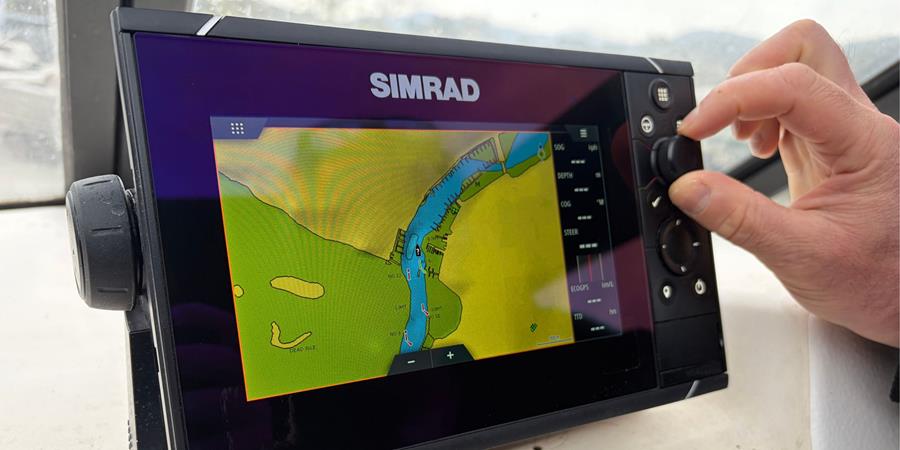
GPS and chartplotters are useful tools for navigating Tasmania’s waterways.
But with so many terms and abbreviations, it can be difficult to know exactly what the information on the screen means.
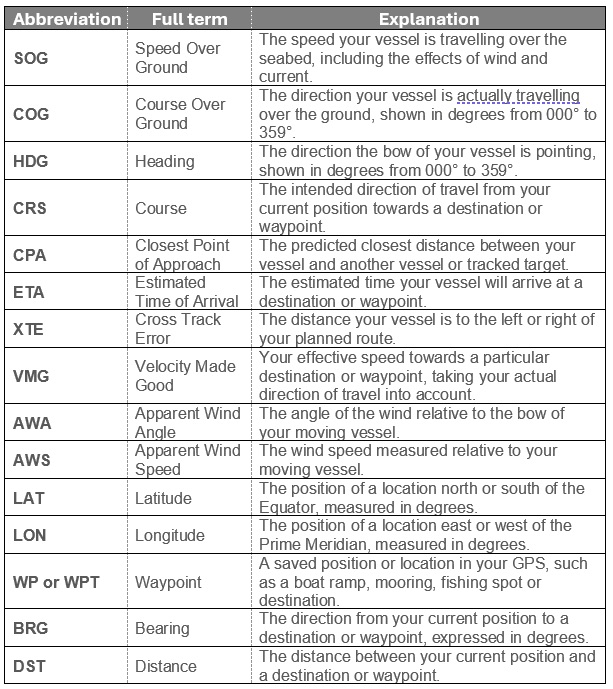
What boaters need to remember
- Your make, model, and application of your GPS will determine which abbreviations are relevant to you.
- Always maintain a proper lookout, be aware of your surroundings and make sure you understand the conditions and hazards in the area you are boating.
- A useful navigation tool for boaters is MAST’s web-based GIS system, available to the public and providing access to a range of boating and navigation information.
Infrastructure update
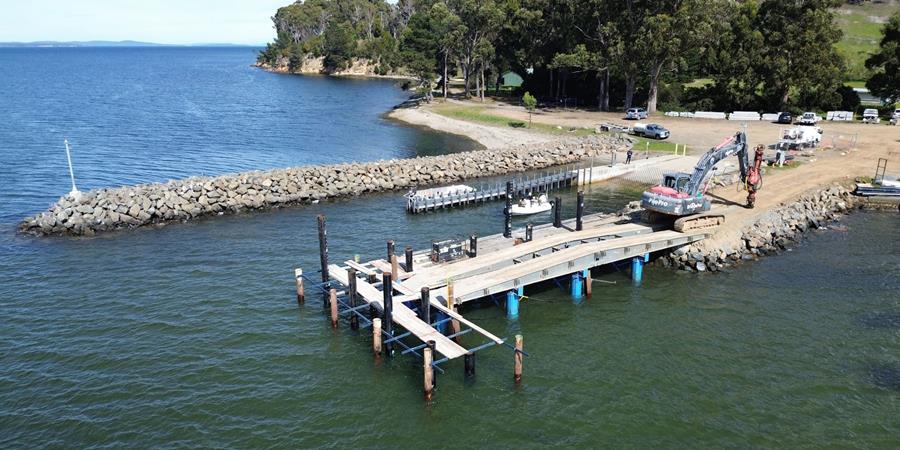
New Gordon Jetty
Construction of the new Gordon Jetty commenced on 17 August.
The contractor is using a temporary structure to construct the new jetty, rather than the more traditional method of using a piling barge. Works are expected to be completed by early November, and MAST will provide updates on our socials.
Dru Point walkway extension
The contract to build the 8.8 metre extension to the existing timber walkway has been awarded, with work expected to commence in late October.
The lower landing extension is expected to take approximately two weeks to complete. There will be some disruption during the works; however, the facility will remain operational. Once completed the upgrades will improve access for smaller boats and personal water craft (PWC) at lower-tides.
Stieglitz boat ramp walkway extension
The 7.3 metre extension to the timber walkway will be undertaken from late October into early November.
The facility will be closed for approximately two weeks while upgrade works are completed. Once finished, the upgraded walkway will provide increased capacity during busy periods.
Rocky Cape boat ramp fender upgrade complete
Fendering upgrades have been completed at the Rocky Cape landing stage. Every second fender has been replaced with a longer fender to help prevent vessels from washing over the structure during higher tides.
Find a Tasmanian marine facility
mast.tas.gov.au