Written by Danny Casey
Anyone who reads my posts will know that I am first and foremost an “engine” man – powerboats mainly, and then classic motor vehicles. However, as someone who has been around boats for nearly all my life, I can still recognise beauty and form in a type of boat which has remained unchanged in concept and construction over nearly nine decades; a local icon and a work of art, even if – shock, horror – it’s a sailboat!
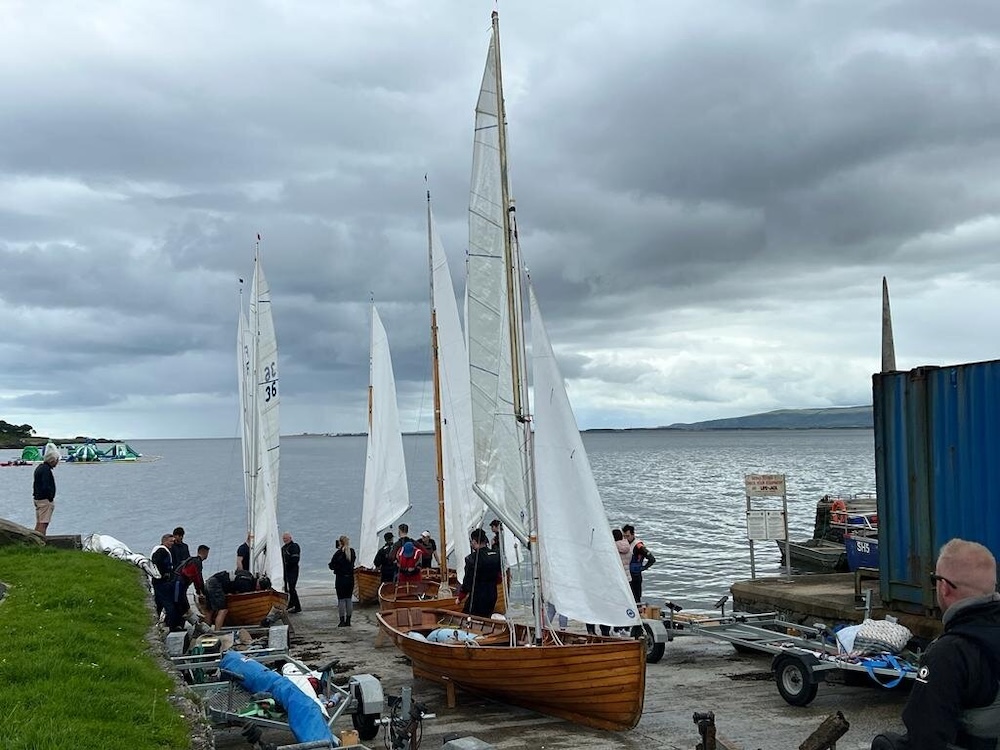
The boat is known as the “Foyle Class punt”. It is very, very rare (in fact, “localised” would be a better word) and can be seen only in the far northwest corner of Ireland on the eastern side of the Inishowen Peninsula, and only on the River Foyle (although the class has made fleeting guest appearances on other waterways). The farthest south you would see one would be Culmore Point (near where I grew up – just north of, but downriver from, Derry City) and the farthest north one would be seen would be Shrove – right at the northern end of the Inishowen peninsula. So a boat seen only on an 18-mile stretch of an Irish waterway (and nowhere else in the world) is pretty much “sui generis”.
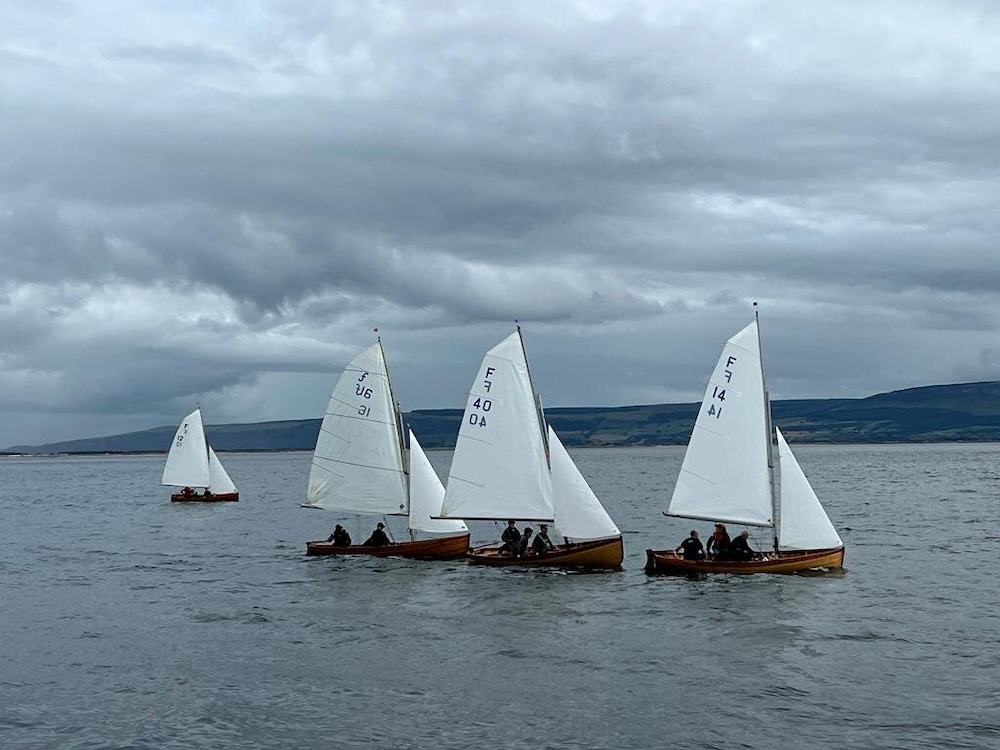
But why is the Foyle Class punt unique? Well, it is a strict one-design boat which must be no longer than circa 5.2 metres overall and which carries quite a large sail rig – but with no centreboard. The boat needs an experienced 3-person crew: a skipper on the tiller, the equivalent of a foredeck hand and then someone amidships whose sole job is to deftly and swiftly move large bags full of sand ballast (to compensate for the shallow draft with no drop-down daggerboard).
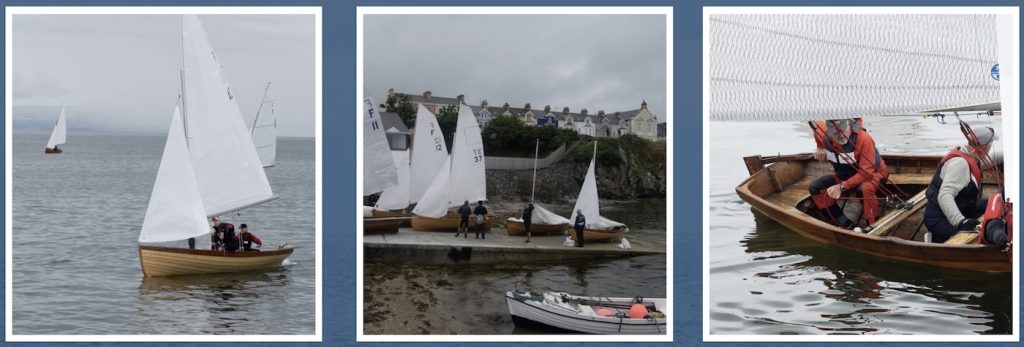
These boats are things of true beauty – all lapstrake (clinker built) and true paradigms of the “race on Sunday, work on Monday” philosophy. Decades ago, owners would have entered a race (for money) at the weekend and then gone back to the nets or lobster pots during the week. All boats must be clinker-sided (no exceptions) but there was one smooth-side (carvel) boat built in the early ’70s – she is allowed to race because she was built before the clinker-only rule came in.
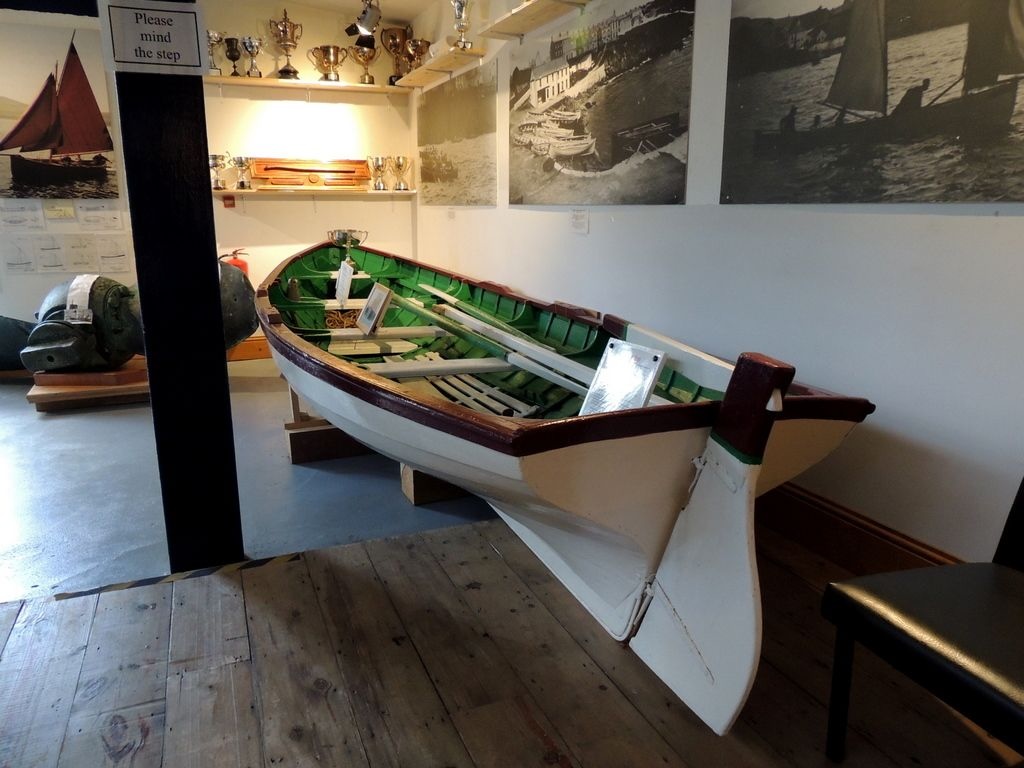
These boats were stalwarts of all the regattas along the Foyle when I was growing up, but I, being in the motorboat camp, never paid them much attention in period. Looking back, though, I seem to remember one seldom saw wet crew members or capsized boats – despite lowish freeboard, relatively narrow beam, no keel and having to constantly trim by shifting ballast bags. So those men (it was all men in those days) were no slouches as sailors.
As the art of building and sailing a Foyle punt is handed down through the generations, it has been the same families for decades: Hegarty, Campbell, Doherty, Stewart, Lynch, Gillespie, Gallagher. An impressive roll of honour considering there are probably fewer than two dozen of these boats extant.
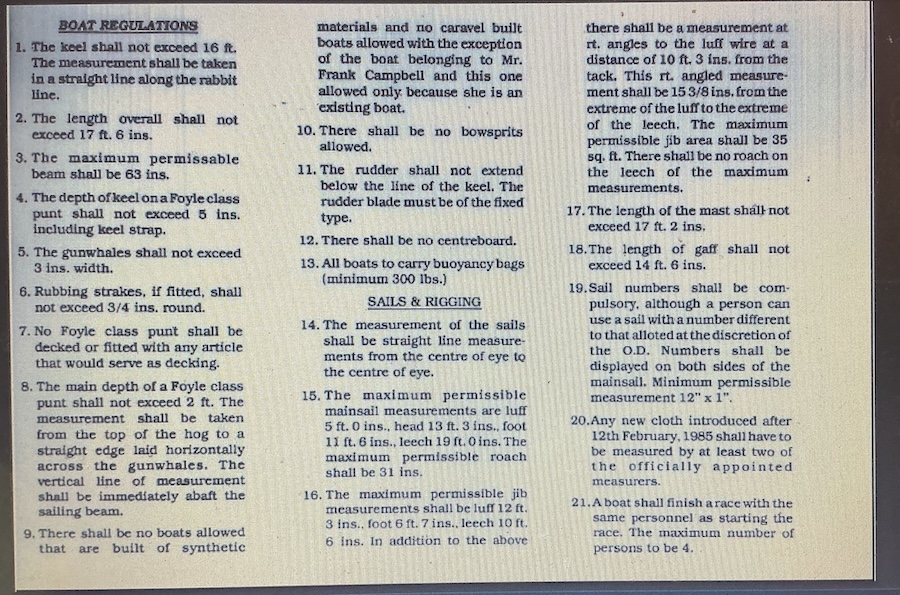
Now, a world away in Sydney, I am reminded of the magnificent maritime heritage ingrained in the land I left behind.
Photo credit: foylepunts.com
Danny Casey is highly experienced, undoubtedly idiosyncratic, and immensely knowledgeable about things mechanical, new or old. His knowledge and passion are as a result of spending his whole life in or around anything power-driven – especially marine engines. His passion for boating is second to none, with his life a montage of fabulous memories from decades spent in or around water and boats, both here and in Europe. Danny has spent myriad years in the recreational marine industry in a varied career in which he has bamboozled colleagues and competitors alike with his well-honed insight.

His mellifluous Irish accent, however, has at times been known to become somewhat less intelligible in occasional attempts at deliberate vagueness or when trying to prevent others from proffering a counter-argument or even getting a word in. Frank and to-the-point, but with a heart of gold, it can be hard to convince Danny to put pen to paper to share his knowledge. Marine Business News is grateful for his contributions. Connect with Danny through LinkedIn.