The coastal suburb of Runaway Bay, on the northern end of Queensland’s Gold Coast, has long been defined by water. Fringed by the Broadwater and threaded with canals, it is home to just under 10,000 residents yet boasts one of the highest numbers of registered boats per capita in the southern hemisphere. For decades, Runaway Bay has been a natural sanctuary for boaties, an environment where maritime culture is not a pastime, but a way of life.
It is also the place where one family helped shape the future of Australian boating infrastructure. The Leigh-Smith family, through vision, innovation and sheer persistence, became instrumental in the development of marina design, marine safety, and boating culture on the Gold Coast and beyond.
Foundations of a waterways community
The story of Runaway Bay predates its name. In 1939, Robert George Oates, through the Anglers Paradise Development Company, acquired around 350 acres along Biggera Creek and the Broadwater, then a landscape of mangroves and tidal flats. By the mid- 1950s, town water and around 50 permanent and holiday homes had been established, with the construction of the Biggera Creek bridge in 1960 accelerating growth.
Further expansion followed in 1967 when Lae Enterprises purchased 182 hectares north of Anglers Paradise. Development began in 1972, and the name Runaway Bay, first adopted by the local post office, soon became the official suburb, cementing its identity as a tranquil coastal and waterways community.
A call to protect lives at sea
While the waterways of the Gold Coast offered opportunity and lifestyle, they also carried risk. By the mid-1960s, recreational boating activity had increased dramatically, yet organised marine rescue services were limited.
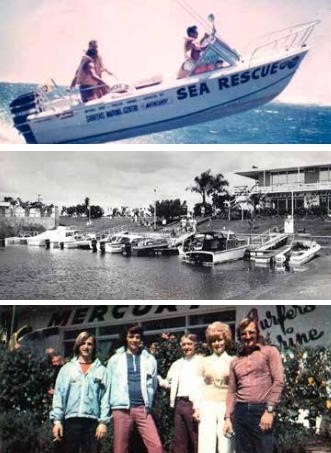
Recognising this growing danger, Reg Leigh-Smith, the family patriarch, identified the urgent need for a dedicated sea rescue organisation on the Gold Coast. In 1965, this vision led to the formation of what was initially known as the Northern Rivers and Gold Coast Air Sea Rescue, later renamed Southport / Tweed Heads.
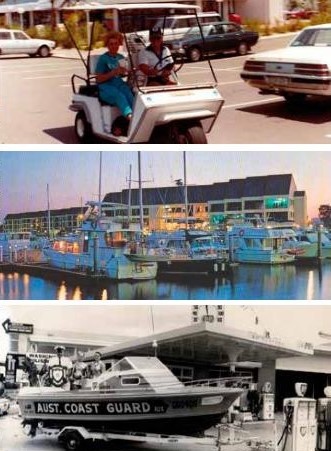
Discussions were soon held with National Commodore Madden and other national officers of the Australian Coast Guard Auxiliary, with agreement reached for Coast Guard to assume responsibility for the flotilla. On 16 May 1967, QF1 Southport was officially formed, the first Coast Guard flotilla in Queensland. Graham Bond, a local water policeman, became its inaugural Flotilla Commander.
The flotilla received its charter on 2 September 1969, signed by National Commodore L. Swift and Queensland State Commodore Reg Leigh-Smith himself. From these beginnings, the success of Southport Coast Guard inspired a broader vision: a coordinated Coast Guard presence around the entire Australian coastline.
From rescue to infrastructure
Reg Leigh-Smith, alongside training leader Bruce Harris, travelled extensively, flying to Cairns and Mossman, and visiting coastal towns down the eastern seaboard. They met with port authorities, harbour masters, marine departments and police, presenting a compelling case for a national volunteer marine rescue network. Their ideas were widely supported.
An approach was even made to have Prince Philip appointed National Honorary Commodore, proposed by Sir Rohan Delacomb in November 1969, reflecting the national significance of the initiative.
The Leigh-Smith family also supplied the first rescue vessel, a Caribbean boat powered by twin 110hp Mercury engines. As Jeff Leigh-Smith later explained, Reg believed it was far easier to teach people not to break the rules than to continually risk volunteers’ lives rescuing those who did.
The birth of Runaway Bay Marina
By the late 1970s, Runaway Bay had become firmly established as a boating suburb but one critical piece of infrastructure was still missing.
“People thought Runaway Bay was out in the bush,” recalls Jeff Leigh-Smith. “But there were 500 boats housed within five kilometres. The demand was obvious.”
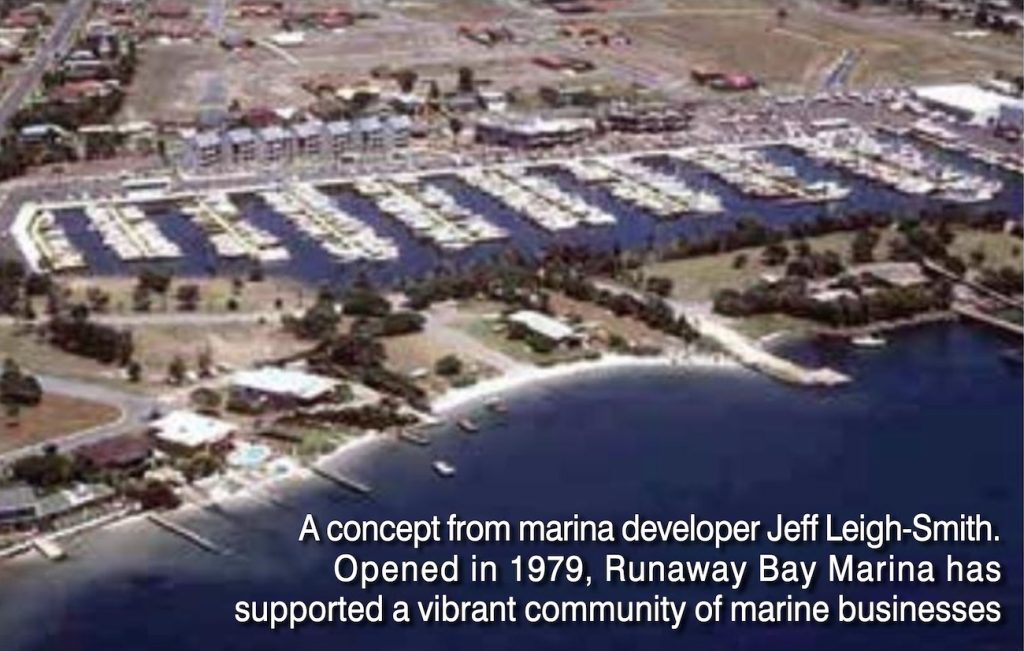
The 23-acre waterfront site that would become Runaway Bay Marina was originally intended for residential development. Jeff, however, saw greater potential. With extensive experience operating marine businesses at Isle of Capri and Southport, and having lived and worked at The Spit, now home to Mariners Cove, he had an intimate understanding of the practical needs of boat owners.
He also studied international trends, particularly the emerging concept of integrated marina facilities. Rather than simply providing a ramp or berths, Jeff envisioned a complete boating ecosystem that brought together lifting, launching, storage, servicing, fuelling, retail, hospitality and residential elements in a single, cohesive precinct.
He acquired the site and began excavation, selling the fill to a nearby developer who required elevated land for housing construction. What followed was a bold and unconventional plan.
Innovation born of ingenuity
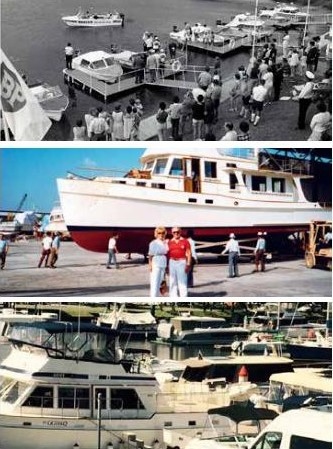
Many of the marina’s features were pioneering for their time. Pontoon manufacturing was undertaken on site. Walkways were constructed over retaining walls. Power, sewerage and water services were installed underground, far from standard practice at the time. “Innovations come from not having too much money,” Jeff says. “And back then, the Gold Coast was a long way from the major cities. You had to be resourceful, that good old Aussie spirit.”
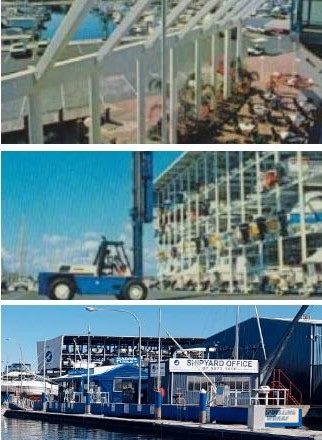
One of the most groundbreaking concepts was the dry-stack storage facility. Designed with a distinctive V-shaped roof, it created downward wind pressure to hold boats securely in their racks, an elegant solution that avoided the lift and instability issues common with flat-roof designs.
A community on the water
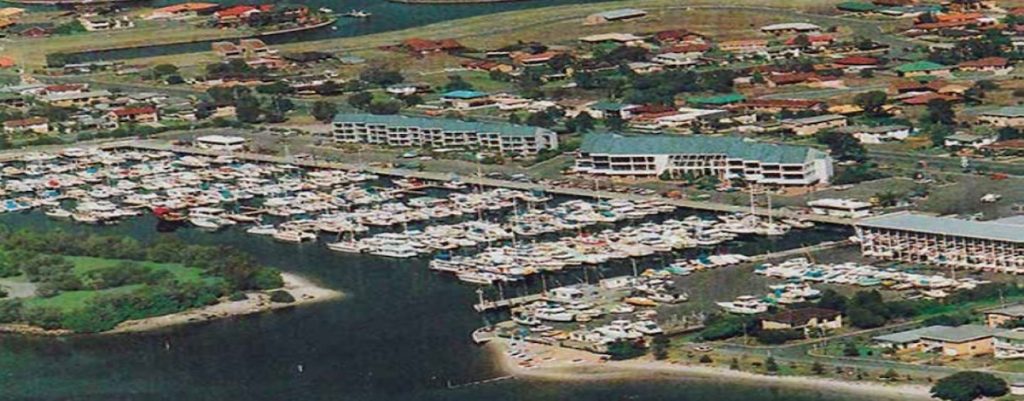
Since opening in 1979, Runaway Bay Marina has supported a vibrant community of marine businesses, many of which have remained on site for decades.
Today, the marina offers 197 premium wet berths, along with a full complement of trades and service providers renowned for their experience and professionalism. “It’s not just a marina, it’s a knowledge base,” says Jeff. “When people ask questions, they get real advice from people who live and breathe boating.”
Sheltered from prevailing winds and tidal challenges, the marina provides exceptional access by both land and water. Positioned close to the Seaway and key Broadwater destinations, it remains one of the most user-friendly facilities on the coast.
Fuel with a smile
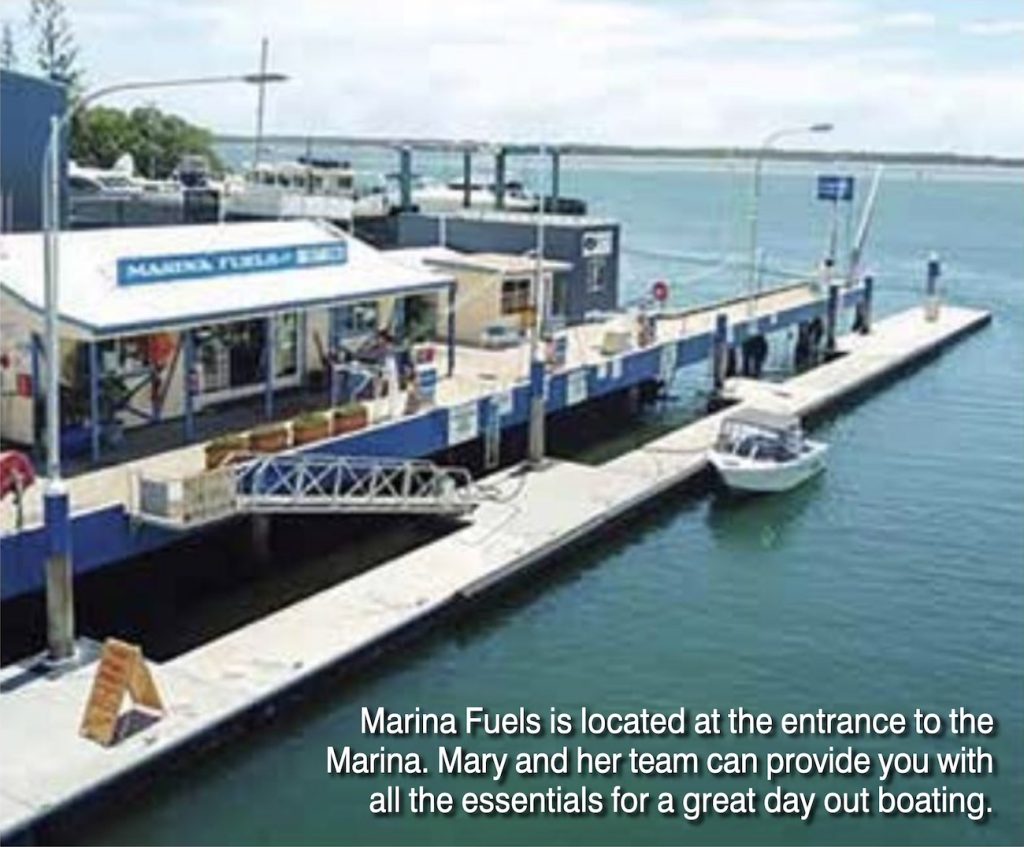
One of the marina’s most enduring traditions is its attended fuel service, a rarity in modern boating. Staff assist with berthing, hoses and nozzles, making refuelling safe, efficient and welcoming.
Jeff’s sister-in-law, Mary Leigh-Smith, began working at the fuel facility at just 17 years of age. Decades later, she is still there, greeting customers and leading a team that turns what can be a daunting experience into a smooth and friendly interaction.
Looking forward
Now more than 40 years old, the Runaway Bay Marina site is earmarked for a major redevelopment incorporating upgraded marine infrastructure alongside retail and residential components.
Jeff Leigh-Smith, however, has never stood still. In 1988, he sold his interest in the marina and became a sought-after consultant, advising on marina design and development across Australia. He played a pivotal role in the establishment of the Coomera Marina precinct, partnering with Pat Gay of Gold Coast City Marina and inviting Bill Barry-Cotter to establish Riviera’s manufacturing base.
Jeff and his family later settled at Sanctuary Cove, where they successfully operate the Leigh-Smith Yachts dealership and brokerage.
The future of Gold Coast boating
As recreational boating continues to grow, Jeff remains a strong advocate for government leadership in identifying and developing new marine infrastructure. Without parallel investment, he warns, risks increase, vessels forced to anchor in exposed conditions and safety compromised.
Recent developments at The Spit highlight a shift towards accommodating large superyachts, creating a lucrative refit and repair industry in South-East Queensland. While this sector brings economic benefit, Jeff believes balance is essential.
“Boating has always been about access, safety and community,” he says. “That shouldn’t be lost.”
A lasting legacy
Jeff Leigh-Smith’s legacy is not defined by a single marina or project, but by a philosophy: that boating infrastructure should serve people, protect lives, and evolve with the community it supports. From marine rescue to marina innovation, his family’s influence is woven into the fabric of the Gold Coast’s waterways.
In every boat purchase, every berth, every rescue vessel, and every boatie who fuels up with confidence and a smile, the Leigh-Smith legacy continues, quietly shaping the future of Australian boating, just as it has for generations.
Article from Boat Gold Coast Magazine. Available at waterfront and boating locations throughout the region, or read the online edition at: www.boatgoldcoast.com.au/latest-issues