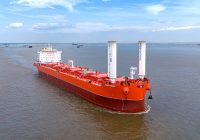
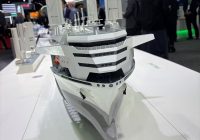
The world’s largest battery-electric ship has departed Tasmania, with Hull 096 leaving the River Derwent aboard the heavy lift vessel Black Marlin recently (on 8 August) to begin its journey to South America.

The 130-metre vessel, designed and built by Incat Tasmania for South American ferry operator Buquebus, is expected to spend around 40 days in transit before arriving in South America, where it will be unloaded, commissioned and prepared to enter service between Buenos Aires and Colonia.
The departure marks another major milestone in the most significant project in Incat’s history.
Incat Chairman Robert Clifford said Hull 096 represented a defining moment not only for the company, but for the future of sustainable maritime transport.
“Today is a proud day for everyone at Incat. Hull 096 has been the biggest and most ambitious project in our company’s history, and its departure is a testament to the skill, dedication and innovation of our entire workforce.
“I want to sincerely thank every person who has contributed to this extraordinary achievement. Thousands of people have played a part in bringing this remarkable vessel to life, and they should all be incredibly proud of what has been accomplished.
“We now look forward to seeing the world’s largest battery-electric ship arrive in South America and demonstrate the enormous potential of large-scale battery-electric technology in commercial ferry operations.”
Hull 096 is the largest battery-electric ship ever constructed and features the largest battery energy storage system ever installed on a vessel. The ship has capacity for up to 2,100 passengers and 225 vehicles and will operate for Buquebus on the River Plate between Buenos Aires, Argentina, and Colonia, Uruguay.
With Hull 096 now bound for South America, work continues at the Incat shipyard in Tasmania on the world’s most advanced aluminium electric shipbuilding program, with the company continuing to develop the next generation of battery-electric and hybrid-electric vessels.
For more information, visit incat.com.au